
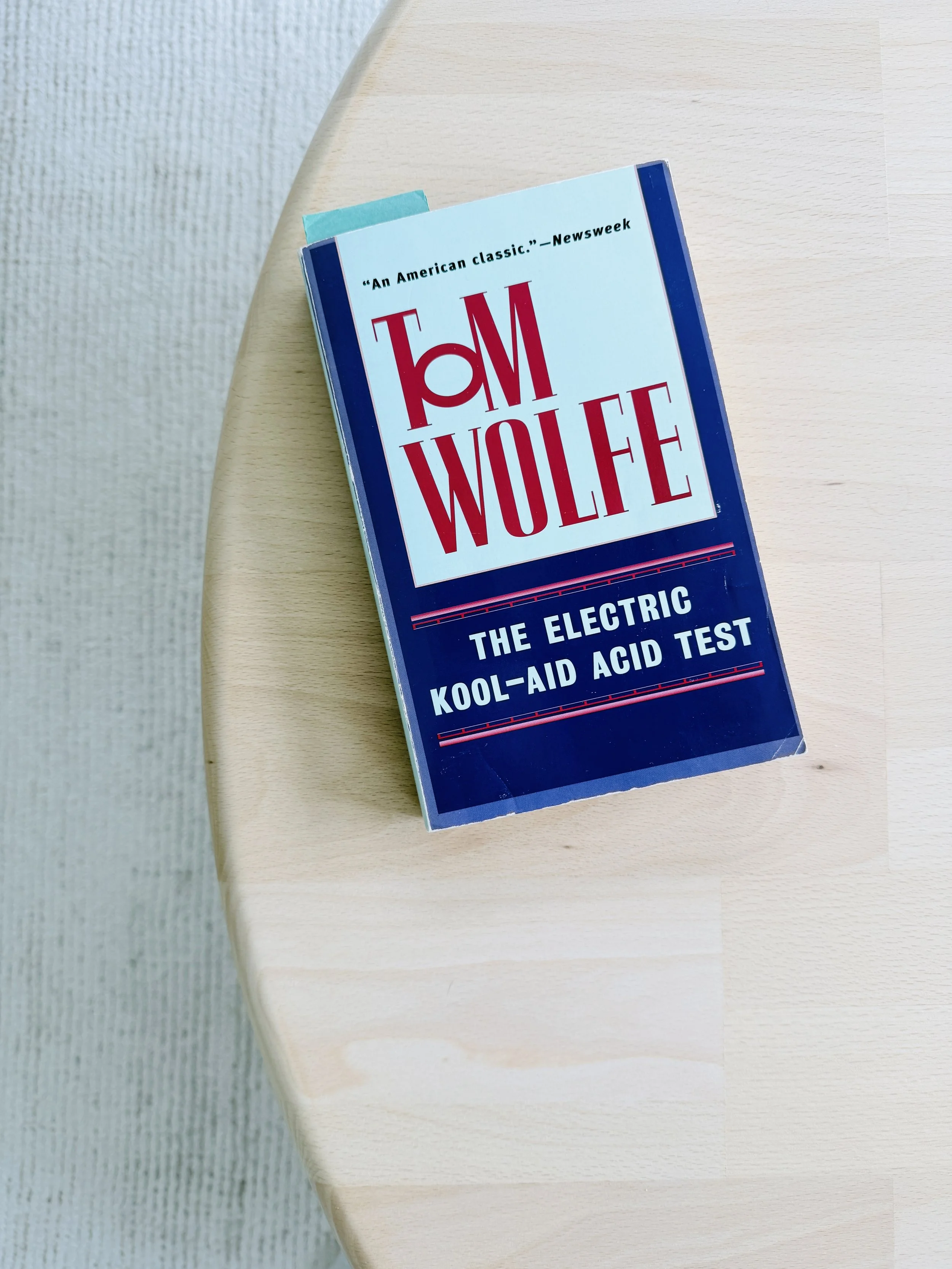
Going Furthur: On Tom Wolfe, The Grateful Dead, and Mourning Routine
What Tom Wolfe, The Grateful Dead, and a School Bus Taught Me About Making Music
I just finished reading The Electric Kool-Aid Acid Test by Tom Wolfe, and I can't stop thinking about it. The book chronicles Ken Kesey and the Merry Pranksters — a group of writers, artists, and seekers who, in the mid-1960s, painted a school bus in psychedelic colors, named it Furthur, and set out across America with the goal of, well, going further. Further into experience. Further into art. Further into whatever was on the other side of the next bend in the road.
I bought this book back in high school. I made it about a hundred pages in before bailing. The themes, the writing style, the life experiences Wolfe was describing — none of it connected. I shelved it and forgot about it.
Years later, with more life in the experience bank, a brief encounter with psychedelics in my past, and a more open mind, I picked it up again. And this time it absolutely floored me.
A Different Kind of Writing
Wolfe's prose is its own kind of trip. What's come to be known as "gonzo" journalism — that immersive, first-person, breathless style — really does feel like being pulled along by someone running ahead of you, looking back over their shoulder and shouting "come on, come on, keep up!" The pacing mirrors the psychedelic experience itself: fragmented, kaleidoscopic, somehow holding together even when it shouldn't.
What struck me most was how elegantly Wolfe wove together so many tales and perspectives into one cohesive journey. Dozens of characters, dozens of scenes, all moving at the speed of a bus barreling down a desert highway with Cassady at the wheel — and yet by the end, I really did feel like I'd been on that bus with Kesey and the Pranksters. That kind of writing isn't just descriptive. It's transportive. It puts you inside something.
The Grateful Dead Connection
Part of what brought me back to Electric Kool-Aid was a recent deep dive into The Grateful Dead and their history (more on that in a future blog — there's a lot to say). What I hadn't fully appreciated until reading Wolfe's book is how foundational the Pranksters were to The Dead's early evolution. The Dead played most of the Acid Test parties Kesey and the Pranksters hosted in the mid-60s. Some music historians argue that those gatherings are how The Dead actually became The Dead — long-form, improvisational, willing to follow a song wherever it wanted to go, comfortable with not knowing what was coming next.
That's a powerful idea for any artist. The Dead didn't become The Dead by deciding what they were going to be and executing on it. They became The Dead by showing up to the Acid Tests, plugging in, and seeing what happened. The form found them through the practice.
Going Furthur
The Pranksters had a phrase painted across the front of their bus: "Furthur." Misspelled on purpose. A direction more than a destination.
That word has stuck with me since I finished the book, because it describes something I recognize in my own creative life. With Six Missing, I try to continually push into new sounds, new methods, new approaches to crafting work. It's very unusual for me to do anything the same way twice. Each release is a chance to explore a different corner of what's possible — different textures, different emotional registers, different production philosophies. Sometimes I don't know where a song is going until I'm already in the middle of it. Sometimes the best material comes from following an idea past the point where I would've normally stopped and turned back.
Reading about the Pranksters made me realize that sense of restlessness isn't a bug. It's the whole point. You go furthur because the interesting stuff is past the edge of what you already know how to do.
In that way, I feel like I would've been welcomed on the bus. (I sometimes wonder what my nickname would've been — Echo Echo, maybe?)
A New Exploration: Mourning Routine
That sense of going furthur is exactly the spirit behind my latest single, Mourning Routine. It's a song I wrote in a headspace not entirely unlike the one Wolfe captures in Electric Kool-Aid — interested in what happens when you sit with discomfort instead of running from it, when you let an idea unspool rather than forcing it into a shape you already recognize. Sonically, it's a step into territory I haven't worked in before, which is becoming a pattern I'm proud of.
Mourning Routine is the leading track off my new EP, Passed Self, out June 5th. The EP as a whole is about the versions of yourself you've outgrown — the routines, the patterns, the people you used to be that you've quietly left behind. It's a record about transition, and about the strange grace of recognizing where you've been from the vantage point of where you are now.
I think there's a thread that connects all of this — Kesey and the Pranksters, The Dead at the Acid Tests, the act of going furthur, and the small, private process of writing songs that move you somewhere new. It's all about being willing to leave the version of yourself you know behind. To get on the bus, even when you don't know where it's going.
Read Anything Good Lately?
If you're a reader, I'd love to hear what's been on your nightstand. I just started Dungeon Crawler Carl and I'm excited to spend more time with it. And if you've read Electric Kool-Aid — or you've been meaning to — I'd love to hear what you made of it.
You can listen to Mourning Routine now. Passed Self arrives June 5th.
Thanks, as always, for being here.
Twelve Years Sober, and Finally Going Back to the Beginning
On recovery, reinvention, and the record that ties it all together.
Today marks twelve years of sobriety for me. And if you'll allow me a few minutes, I want to talk about it — because it's the reason everything else in my life exists the way it does.
Getting sober was simultaneously the hardest and best decision I have ever made. I was terrified, really. I had never genuinely admitted to myself — beyond saying it to take the heat off my previous poor decisions — that I am an alcoholic. And I knew that the moment I truly took ownership of that, there was no going back. Because I didn't really know what life would look like without alcohol, I was petrified of what lay ahead.
But I did it — though not alone. And for that I'm entirely grateful for my family and friends who showed up for me.
The Person I Was
I wasn't a great person when I drank. While drunk, I thought the exact opposite — I thought my life was pretty good, actually. I had a job, I was making music, I had a partner, I wasn't homeless. But it wasn't until I stopped long enough to let the fog lift that I realized just how much I was hindering my own health and my own potential.
Putting down the bottle meant changing everything about how I lived, and that was hard. But not as hard as the first few days.
I had to break down the days into 15-minute segments just to get through them. I had pints of Americone Dream, Red Bull, and GIRLS loaded up on HBO. I'd say to myself: okay, you're not going to have a drink for the next 15 minutes. And when those elapsed — great job, now we're not going to have a drink for the next 15 minutes. Slowly, the days crawled by. But I could see a tiny crack of light peering through. And so I followed that.
The minutes became hours, the hours days. Days became weeks, and weeks months. Before long, I was sleeping better, I had more money in the bank, my digestion improved, I began wanting to exercise, my head un-fogged, and I could begin to see how life might look past this hurdle.
It Didn't Happen on the First Try
I want to be honest about something, because I think it matters: before this day twelve years ago, I tried and failed twice.
So if you're reading this and you're somewhere in that process, thinking I must be failing at this — no, you aren't. Everyone is different. Mine took the classic third time's the charm. Recovery isn't linear, and the attempt itself is never wasted.
The first few years were still really hard even after it finally took. But something had shifted. The crack of light got wider.
What Changed
Soon after getting sober, I started taking full control of my life in ways I never had before. I quit my job and started my own business. I went solo as an artist. I married the love of my life. I moved to a completely new city and bought a house. I signed with a music label. I clocked more hours than ever in a career I genuinely love. The list goes on.
And all of it — every single thing — comes down to that one final night before I quit. The night I was at my absolute lowest. The night I was my worst. The chapter I didn't know how to get past.
I think we try too often to rush past the hard things in life. But if I didn't have that hard night, I would've never made a change. The darkness wasn't a detour. It was the door.
Change is scary. Change is exciting. I'm just really glad I was able to make the change before things got undoable.
Where This Leads — drift, sway
So what does any of this have to do with music?
Everything, honestly.
To mark this anniversary, I'm going back to my roots as Six Missing — back to where it all began, when I was just starting out and fumbling my way through things. Me, my guitar, and some pedals. No armor, no production gloss. Just the thing itself.
drift, sway is a record about honoring your past, celebrating your courage, and looking toward the future. It's the most personally true thing I've made, and I think that's because I finally had twelve years of clarity to make it from.
If you've read this far and you're somewhere in the middle of your own hard chapter — whether that's sobriety or something else entirely — feel free to reach out. I'm happy to chat about any of it. For me, getting sober was the best decision I could've ever made. I don't say that lightly.
Here's to another twelve years.
— TJ (cheers-ing with a seltzer)
You Don't Have to Beat It — You Just Have to Outlast It
Reflections on ten years of Six Missing, survival reality TV, and why sway: breathing room exists
I want to talk about Alone. But first, let me back up — because that's actually how we got here.
SXSW just wrapped up in Austin, and while I didn't do much by way of events this year, I did get to see two old friends and one new one, which was absolutely lovely. Through chatting with one of my old pals — who had me on his podcast while he was in town (more on that soon) — we realized we've known each other for almost 30 years. How absurd is that? Three decades, and somehow it still just feels like us.
But here's the thread that ties this whole thing together: my other old friend is the one who turned us onto Alone.
The Show
If you haven't seen it, Alone is a survival reality show where contestants are dropped — completely solo — into the wilderness with minimal gear and told to last as long as they can. No camera crew. No producers. Just them, the elements, and whatever they can figure out. Season 11 is on Netflix, and my partner Hanna and I tore through it in about a week.
Reflecting on it together over the past couple of days, something started to crystallize for me.
Some contestants came in trying to dominate — to beat the game, outsmart it, conquer it. Others took a different approach entirely. They weren't trying to win against the wilderness; they were trying to exist with it. To build something sustainable. To make themselves at home in an environment that wasn't designed for them.
And in the end, the one who built the most sustainable relationship to their survival — not the strongest, not the loudest, not the most aggressive — was the one who won.
I feel the same way about my relationship to music and the music industry.
You Can't Beat It
I'm not trying to beat the music industry, because it simply can't be won. The goal posts never stop moving. Streaming payouts shift. Algorithms change. What worked last year doesn't work this year. If you orient yourself around winning that game, you will exhaust yourself chasing a finish line that doesn't exist.
But what you can do is co-exist with it. You can build sustainable workflows and habits and a body of work that allows you to quite literally outlast the other contestants.
There's an old adage: you don't always have to be the best, you just have to outlast everyone else. That's something I've been sitting with a lot lately, as I approach ten years as Six Missing this year.
Ten years. I genuinely can't believe it and also I can completely believe it, because I've never once felt like I was grinding against something. The work feeds me. It always has.
My Version of Alone
My approach to Six Missing mirrors the mindset of the best Alone contestants. Build a shelter, find food, sleep, stay alive, repeat.
For me: shelter is my body of work. Food is the inspiration and motivation. Sleep is still sleep (heh). And staying alive is continually releasing the highest quality work I can — not rushing, not forcing, but never stopping either.
I never grow tired of it. And I think that's where my real advantage lies. Another ten years? I'd do it without hesitation. I'm really only just getting started.
But here's where my version of the story diverges from the show, and it's the part that actually matters most to me.
A lot of those contestants tap out — not because they can't survive physically, but because they miss their people too much. The isolation becomes the thing that breaks them, not the cold or the hunger. And honestly? I get it completely.
Unlike them, I don't have to choose. I get to make this work with incredible artists, collaborators, and listeners who light me up just as much as the music itself does. Every collaboration teaches me something. Every conversation with someone who's actually heard the music changes the way I think about what I'm making.
And that includes you — reading this right now. You showing up here, following along, lending your ears and your time — that's what keeps me wanting to share. That's not a small thing. That might actually be the whole thing.
sway: breathing room
Which brings me to today.
I have a new single out — sway: breathing room — and its existence is pretty much a direct product of everything I just described. It's full circle in the best way: me, sitting with my guitar and my pedals, the way I used to make music when Six Missing was brand new. That intimacy, that simplicity. But sway: breathing room takes it a step further — printed to tape, slowed all the way down, given room to exist without rushing anywhere.
Mmm, tape.
It feels like a breath. Which, given everything, feels exactly right.
If you'd like to hear it, you can find it HERE. And if you haven't started Alone yet — you can thank me later, just as my friend did for us.
Your friend, TJ
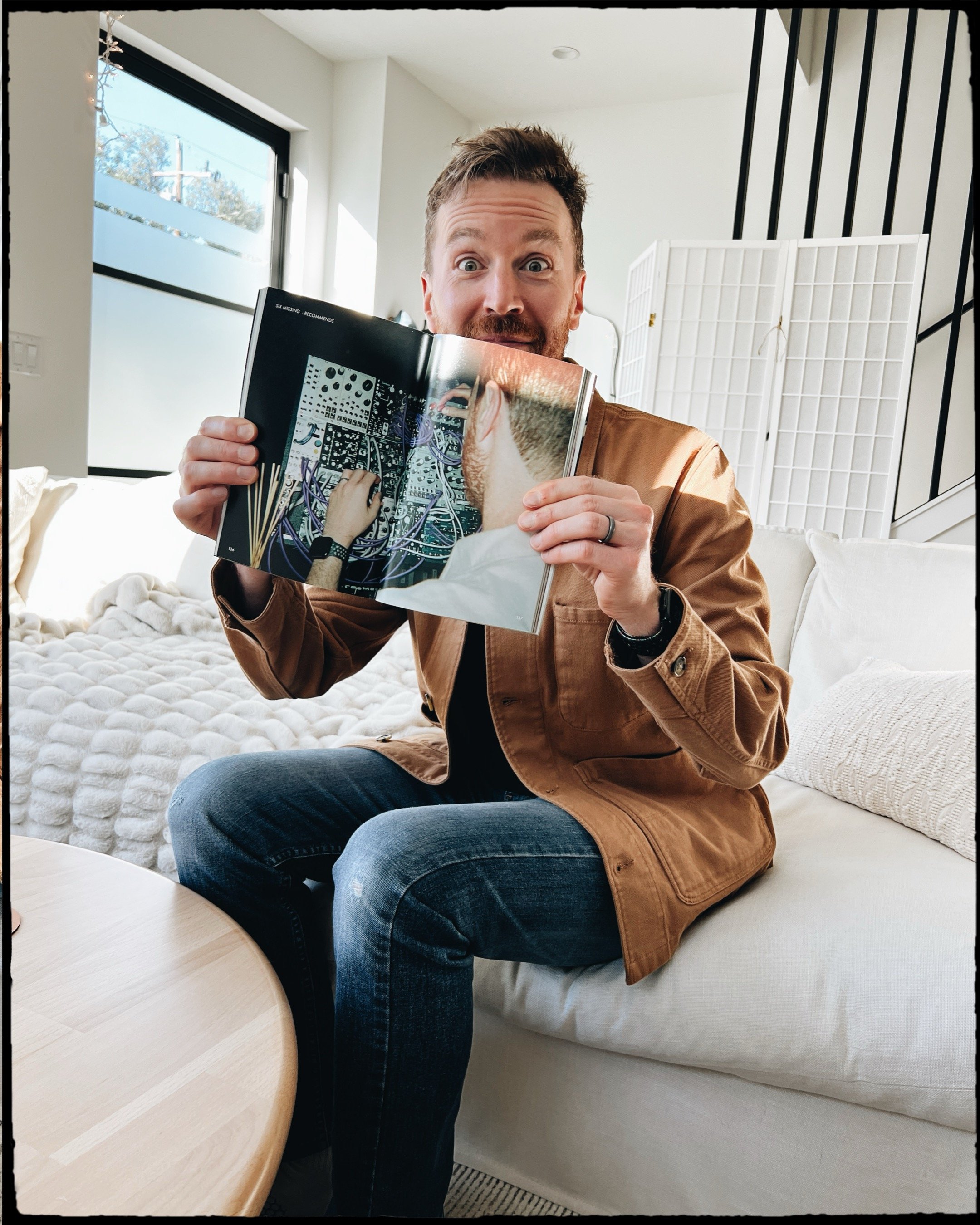
Synth History Recommends
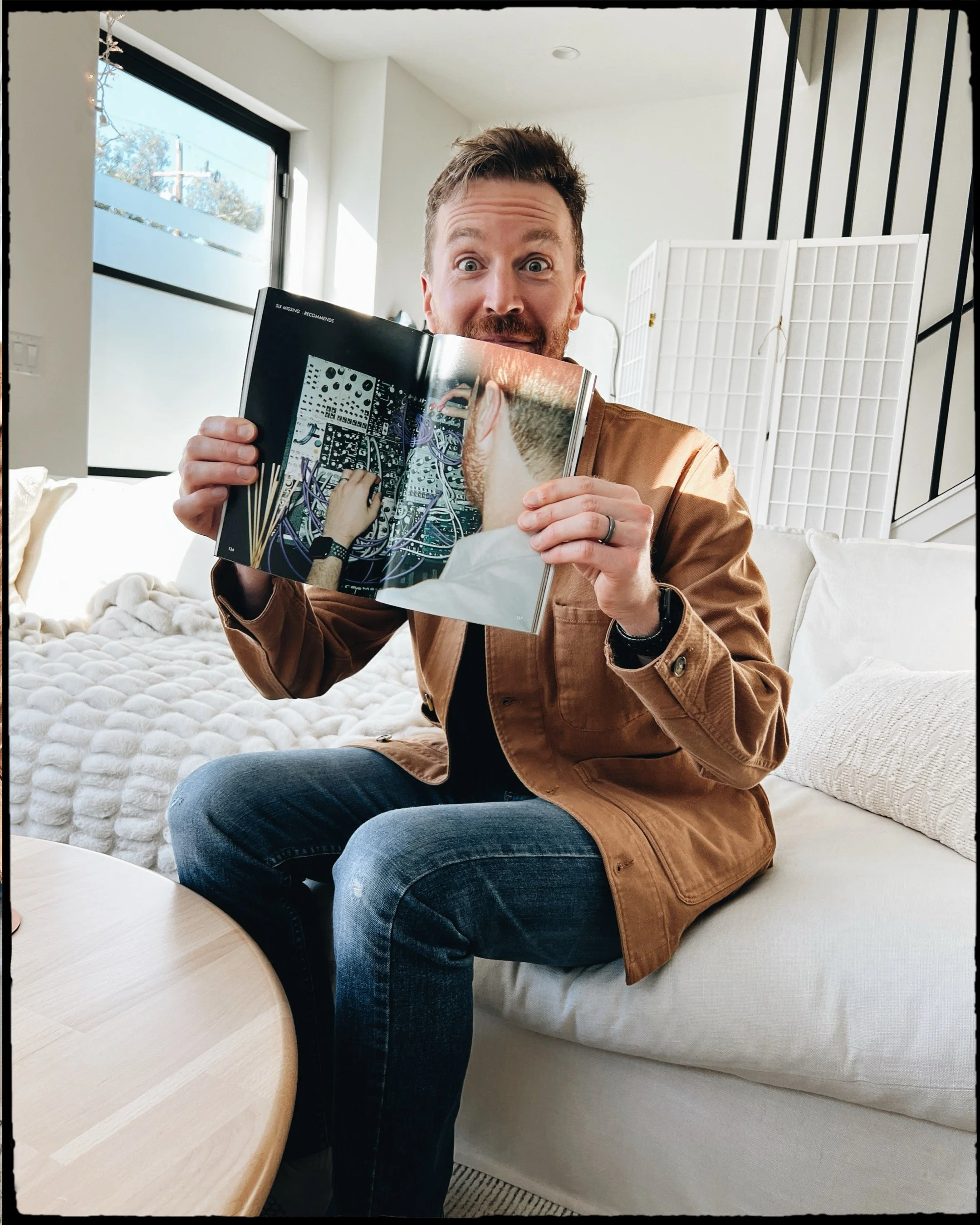
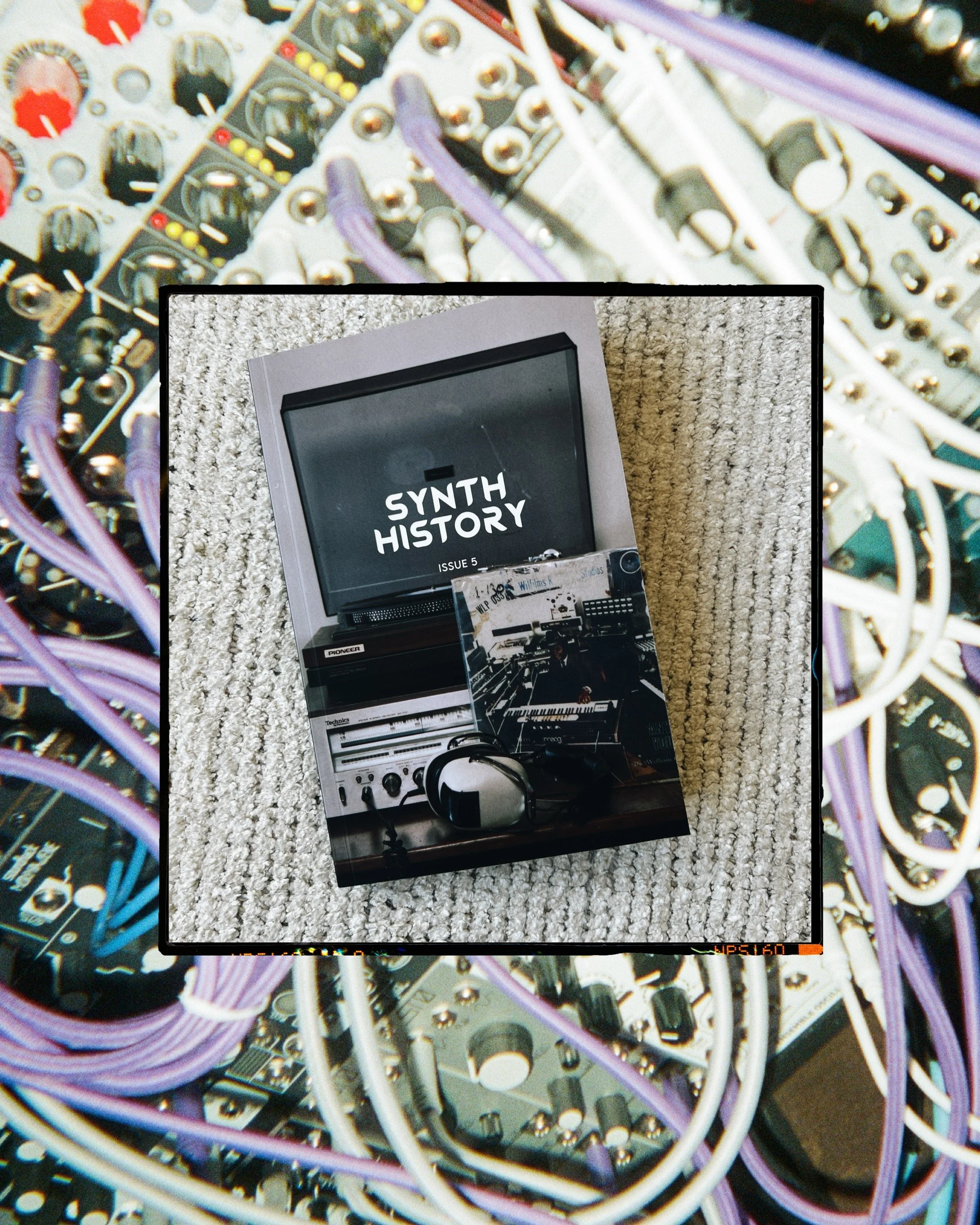
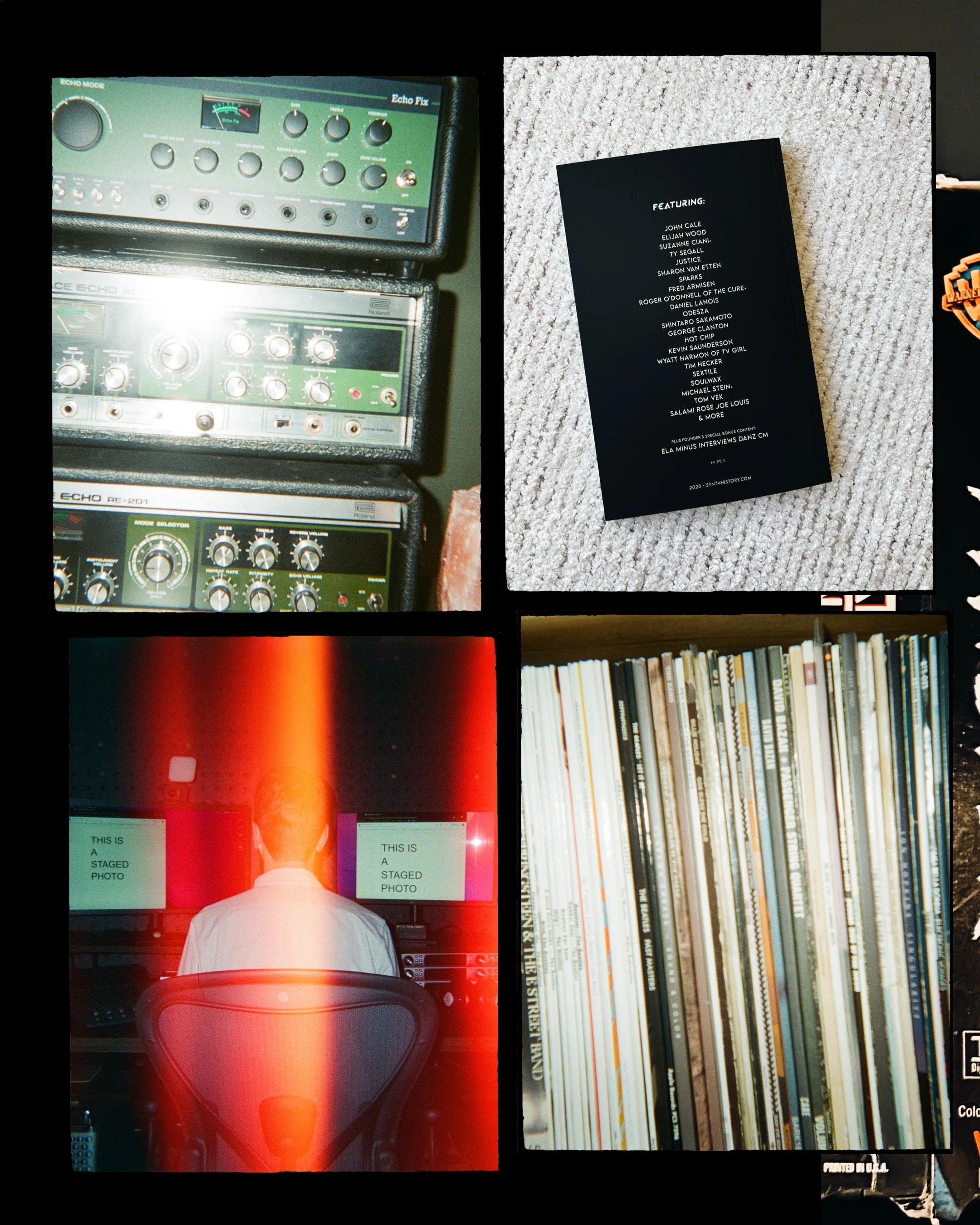
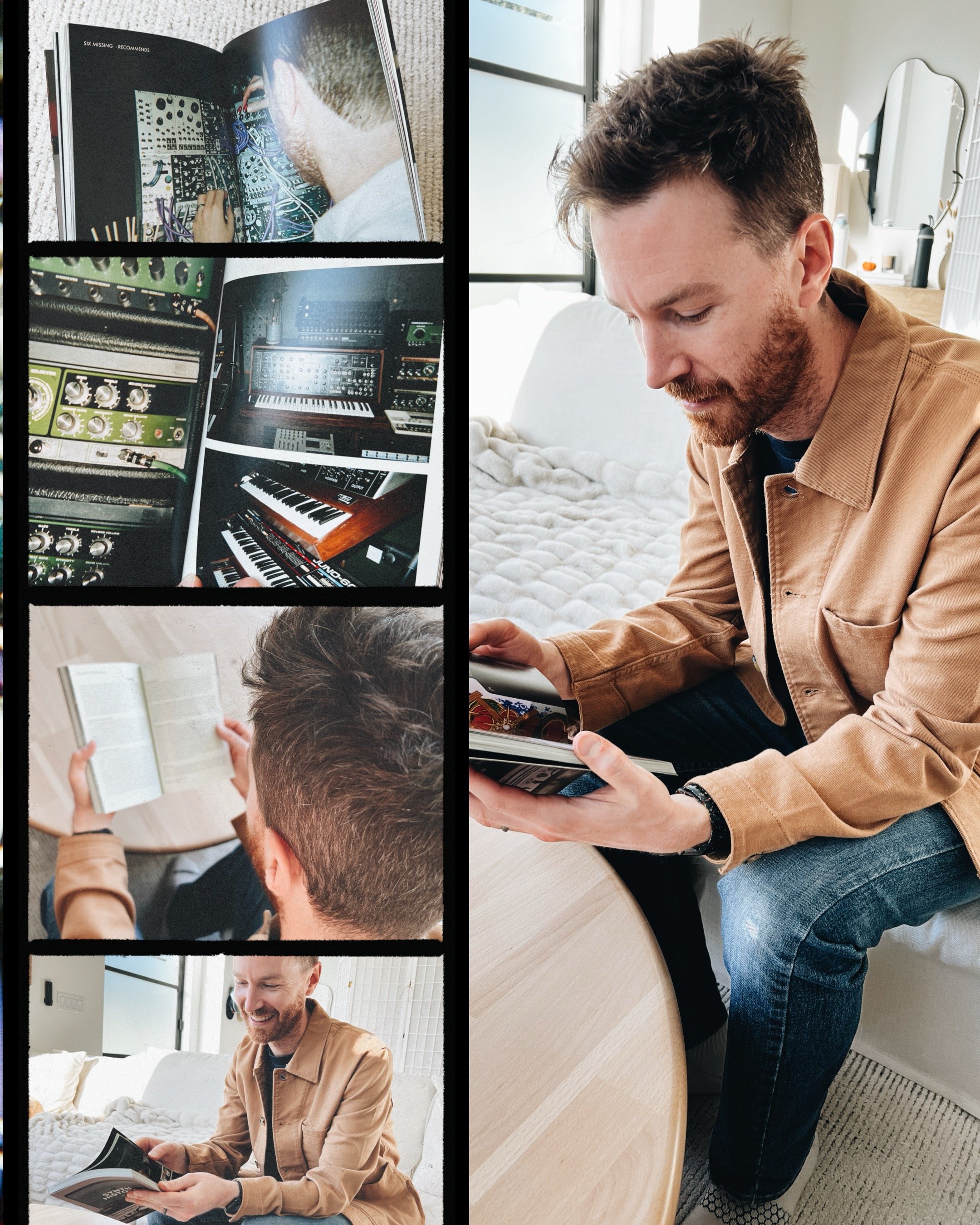
Being Featured in Synth History Vol. 5 -- Finding My Place
You can read the full Recommends feature here:
https://www.synthhistory.com/post/six-missing-recommends
I wanted to share something that genuinely stopped me in my tracks.
I’m featured in Synth History Vol. 5 — the physical zine — and also on their website as part of their Recommends Series.
That still feels surreal to type.
I first discovered Synth History on a plane, flipping through Volume 2, and immediately felt something click. The care in the layout. The tactile feel of the paper. The depth of the writing. It wasn’t just about synths — it was about why we’re drawn to these machines in the first place.
It felt like finding my place.
Fast forward a few volumes later, and now I’m somehow in actual ink, alongside artists I deeply admire. That kind of full-circle moment doesn’t happen often — and when it does, you really feel it in your chest.
Synth History as a Living Document
What Dan and the Synth History team have built is special. This isn’t gear fetishism or trend chasing — it’s documentation. Culture. Memory.
In a time when so much of music exists fleetingly on screens, there’s something grounding about a printed object that asks you to slow down, sit with it, and turn pages. That philosophy mirrors how I like to work musically — hands on, ears open, patience intact.
Holding Vol. 5 feels like holding a small piece of collective history.
The Recommends Series
For the Recommends Series, I was asked to list 10–15 studio essentials — instruments and tools that have shaped how I hear, feel, and create.
What I appreciated most about the prompt was that it wasn’t about productivity or optimization. It was about relationship.
Two pieces I spoke about in depth were my Korg PS-3100 and the EarthQuaker Devices Avalanche Run — both of which feel less like gear and more like collaborators.
The PS-3100 is big, heavy, temperamental, and already feels like it has a will of its own. It’s been in the shop more than once — and I’ll still never give it up. There’s something mystifying about it that I was actively searching for. The interface invites you to touch it, to play, to mess things up and see where they land. Watching Ólafur Arnalds speak about the PS-3100 years ago made me realize he was talking about synths the same way I do — almost poetically. That moment sent me on a long hunt until I finally found one, had it put on a plane, and picked it up at the airport like a precious artifact.
And then there’s the Avalanche Run.
I don’t say this lightly — that pedal changed the entire course of my musical life. I bought it at Main Drag Music in Williamsburg, and the person ringing me up smiled and said, “Hope you enjoy losing time for three days.” They weren’t wrong.
My first Six Missing release was born entirely out of improvising with that pedal — one long session of me playing with it and it playing back at me. It’s a universe. A texture engine. A collaborator that chews sound into something elastic and strange and beautiful. If I ever had to choose just one pedal to perform with, it would be the Avalanche Run. No question.
Gratitude
Huge thanks to Synth History for including me — both in Vol. 5 of the physical zine and online. It means more than I can properly articulate.
And thank you to everyone who listens, supports, reads, and makes space for this kind of slow, intentional work. None of it exists in isolation.
If you’re into synthesizers, ambient music, or thoughtful creative culture, I can’t recommend Synth History enough. And if you can get your hands on a physical copy — do it. Some things really are better when you can hold them.
You can read the full Recommends feature here:
https://www.synthhistory.com/post/six-missing-recommends

Without Mind: An Album Designed for Deep Listening in a Distracted World
In a world where music is often consumed in fragments — a playlist here, a 15-second clip there — Without Mind was always meant to be something else entirely. It’s not background noise, it’s not a quick dopamine hit, and it’s certainly not made for skipping through. This record asks you to lean in, stay awhile, and let the sound pull you somewhere quieter.
When I began Without Mind, it was in the context of a single, transformative experience: creating an improvised soundtrack for ketamine-assisted therapy. The music unfolded in real time, with no edits, no plan — just instinct, emotion, and the tools around me. Modular synths, my Moog Matriarch, Minimoog, and the physical space itself all conspired to create textures that felt alive and unpredictable. That spirit carried through the entire trilogy.
I chose to release it in three parts before the full album dropped — a deliberate push against the “all at once, onto the next” mentality that dominates streaming culture. I wanted each section to have its own breathing room, to give listeners a chance to live inside it before moving on. Now that it’s all together, all 12 tracks, it feels like the record I always envisioned: big, dense, and immersive, but with moments of stillness that invite you to exhale.
The title, Without Mind, comes from the idea of being fully present without the constant narration of thought — the meditative state where awareness expands beyond words. That’s the listening posture I hope for: no pressure, no expectation, just allowing yourself to be carried.
If you can, try listening front to back in one sitting. Put your phone on the other side of the room. Maybe close your eyes. Let the room change shape. Let the layers reveal themselves. You’ll hear the deliberate imperfections, the subtle tape warble, the spaces where the gear was breathing on its own. That’s where the humanity is. That’s where I’m most at home.
And if you prefer something physical, the limited-edition 3xLP vinyl is out now — hand-numbered, beautifully packaged, and meant to be as much an art object as a listening experience.


Six Missing: The Ghostly Encounter That Inspired My Name
Some moments never leave you. They linger in the back of your mind, shifting and reshaping over time, but always present. My ghostly encounter was one of those moments, and it ultimately led to the name Six Missing—a name that now defines my music, my sound, and the unseen layers of existence I explore through ambient composition.
A Haunted Recording Session
Years ago, my band and I traveled to West Chester, Pennsylvania, to record an album at a studio near the Brandywine Battlefield, a site steeped in Revolutionary War history. The property had an eerie stillness to it, an almost unsettling quiet that seemed to hum beneath the surface.
We stayed in a small cottage on the grounds, separate from the main studio. Late one night, after a long session, I realized I had left something behind in the control room. I made the short walk alone, stepping into the darkened space, where the only sounds were the occasional creaks of an old building settling into the night.
As I retrieved my gear and turned to leave, a sudden, overwhelming sensation crept over me—an unshakable feeling that I was being watched. The air felt thick, pressing against my skin like static before a storm. I hurried back to the cottage, convincing myself it was just my imagination. But what happened next made me question everything.
A Presence in the Night
I climbed into my bunk, trying to shake the unease, when the silence was broken by the slow creak of the screen door opening. My body froze. I strained to listen, waiting for the sound of footsteps—someone from the band, maybe—but there was nothing. Just an emptiness stretching through the dark.
Then, without warning, a piercing, ice-cold sensation shot through the center of my back. It was as if something—someone—had pressed into me, sending a wave of despair and weightlessness through my entire body. I tried to move, to turn, but I was completely paralyzed. A deep, sinking feeling overtook me, a sensation I can only describe as slipping into the void.
I don’t know how long it lasted, but at some point, I remembered something I had seen on a ghost hunting show—speak with authority, take control. Summoning every ounce of strength, I forced out the words: LEAVE ME ALONE.
The moment I spoke, the weight lifted. My breath came back in a rush, my limbs unlocked, and the air in the room shifted. Then, just as clearly as before, I heard the screen door creak open again—and then softly close.
The Missing Six
The next morning, I hesitantly brought it up to the rest of the band, expecting them to laugh it off. But one of them turned pale. He had woken up in the night and heard the door open too, thinking it was one of us stepping outside.
Later, curiosity got the best of me, and I started researching the area. That’s when I came across the historical records—six soldiers from the Battle of Brandywine were documented as missing. Their bodies were never found, their stories lost to time.
I couldn’t shake the connection. Whether what I experienced was tied to them or not, it felt like more than a coincidence. The idea of something unseen but present—of spirits lingering just beyond perception—stayed with me. It resonated deeply with how I think about sound, about atmosphere, about the spaces between notes where emotion truly lives.
The Sound of the Unseen
When I started releasing music under the name Six Missing, it wasn’t just a nod to that night. It was about everything the experience represented: the unseen, the unknown, the way sound and memory intertwine. My ambient compositions aim to capture that—textures that feel both present and distant, melodies that drift like echoes through time.
There’s something powerful about what exists just beyond our reach. Whether in history, in memory, or in sound, the missing pieces often tell the most compelling stories.
That’s what Six Missing is about—creating music that lingers in the in-between, that resonates in the quiet spaces, and that, maybe, just maybe, touches something beyond what we can see.
A Soundtrack to the Unexplained
If you’ve ever felt something inexplicable—an eerie presence, an unshakable familiarity with a place you’ve never been—then you understand the feeling I chase in my music. My compositions are not just about melody or harmony; they are about atmosphere, memory, and the spaces in between.
I want my music to be a soundtrack for those moments when reality feels just a little thinner, when time slows, and the unseen world brushes against our own. Whether you listen for meditation, for deep focus, or simply to lose yourself in sound, know that you are stepping into that same ethereal space—where stories linger, where echoes fade, and where the missing are never truly gone.
Until next time, Your fellow human just being.
Six Missing
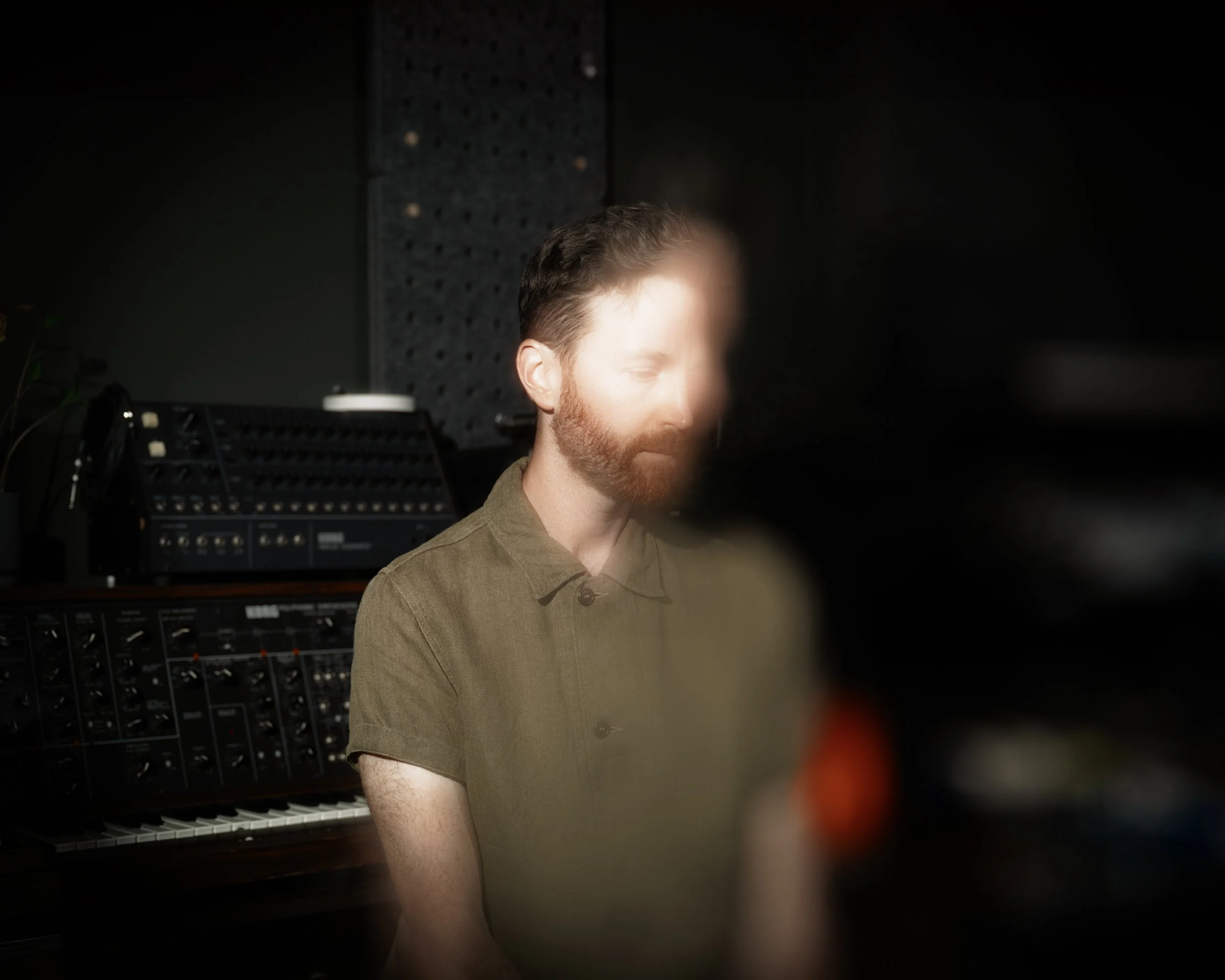
Who I Am & Why I Make Music
Who I Am & Why I Make Music
Music has always been a way for me to process the world—its beauty, its weight, and the in-between spaces where emotions live. From my earliest memories, sound fascinated me. I was drawn not just to melodies but to the textures of sound, the way it could envelop you like a warm embrace or stretch out into the distance like a horizon at dusk. That fascination never faded; it only deepened, eventually leading me to create Six Missing.
A Sonic Beginning
My journey started with the piano, my first instrument. While I found traditional lessons slow-paced, I quickly discovered that I could play by ear, and that felt far more natural. But it wasn’t until I stumbled upon my Uncle Chuck’s 1964 Gretsch Clipper in my grandparents’ attic that my love for music truly ignited. Surrounded by stacks of vinyl records, I felt an instant connection to the instrument, sparking a passion that would guide me for years to come.
Like many guitarists, I was shaped by classic rock, and Led Zeppelin’s IV was my gateway. The moment I heard the solo in “Stairway to Heaven,” I was hooked. But it wasn’t just the guitar work that fascinated me—it was the atmosphere, the space between the notes, the way sound could transport you.
The Path to Six Missing
As I grew, my musical tastes evolved. I explored delay pedals and looping, captivated by the infinite layers they could create. My first pedals—a Jekyll & Hyde distortion, a Zoom 606 multi-effects unit, and eventually a Boss DD-6—opened the door to soundscapes that felt boundless. By the time I transitioned to synths, beginning with the Korg Minilogue, my focus had shifted from traditional songwriting to immersive sonic exploration. Discovering vintage synths like the Moog Memorymoog and the Juno-60 further deepened my understanding of texture and space, shaping the sonic identity of Six Missing.
But the defining moment for Six Missing came in Astoria, Queens. What began as a simple guitar looping project evolved into something deeper. Encouraged by friends, I released my early ambient explorations, and the response was unexpectedly encouraging. It was clear that people connected to this music—not just as entertainment, but as a space for meditation, deep focus, and healing.
Why I Create
For me, music is more than sound—it’s a means of connection, a way to navigate the complexities of being human. I’ve found that ambient music, in particular, holds a unique power. It allows the mind to wander, to rest, to breathe. It can offer solace in moments of anxiety, a moment of stillness in a chaotic world.
That’s why I create. Whether it’s for someone meditating, studying, or simply needing a pause from the noise of everyday life, my goal is to craft soundscapes that offer space—to think, to feel, to just be.
This blog will be a place to share my journey—how Six Missing came to be, the struggles I’ve faced, and the inspirations that continue to shape my sound. If you’re here, I hope you find something that resonates with you.
Until next time, Your fellow human just being.
Six Missing