
The Instruments Behind the Sound: An Ambient Music Gear Guide From Someone Who Actually Uses This Stuff
I want to start with something that might be counterintuitive coming from someone who is about to describe a room full of vintage synthesizers.
The gear is not the point.
I know how that sounds. But I mean it genuinely, and I think it's the most important thing I can say before walking you through what actually lives in my studio. Because gear has a seductive way of presenting itself as the answer — as the thing standing between you and the sound you're trying to make. Buy this synthesizer. Add this pedal. The right equipment will unlock the right music.
It won't. Or more precisely: it might help, in specific and limited ways, once you already know what you're trying to make and why. But the instrument is not where the music comes from. The music comes from somewhere much less purchasable than that.
I also want to be honest about something before we go any further: this room took years to build. Some of these instruments scared me to buy even when I had the money sitting there. I lost sleep over a few of them. And I started with almost nothing — a laptop, a free DAW trial, a MIDI keyboard I got secondhand, and an internet connection. If that's where you are right now, you are not behind. You are exactly where I was.
So: here's the honest version. What I use, why I use it, what it actually does — and what you can use right now, for free or close to it, to get to the same place.
Start Here: You Don't Need Any of What I'm About to Describe
I mean this. Before I get into vintage synthesizers and boutique pedals, I want to spend a moment on what's available to anyone with a laptop and a few hours of curiosity, because it genuinely changed what was possible for people getting started — and it didn't exist when I was coming up.
Arturia's BruteStep, the Arturia V Collection, Cherry Audio's catalog — these companies make software emulations of iconic hardware synths that are, in some cases, startlingly good. Korg has their own line of iOS and desktop virtual instruments, including a Polysix and an M1 emulation, that capture a real amount of what makes those hardware instruments work. The Minimoog I'll describe below? Arturia makes a software version called the Mini V. It is not the same thing. But it is in the same neighborhood, and it costs less than dinner out.
For reverb and delay — the two most essential effects in ambient music — there are free and low-cost VST plugins that will take you very far. Valhalla makes a free reverb plugin called ValhallaSupermassive that I would genuinely recommend to anyone. It is not a budget option. It is simply a great option that happens to be free. I've heard it on professional records. I've probably used it myself.
GarageBand, which comes free on every Mac, has more than enough to make a complete ambient record. Ableton Live Lite, which ships with almost every piece of hardware you'd ever buy, is where a lot of real careers began. REAPER costs $60 and has a genuinely indefinite free trial with no crippled features.
I'm not saying this to be dismissive of the hardware I'm about to describe. I'm saying it because I was fourteen once, or close enough, and I would have given anything for someone to tell me clearly: you can start today, with what you have, and make something real. The vintage stuff came much, much later. And the music I made before I had any of it still mattered.
The Holy Grail: Korg PS-3100
If you've spent any time in the ambient music world, you've probably heard someone speak about a piece of gear with a reverence that sounds slightly unhinged. A synth that changed everything. An instrument they would never sell under any circumstances. Something they describe less like a tool and more like a collaborator.
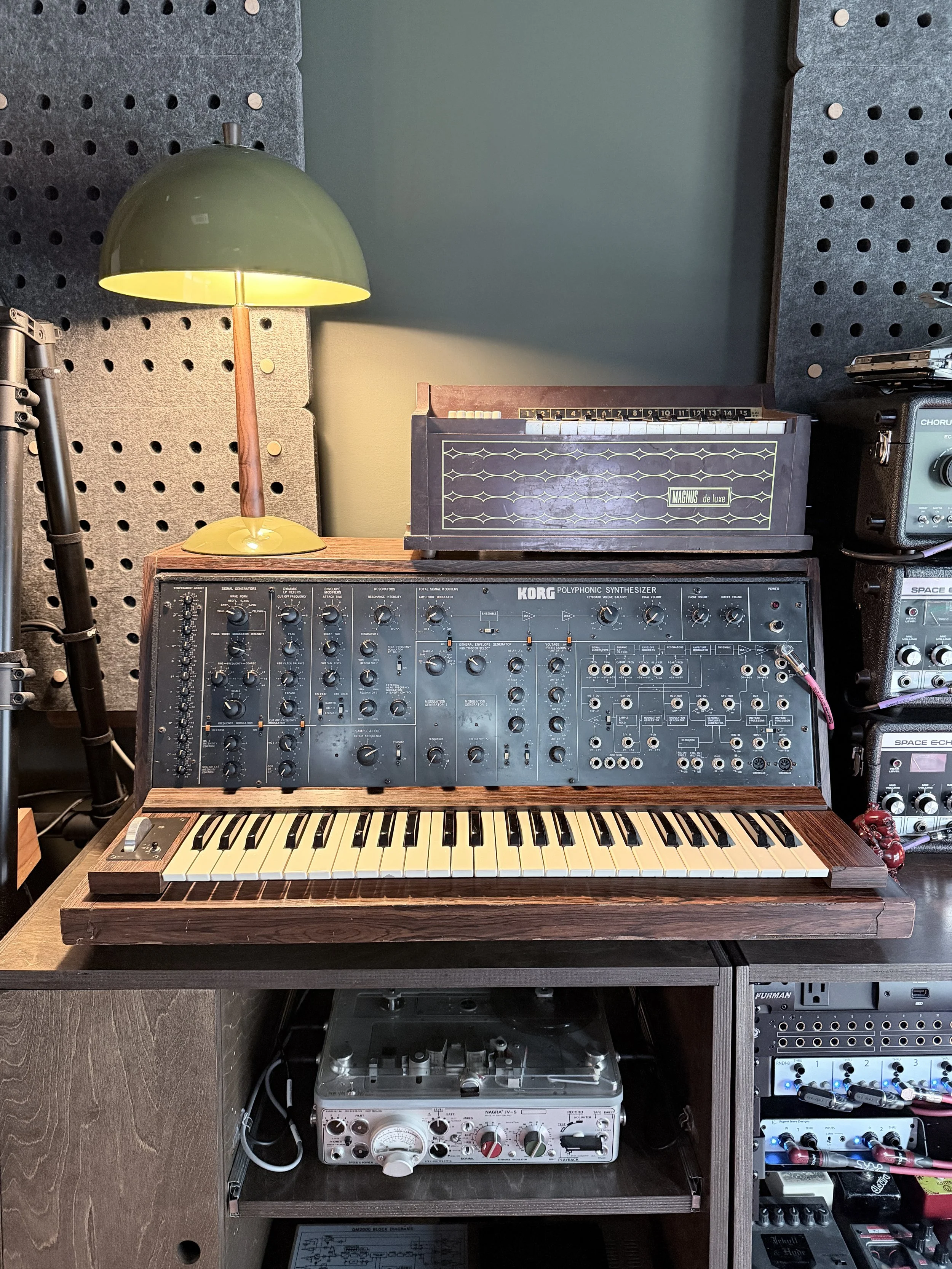
For me, that instrument is the Korg PS-3100.
It was made in 1977. It is enormous — the kind of thing that commands an entire section of a studio rather than sitting politely on a shelf. It is fully polyphonic in a way that was genuinely rare for its era: every single note has its own dedicated filter and tuner, which means every chord you play has its own internal ecosystem. No two notes are treated identically. No two performances are quite the same. It drifts. It breathes. It sounds different every time I turn it on, and I have genuinely never gotten a sound out of it that I couldn't use for something.
I found it because of Olafur Arnalds. I watched an interview where he spoke about his own PS-3100 almost poetically — the way it responds, the way it has opinions, the way it resists being controlled entirely. Something about that description resonated with how I think about creativity in general. The best work tends to happen in the space between your intention and the instrument's resistance to it.
I spent months searching for one. When I finally tracked one down, I had it put on a plane and picked it up at the airport like precious cargo. It has been in the shop more than once. I will never sell it.
I will also be straight with you: instruments like this run several thousand dollars on a good day, more on a bad one, and they require maintenance costs that sneak up on you. This was not an impulsive buy. It was a years-long aspiration that I worked toward deliberately. And even knowing I wanted it, even knowing I had saved for it, I still hesitated at the end. There's a particular kind of fear that comes with spending a significant amount of money on something you want rather than something you need — and I sat with that feeling for longer than I expected.
It was worth it. But I want you to know that the hesitation was real, the timeline was long, and nobody starts here.
VST ALTERNATIVE: Cherry Audio's PS-3300 is the software instrument I'd point you toward here. It's modeled on the Korg PS-3300 — the PS-3100's bigger sibling — and it can absolutely nail the sounds I'm describing: that full, drifting polyphony, the organic movement between notes, the sense that each chord has its own internal life. It won't drift the way analog hardware drifts, but it gets you into the same sonic territory for a fraction of the cost and without anyone putting anything on a plane.
The Foundation: Moog Minimoog
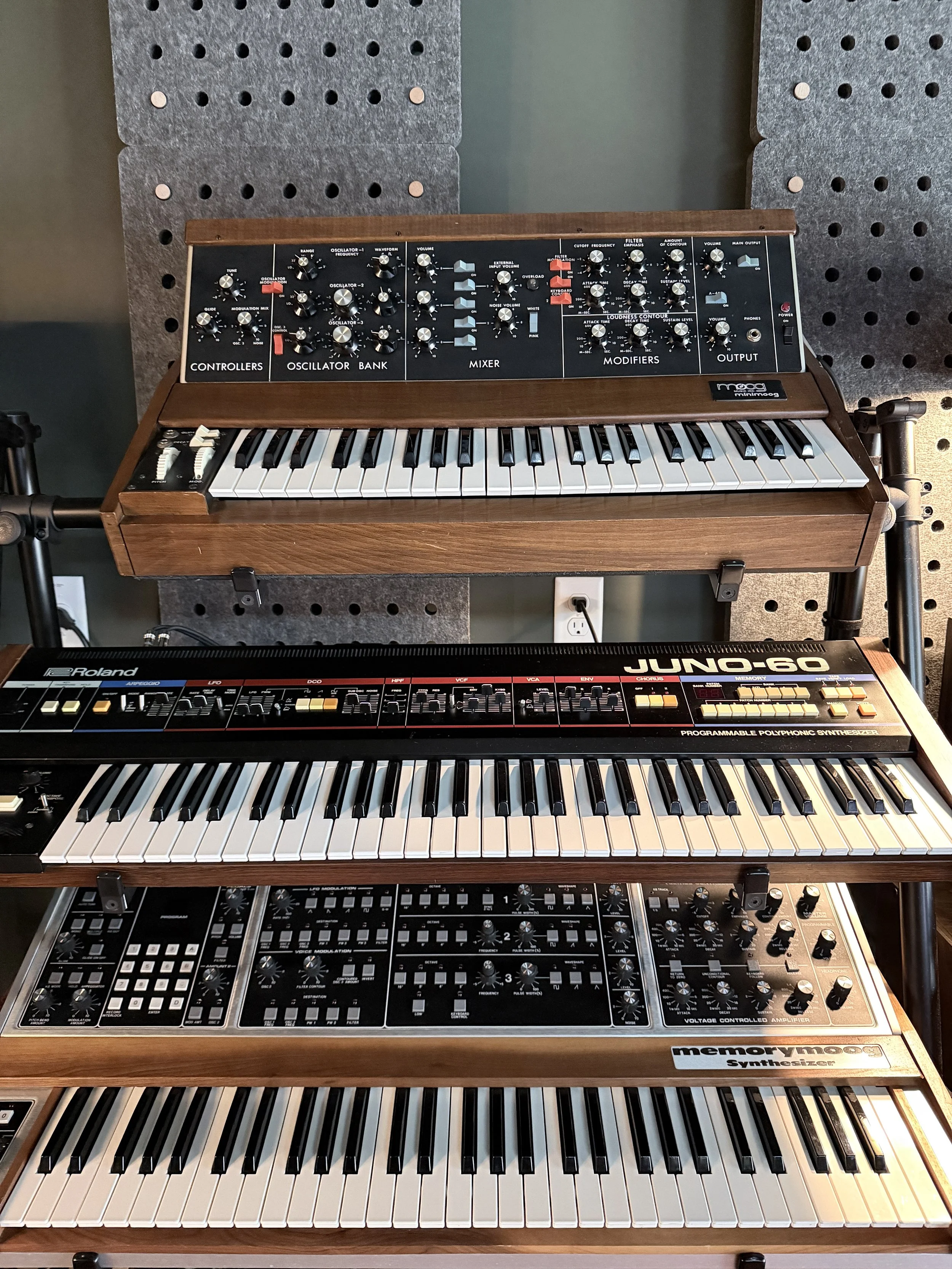
The Minimoog is where everything started for me in terms of vintage synthesis. It was the first real-deal vintage synth I bought — a significant investment that Hanna encouraged me to make when I was hesitating, which I think about every time I use it.
She was right, as she tends to be about these things.
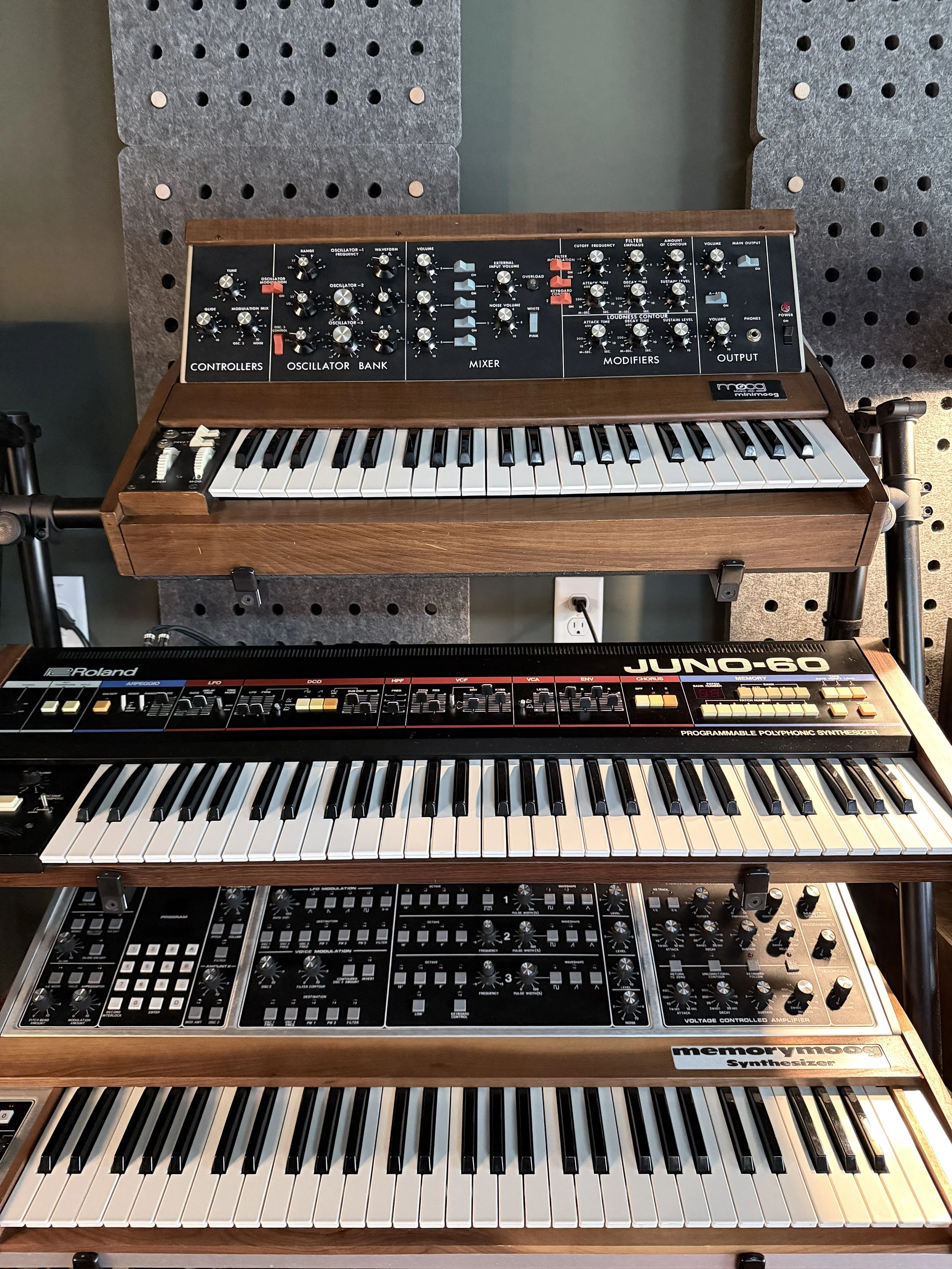
The Minimoog is a completely different instrument from the PS-3100 — focused where the PS-3100 is sprawling, monophonic where the PS-3100 is polyphonic, precise where the PS-3100 is unpredictable. But it shares the essential quality: warmth. A physical thickness in the low midrange that you feel in your chest when it's in the room at the right volume. It has been on nearly every Six Missing track I've ever made, often doing something you can't quite identify — a low texture, a barely-there foundation — that you'd notice immediately if it were removed.
Vintage Minimoogs are not cheap — they're collector's items at this point — and the reissued Minimoog Model D, when Moog was still producing it, was still a serious purchase. I took my time getting here too. This was not the first synth I owned. It was the one I worked toward after I already knew I was serious.
VST ALTERNATIVE: Arturia's Mini V is a software emulation of the Minimoog that a lot of working producers rely on. It's part of the Arturia V Collection, which gives you emulations of dozens of classic synths for a single annual subscription fee — or you can buy instruments individually. If I were starting today, this is where I'd spend my first fifty dollars.
The Guitar Named Hanna
Not every instrument in the Six Missing studio is a synthesizer.
My Fender Jazzmaster is the guitar I used to make drift — the first part of my record drift, sway — and it has become one of the most important instruments I own. I've named her Hanna, after the person who encouraged me to get her, because that felt right and because some instruments earn a name.
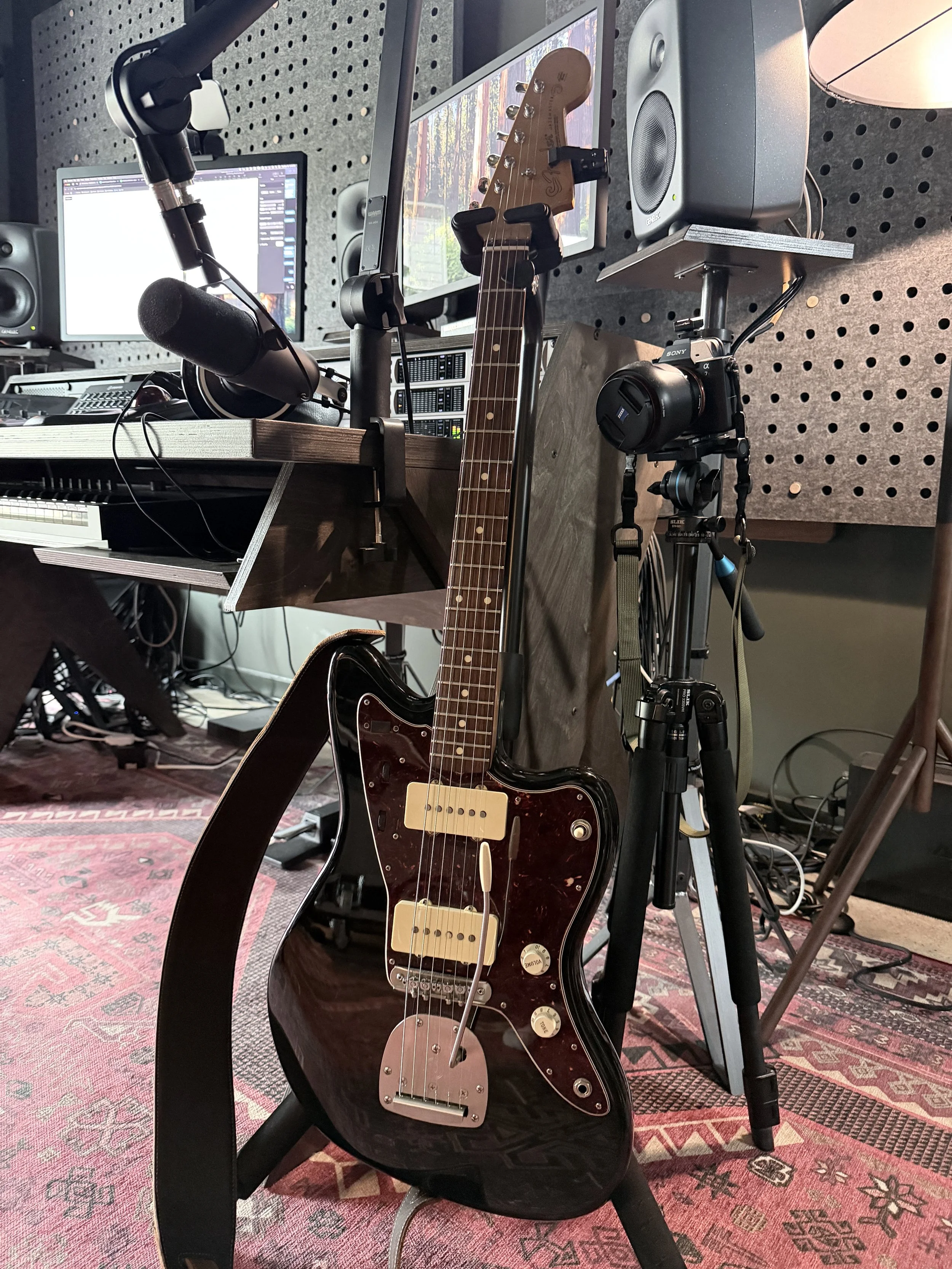
She started as a Classic Player body but I've modified her into something that feels entirely my own over time. Hand-wound Creamery pickups that give her a warmth and complexity the stock pickups couldn't touch. A Mastery bridge and trem for better intonation and stability. A new string tree, 500k pots swapped in for a better taper, and the rhythm circuit removed entirely because it was a solution to a problem I didn't have.
What came out the other side is an instrument that plays like it was built for exactly what I do with it. The mods accumulated over time — none of it happened at once. The pickups first, when I understood what I needed. The bridge later, after I'd lived with the intonation problem long enough. The pots last. This is how guitars actually evolve in working musicians' hands: not in one definitive purchase but in slow, considered layers.
If you're starting with guitar for ambient music, a used Squier or a budget Jazzmaster-style guitar will do the same fundamental thing. The Creamery pickups are a refinement, not a prerequisite. A guitar that sustains well and a delay pedal you love — or a free delay plugin — is the whole foundation.
The Pedal That Started Everything: EarthQuaker Devices Avalanche Run
I've told this story before but it bears repeating because it's true and because the pedal deserves the credit.
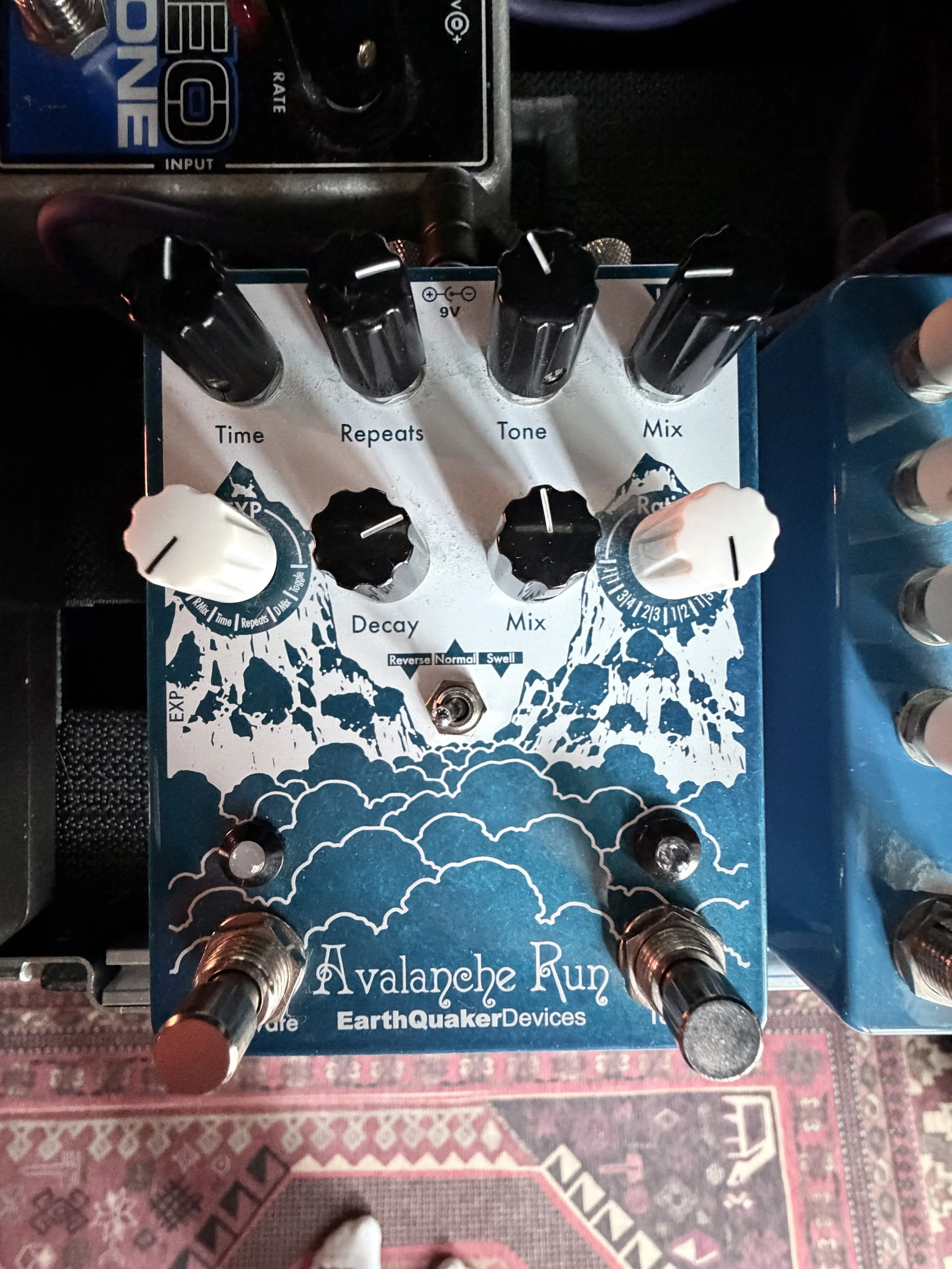
I bought the Avalanche Run at Main Drag Music in Williamsburg, New York. The person ringing me up looked at it and said, without particular ceremony, 'Hope you enjoy losing three days.' They were not wrong.
My first Six Missing release was built entirely from one long session of improvising with this pedal. Me playing, the pedal playing back at me, a call-and-response building into something I hadn't planned and couldn't have predicted. It creates a stereo delay with a depth and movement that feels genuinely alive — the echoes don't just repeat, they transform, they breathe, they interact with each other in ways that the dry signal alone never could.
The Avalanche Run is a real purchase — boutique pedals run in the $200–300 range — and it took me a while to pull the trigger on it even then. But of everything in this room, it might be the best argument for spending money on a physical object rather than a plugin. There's something about the hands-on interaction with a delay pedal — turning the knobs in real time while you play, feeling the music respond immediately — that changes how you perform. It turns a technical tool into a conversation.
FREE ALTERNATIVE: ValhallaSupermassive is free, full stop, and creates enormous delay and reverb spaces that will carry you a long way. For something closer to the Avalanche Run's character, the Valhalla Delay plugin is not free but is very fairly priced. Kilohearts Essentials also offers a solid free delay. Start there. The hardware pedal will still be there when you're ready for it.
Space and Depth: Meris Mercury7
Reverb is the atmosphere of ambient music. The space between notes. The sense of physical location — whether you're in a cathedral, a cave, a vast open room, or somewhere that doesn't exist in the physical world at all.
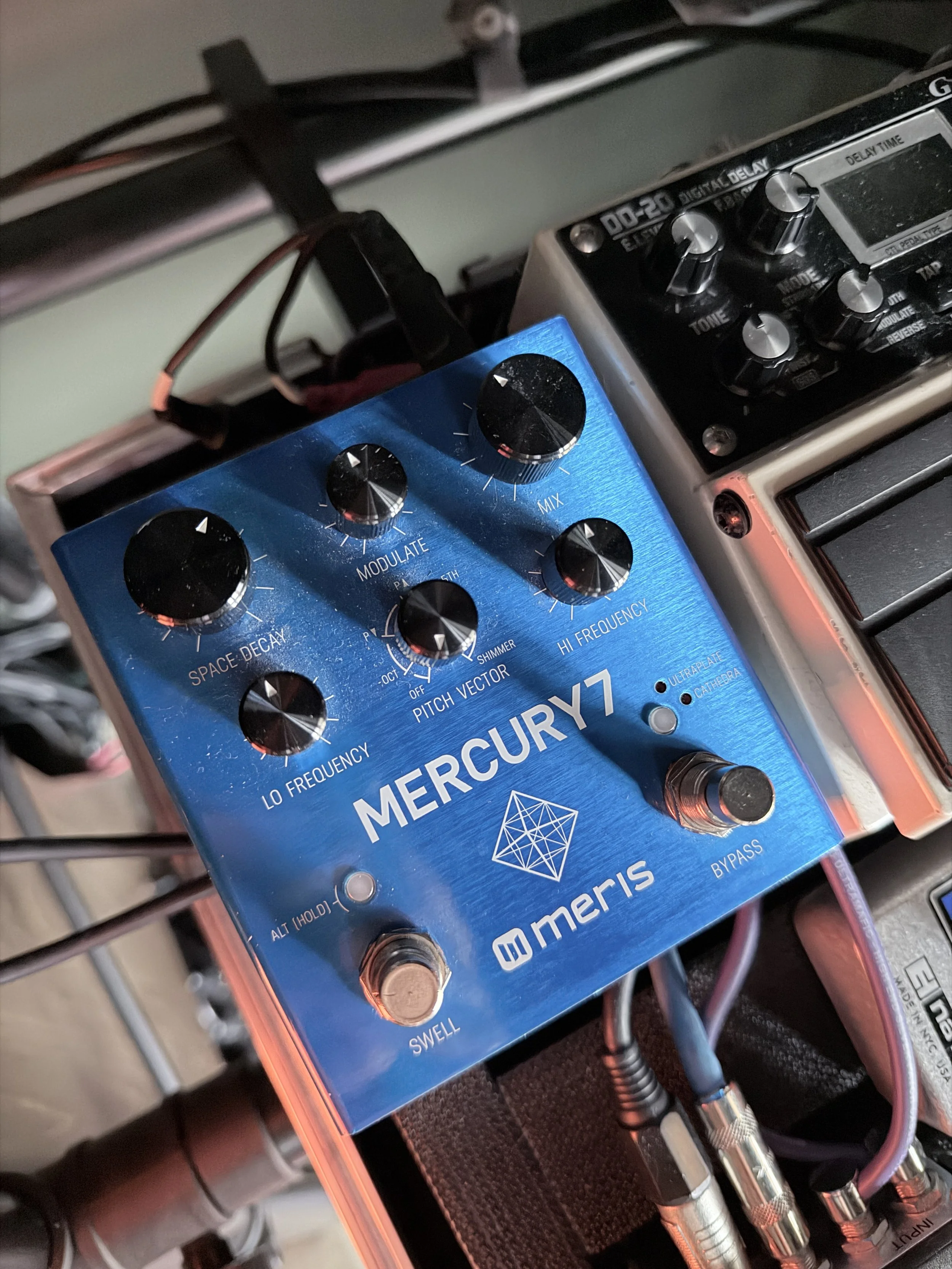
The Meris Mercury7 is named after a NASA spacecraft, which tells you something about what it's going for. The reverbs it generates are enormous without being muddy, detailed without being clinical. There's an algorithmic intelligence to how it handles the tail of a sound — the way a note decays into the space — that I find irreplaceable for guitar work.
This was also a purchase I sat on. Meris makes boutique-level pedals and prices them accordingly. I researched it for months before buying. And then I used it on drift within the first week of owning it, which tells you something.
FREE ALTERNATIVE: This is where I come back to ValhallaSupermassive. I know I've already mentioned it, but it genuinely belongs in this conversation twice. It creates exactly this kind of enormous, spacious reverb at zero cost. The Oril River reverb plugin is another free option with impressive depth. These are not compromises. They are legitimate tools.
The Imperfection Machines: Tape
I want to say something about tape, because I think it's the least understood element of the Six Missing sound and in some ways the most important.
Vintage tape machines — reel-to-reel units from the same era as the PS-3100, built when magnetic tape was the primary medium for recorded sound — introduce a set of qualities that no digital plugin has ever fully replicated to my ears. Flutter. Saturation. A gentle compression that feels like the sound is being held rather than processed. A warmth in the upper midrange that makes things feel slightly worn, slightly human, slightly like a memory rather than a document.
A perfectly clean recording of a synthesizer sounds like a synthesizer. The same recording run through a tape machine sounds like a feeling you had once about a synthesizer. The distance is subtle but it's real, and it is the difference between music that sounds like it was made and music that sounds like it happened.
I want my music to sound like it happened.
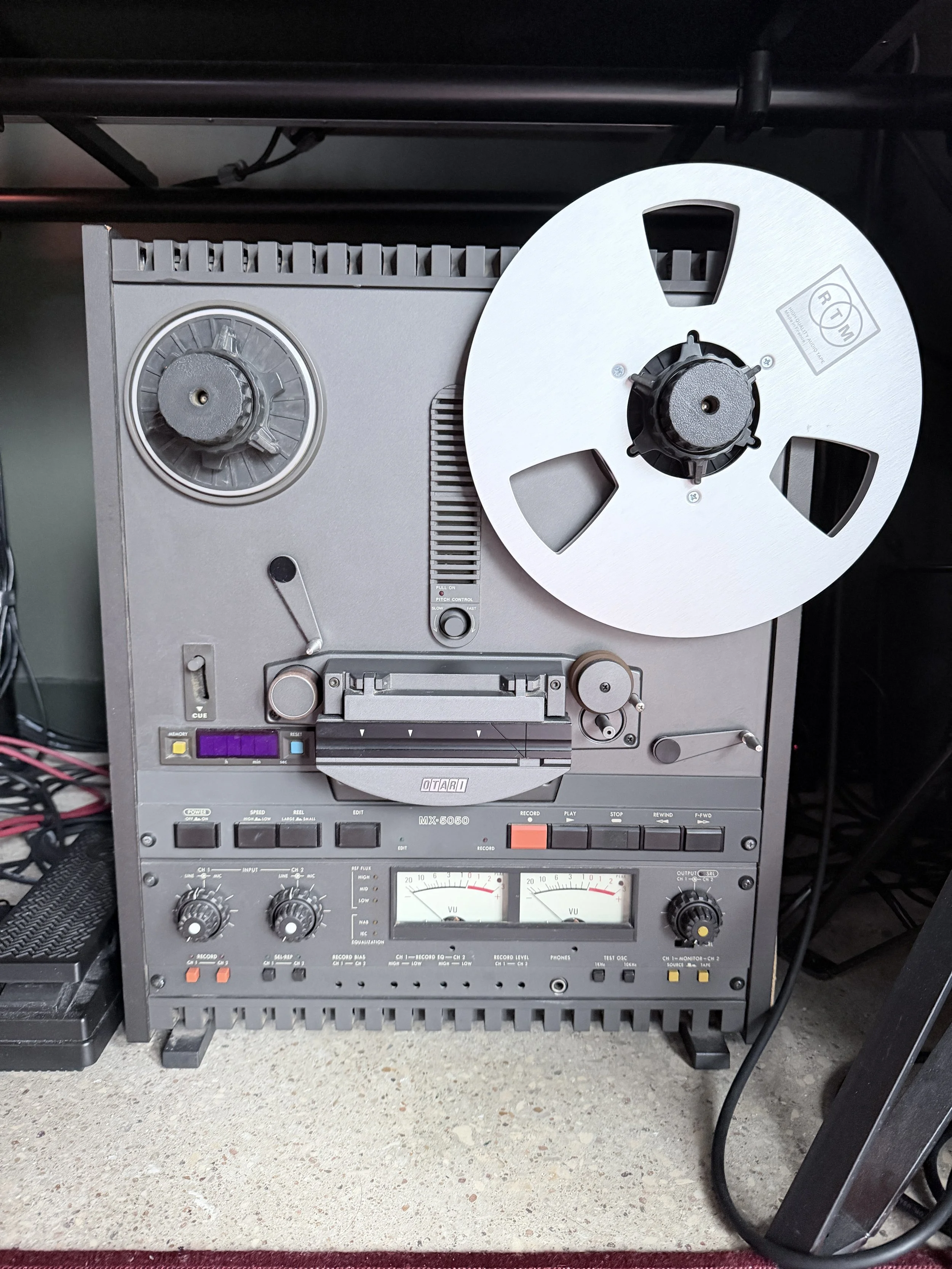
Vintage tape machines are also heavy, temperamental, expensive to maintain, and occasionally smell alarming. I love mine. I would not recommend starting here.
VST ALTERNATIVE: Tape emulation plugins have gotten genuinely good. IK Multimedia's TASCAM Tape Collection, Arturia's Tape MELLO-FI, and even the tape saturation options built into Ableton Live get you meaningfully closer to that warmth without the physical object. These are affordable starting points that capture the spirit, if not the full unpredictability, of the real thing.
What None of This Actually Matters Without
I said at the beginning that the gear is not the point, and I want to close there, because I mean it.
Every instrument I've described is a tool for accessing something that has to already be there — a genuine intention, a real emotional state, a question you're actually trying to answer. The PS-3100 is extraordinary, but it cannot make music that means something if the person playing it doesn't mean something. The Avalanche Run will generate beautiful textures all day, but textures in the absence of feeling are just decoration.
The reason I'm being honest about the timelines and the costs and the hesitation is not to make the hardware seem less desirable. It's to make the point clearly: the music I was making before I had any of this still mattered. The music you can make with a free DAW and a free reverb plugin matters. The instrument is not the source of the feeling. You are.
What I've learned over years of doing this is that the instruments that serve me best are the ones that resist me a little. That have opinions. That drift and breathe and occasionally do something I didn't ask for that turns out to be exactly right. You can find that quality in a thousand-dollar vintage synthesizer. You can also find it in a free plugin you've learned deeply enough that it surprises you.
Start where you are. Use what you have. The gear you dream about will still be there — and by the time you reach it, you'll know exactly what to do with it.
Everything else is just listening.
Why I Release a New Song Every New Year's Day
Every year, without exception, I release a new piece of music on January 1st.
No album cycle. No press run. No particular strategy behind the timing beyond the timing itself. Just a single piece of music, made quietly and released into the first hours of a new year, for anyone who wants to start the day with something intentional.
I've been doing it long enough now that people expect it. I get messages in late December — are you putting something out on New Year's? What's coming this year? — which still surprises me a little, in the best way. The idea that a ritual I started for entirely personal reasons has become something other people look forward to and build into their own New Year's Day is one of the things I'm most quietly proud of about this project.
But I should tell you where it actually came from. Because it didn't start as an artistic statement. It started as survival.
What January 1st Used to Mean
For a long time, New Year's Day was the hardest day of the year.
I've been sober for over eleven years now. Early sobriety has a particular relationship with the calendar — certain days carry a weight they don't carry for everyone else. Holidays especially. New Year's Eve, with its built-in permission to drink, with its cultural script about excess and celebration and letting go, was a night that required active navigation. And New Year's Day — the morning after, the first day of whatever was supposed to be different — that day had a particular texture to it. Heavy with the pressure of beginning again. Loaded with the question of whether this year would be the one where things actually changed.
Recovery teaches you, slowly and not always gently, that the calendar is not as powerful as you give it credit for. That change doesn't happen because a number rolls over. That the version of yourself you're trying to become doesn't materialize because you wrote a resolution on a piece of paper and meant it very sincerely at the time.
What it does teach you — if you're paying attention, and sobriety has a way of making you pay attention — is the difference between a resolution and an intention.
Resolutions vs. Intentions
A resolution is a declaration. I will do this. I will stop doing that. It lives in the future tense, in the gap between who you are and who you think you should be, and it carries with it the implicit possibility — the near-certainty, statistically speaking — of failure.
An intention is different. An intention is a direction, not a destination. It's not I will be this by December 31st. It's I am orienting myself toward this. I am pointing myself in this direction and I am going to keep doing that, imperfectly and with interruptions, for as long as it matters.
The distinction sounds subtle. It isn't. One sets you up to fail and feel bad about it. The other invites you to begin again, as many times as necessary, without the accumulated weight of every previous attempt.
The music I release on January 1st is always built around this idea. Not a fanfare. Not a countdown. Not the kind of energy that announces a fresh start and implies that whatever came before was insufficient.
Just a breath. A single sustained note of beginning. Something that says: here we are, in the first quiet hours of a new year, and that is already enough.
How Light, Again Came to Be the Name
The 2026 edition of the tradition is called Light, Again.
That title is doing a few things at once that I want to unpack, because I chose every word of it carefully.
Light — not as a metaphor for happiness or success or any of the things we're culturally pressured to optimize for in January. Light as in illumination. As in what happens when you stop bracing against the dark and let your eyes adjust. As in the particular quality of a January morning when the sun comes back a few minutes earlier than the day before and you notice it, and it means something.
Again — because this is not the first time. The light has come before. It will come again. It always comes again. The tradition itself is built into the word: this is one iteration of something that repeats, that has always repeated, that will go on repeating long after any particular year becomes relevant.
Again also carries something about renewal that feels more honest to me than newness. I am not a new person on January 1st. I am the same person I was on December 31st, with all the same accumulated history and habits and ongoing projects and unresolved questions. But something is being offered — by the calendar, by the light, by the act of making and releasing a piece of music into the first morning — and I want to receive it. I want to be present for it.
That's what Again means. Not starting over. Continuing, with intention.
Why I Make It Rather Than Just Listen to It
People sometimes ask why I release music on New Year's Day rather than just putting on a playlist and observing the occasion quietly, the way most people do.
The honest answer is that making something is how I show up for things that matter to me.
I am a sound designer and a mixer by trade — my professional life is spent in service of other people's creative visions, which I love and which I'm good at. Six Missing is the place where the creative impulse is entirely mine. No brief, no client, no deliverable. Just whatever needs to come out and whatever form it wants to take.
Releasing something on January 1st is an act of commitment to that. A declaration — not a resolution, note — that this work matters, that this practice continues, that I am still here making things for reasons that have nothing to do with metrics or timing or whether the algorithm thinks it's a good release window.
It's also an offering. I make it and I put it out into the world and I don't know exactly who will find it or what they'll do with it. Someone somewhere will be listening to it alone in a quiet house while the rest of the world sleeps off the night before. Someone will put it on during a long drive to visit family. Someone will hear it and feel, for a few minutes, that the year beginning outside their window is something worth moving toward.
I find that idea genuinely moving. That a piece of music made in a studio in Austin on some ordinary Tuesday in December will be someone else's first sound of a new year.
That's the tradition. That's why it continues.
What Intention Actually Looks Like in Practice
I want to say one more thing about intentions, because I think the word gets softened into something passive — a wish, a hope, a vague leaning-toward — that isn't quite what I mean.
An intention is active. It requires attention. It means checking in regularly with what you said you were orienting yourself toward and asking honestly whether your days reflect that. It means being willing to course-correct without drama when they don't. It means holding the direction loosely enough that life can happen inside it, but firmly enough that the direction still means something.
Eleven years of sobriety is, among many other things, an eleven-year practice of intention. Of waking up each day and orienting toward a version of life that I chose, that I keep choosing, that doesn't maintain itself automatically.
The music I make on January 1st is a small version of that. A single morning's worth of orientation. A sound that says: this is where I'm pointing. This is the quality of attention I want to bring to the year ahead.
Light, again. Every time.

Music for Grief: How Ambient Sound Holds What Words Can't
I want to tell you about Nala.

She was my cat — my companion, my studio mate, my entire universe for the years she was with me. She had diabetes, which meant years of careful management: insulin, blood glucose checks, the particular vigilance of loving something that needs you in a very specific and daily way. Hanna and I learned more about feline endocrinology than we ever expected to know. We gave her injections twice a day without blinking. We adjusted her diet, tracked her numbers, advocated hard for her at every vet visit. She was worth every bit of it and more.
When she passed, the studio went quiet in a way that had nothing to do with sound.
I'd been in that room with her for years — she had a spot, the way cats always have a spot, somewhere warm and elevated where she could keep an eye on things. On me. I'd look over mid-session and she'd be there, watching whatever I was doing with that particular quality of feline attention that manages to be both completely indifferent and deeply present at the same time. I didn't realize how much of my sense of not being alone in the studio came from her until she was gone and the room felt like a completely different place.
Hanna and I grieved her together. That matters — loss shared is still loss, but it is a different kind of weight when someone else in the room knew her too, loved her too, feels the same absence in the same spaces. We were a team in caring for her. We were a team in losing her.
Grief is strange. It doesn't announce itself cleanly. It arrives in the wrong moments, triggered by the wrong things — a spot on the couch, a food bowl you haven't moved yet, the particular silence of a room that used to have a small warm presence in it. It's nonlinear and irrational and it doesn't care about your schedule or your deadlines or the fact that you have work to do.
Music was there for us in that time. Specifically the kind of music I make, and the kind I turn to when language has nothing useful left to offer.
Why Grief and Words Don't Get Along
There's a reason the first thing most people reach for when someone they love dies is not a book or a podcast or a conversation. It's music.
Language is a tool for precision. For naming, categorizing, explaining. It works beautifully when the thing you're trying to express has edges — a specific thought, a logical argument, a story with a beginning and end. Grief doesn't have edges. Grief is the feeling that something has been removed from the world that cannot be replaced or explained or argued with. It exists in the body before it exists in the mind. It lives below the level of words.
Music lives there too. And ambient music lives there most of all.
There are no lyrics to follow, no narrative to track. No one is telling you how to feel or walking you through what the emotion means. There's just sound — texture and space and time passing slowly — and whatever you bring to it gets held by the music rather than redirected by it. You don't have to translate your grief into language and then translate it back. You can just be inside the sound and feel what you feel and let it move at its own pace.
That's a rare thing. And in the weeks after Nala passed, it was the thing we needed most.
What the Music Actually Does
I've thought a lot about the mechanics of this — why music helps in grief when so many other things don't, or can't, or only help partially.
Part of it is physiological. Grief is held in the body — in the chest, the throat, the jaw, the places where we physically brace against pain. The nervous system is doing something specific during grief, cycling between activation and collapse, between the sharp edges of a new loss and the strange flatness that follows. Slow, low, continuous music intervenes in that cycle in a quiet way. It gives the nervous system something steady to orient around. Something that says: the world is still moving, still breathing, still here.
But there's something beyond the physiological that I find harder to articulate and more important.
Ambient music, at its best, doesn't try to resolve. It doesn't build to a climax and release you on the other side. It holds a state — it exists inside a feeling without trying to move you out of it. For grief, that quality of non-resolution is not a flaw. It's the whole point. Grief doesn't resolve. It transforms, slowly, over time, into something you carry differently. Music that understands that — music that isn't trying to cheer you up or walk you through stages or land you somewhere tidier than where you started — that music is a companion in the truest sense.
It sits with you. That's all. That's everything.
The Records That Were There
Without Mindis the record I made in the most open, most psychologically unguarded state of my career — improvised scores for a ketamine-assisted therapy process, nothing planned, nothing fixed afterward. That quality of openness, of having nowhere to hide, is in the music. People use it for all kinds of things. But the messages I receive from people who listened to it in grief are the ones that stay with me longest.
Gentle Breath came from a different kind of hard season — the slow, sustained weight of burnout and anxiety that had been accumulating for longer than I'd admitted to myself. It's quieter than almost anything else I've made. More space, longer decays, less happening. I've come to think of it as music that knows when to stop talking. Which is maybe the most useful quality anything can have when you're in pain.
Both records were made from real emotional places. I think that's why they work for grief. Not because they were designed for it — they weren't — but because they were made honestly, and honesty has a quality that the grieving can feel. You can't fake your way into that frequency. Either the music came from somewhere real or it didn't. And people who are hurting are very, very good at knowing the difference.
A Few Things Worth Knowing
Grief is not a problem to be solved, and music is not a solution. I want to be clear about that. If you are in the acute pain of a fresh loss, please reach toward the people in your life, toward professional support if you need it, toward whatever holds you. Music is a companion on that road, not a substitute for the road itself.
But as a companion — something to sit with you in the hard hours, something to make the room feel a little less empty, something that asks nothing of you and offers presence in return — it is genuinely, practically, meaningfully useful. I have experienced this myself. I have heard it from hundreds of listeners. It is real.
The specific loss doesn't matter to the music. Nala was a cat. You might be grieving a parent, a partner, a friendship, a version of yourself you had to leave behind. Grief is grief. The music doesn't ask you to justify the size of your loss before it agrees to be present.
It just holds the room.
The same way she used to.
The History of Ambient Music: From Eno's Airport to the World You Hear Today
I discovered ambient music on a subway platform in Manhattan, running a fever, trying not to fall over.
This was pre-pandemic, back when working through a cold was just what you did — you showed up, you pushed through, you apologized to your coworkers with your eyes. I was working at a studio in SoHo at the time, and I had finally hit the wall where pushing through was no longer physically possible. So I packed up, headed for the subway, and in that particular fog of fever and fluorescent light and the general chaos of a New York City platform at rush hour, I did something I don't entirely remember deciding to do.
I put on Tangerine Dream's Phaedra.
I'd never really heard them before — or more accurately, I'd heard them without knowing it. Phaedra was the soundtrack of Risky Business, the one playing when Tom Cruise slides across the floor in his socks. That was my entire reference point. I figured it would be a good soundtrack for the commute. I had no idea what was about to happen.
The train came. I got on. And somewhere between Canal Street and wherever I was going, I stopped being on the subway. The fever helped, probably — everything was already slightly unreal, slightly detached from its usual weight. But the music did something to that state. It didn't fill the space so much as expand it. The rhythmic sequencers cycling slowly beneath those long, hovering synth pads, the whole thing moving like a tide rather than a song. I arrived somewhere I couldn't name. I didn't want to come back.
That was the beginning. That was the moment I understood, in my body before I could articulate it, what this music was actually for.
But the Story Starts Much Earlier
Ambient music as a named genre has a specific origin, and it belongs to Brian Eno — though he'd be the first to tell you he didn't invent the underlying idea, just gave it a useful label.
The real conceptual seed was planted by a French composer named Erik Satie in 1917. Satie wrote what he called musique d'ameublement — furniture music — pieces designed to be played during social gatherings not to be listened to, but simply to exist in the room. To color the atmosphere the way wallpaper colors a wall. He reportedly got irritated when audiences sat down and paid close attention. That wasn't the point. The point was presence without demand — sound that occupied space without asking to occupy attention.
That idea sat mostly dormant for sixty years. Then Brian Eno had a car accident.
The year was 1975. Eno was recovering in bed when a friend visited, put on a record of 18th century harp music, and left without turning the volume up properly. The music was barely audible — more suggestion than sound, blending with the rain outside the window. Eno was too weak to get up and fix it. So he lay there, listening to something hovering at the edge of perception, and had what he later described as a revelation: this was a completely different relationship to music. Not active listening. Something more like breathing. The music was simply there, changing the quality of the air without demanding anything in return.
That experience became Music for Airports in 1978 — four pieces of slow, looping, largely textureless music designed for public spaces. Not elevator music. Not background noise. Something genuinely new. Eno coined the term ambient, and a genre was born.
What Was Happening in Japan
While Eno was working in England, something parallel and in many ways more philosophically sophisticated was developing in Japan.
Japanese composers in the late 1970s and early 1980s were developing what they called Kankyo Ongaku — environmental music — rooted in a distinctly Japanese aesthetic concept called ma. Ma is the idea that negative space is not absence but presence — that the gap between things carries as much meaning as the things themselves. Silence not as emptiness but as a compositional element with its own weight and intention.
Hiroshi Yoshimura's Music for Nine Postcards, released in 1982, is one of the defining works of this tradition — synth melodies so sparse and carefully placed they feel like light through blinds rather than a conventional piece of music. Midori Takada's Through the Looking Glass is stranger and more hypnotic, percussion cycling slowly like something geological. These records were not widely known outside Japan for decades. When they were finally reissued and discovered by a new generation of listeners, the response was immediate and overwhelming. People recognized something in them that felt ancient and necessary.
That philosophy of negative space — the idea that silence is part of the composition, not a gap in it — lives in my own music now, even when I'm not consciously reaching for it.
Tangerine Dream and the Electronic Wilderness
Back on that subway platform: what Tangerine Dream were doing on Phaedra in 1974 was something that didn't have a name yet.
The Berlin School — Tangerine Dream, Klaus Schulze, Cluster, early Kraftwerk — were using synthesizers not as tools for mimicking acoustic instruments but as tools for generating entirely new sonic environments. Long, evolving sequences. Textures that shifted so slowly the movement only became apparent in retrospect. Music that felt less like a song and more like a place you could enter and inhabit.
Phaedra specifically — that opening sequence of arpeggiated synth rising out of a low drone, unhurried, going somewhere and nowhere simultaneously — is still one of the most transporting pieces of recorded music I know. I understand now why it caught me off guard on that platform. It wasn't asking me to listen. It was asking me to go somewhere. And in my fever-softened state, I went.
These were the records that proved the synthesizer wasn't just a novelty or an orchestral shortcut. It was its own instrument with its own emotional vocabulary. That lineage runs directly through everything I make.
A Record That Found Me Later
There's another piece of music I need to mention here, because it was formative in a quieter way.
Ami Shavit's In Alpha Mood was one of the early records that helped me understand what ambient music could do on a more intimate, almost psychological level. Where Tangerine Dream transported you outward — into vast electronic space — In Alpha Mood worked inward. Softer, more patient, designed to slow the brain into that particular state between full wakefulness and something deeper.
I haven't been able to find it on streaming services in years, which is one of those small music world mysteries that genuinely bothers me. It seems to have quietly disappeared from the platforms.
Note to self: go find it on Discogs.
If you know it, you know why I'm bothered. If you don't, I'd encourage you to look — Discogs is where I do most of my hunting for records that have quietly slipped through the cracks of the streaming world, and it is remarkable what turns up there if you're patient enough to go looking. I could talk about Discogs and vinyl collecting for an embarrassingly long time. More on that another time — because it deserves its own post entirely. For now: go find In Alpha Mood. Good luck to us both.
The Neoclassical Wave and Where We Are Now
The genre that Satie pre-figured, Eno named, the Berlin School electrified, and the Japanese environmental composers deepened went through a long period of existing mostly at the margins — appreciated by musicians and sound designers and a dedicated community of listeners, but largely invisible to mainstream culture.
That changed, gradually, with a generation of artists who collapsed the boundary between classical and electronic music in ways nobody had quite managed before.
Olafur Arnalds, working out of Iceland, brought chamber strings and ambient electronics into a conversation so fluent it became impossible to say where one ended and the other began. Nils Frahm treats the piano as a synthesizer and synthesizers as pianos, his recordings alive with the sound of hammers and pedals and breath — the physical presence of a human being in a room. Max Richter's Sleep, an eight-hour piece designed to be listened to overnight, was one of the most quietly audacious artistic statements of the last twenty years. I covered one of its movements as a tribute. It deserved one.
And then there's the generation working now, in every corner of the world, making music that resists easy categorization and finds its audience through streaming algorithms and word of mouth and the particular loyalty of listeners who find something that actually does something for them and can't stop telling people about it.
Which is, I suppose, how most of us found this music in the first place.
A subway platform. A sick day. A record chosen almost at random.
And then: another dimension, entirely.
Ambient Music for Babies and New Parents: A Softer Way Through the Night
My sister Kelly sent me a photo once that I still think about.
No caption, just the image: my nephew settled into his spot, and right there beside him, her phone screen clearly visible — one of my albums playing. She didn't need to explain it. The picture said everything. This is what we're using. This is what helps.
But the moment that really got me happened a few Christmases ago. We were in the car together and my nephew was escalating — that particular brand of toddler distress that has no obvious cause and no obvious solution. Someone put my music on. And I got to sit there, in real time, and watch his entire mood shift. The tension leaving his body. The crying slowing. The settling.
I don't have the words for what that felt like, honestly. I've had music placed in films and on billboards in Times Square, and none of it hit me the way that car ride did. Because it was just real. Just a small person and a piece of sound I'd made and a moment that actually worked.
I've thought about both of those moments a lot since then. And they sent me down a genuine rabbit hole of thinking about why ambient music works so well for babies — and honestly, maybe even more importantly, for the exhausted human beings trying to get them to sleep.
What a Baby's Nervous System Is Actually Doing
A newborn arrives in the world having spent nine months in an environment that was anything but silent. The womb is surprisingly loud — a constant wash of blood flow, heartbeat, muffled voices, the rhythmic sound of breathing. It's warm and close and constant.
And then suddenly: the world. Light, cold air, new smells, sounds with hard edges, silence that's actually more alarming than comforting because silence means the familiar has stopped.
This is worth understanding if you're a new parent trying to figure out why your baby seems to settle more easily with some kind of sound playing. It's not that the baby needs entertainment. It's that the baby needs the world to feel a little less abrupt. A little more like something familiar. A soft, continuous, gently moving sound is probably the closest thing the outside world has to offer to what they already know.
Ambient music — specifically the kind without hard edges, without sudden dynamic shifts, without the kind of melodic hooks that pull attention — fits that description pretty naturally. It doesn't startle. It doesn't resolve and then stop. It simply continues, warmly and without urgency, for as long as you need it to.
Why It's Different From White Noise
White noise has become the go-to recommendation for baby sleep, and it works — to a point. The mechanism is similar: a consistent sound that masks environmental noise and gives the nervous system something predictable to process. Nothing wrong with that.
But white noise is a blank. It has no warmth, no movement, no sense of human presence. It fills the room the way a refrigerator hum fills a room — functionally, without feeling.
Ambient music, made by a human being with genuine emotional intent, does something additional. It carries warmth. It has texture that shifts almost imperceptibly, the way a living thing shifts. There's a reason lullabies have existed in every human culture across recorded history — we have always known, intuitively, that music made by people carries something that pure noise doesn't. A quality of presence. Of someone being there.
I think about this when I make music. Not specifically for babies, obviously — but the impulse is the same. I want the listener to feel held by the sound. To feel, even subconsciously, that something alive made this and that something alive is in the room with them.
That quality doesn't disappear when the listener is six weeks old. If anything, it matters more.
And Then There's the Parent
Here's the thing nobody tells you enough about new parenthood, from what I understand: it is an extended exercise in running on empty while remaining somehow functional.
The baby needs to sleep. You need the baby to sleep. You also need to sleep, which is the thing you are least likely to get. The mental load of those overlapping needs — the vigilance, the exhaustion, the emotional intensity of caring for something so completely dependent — is its own kind of weight.
Ambient music doesn't fix any of that. But it does something quiet and real: it changes the quality of the room. It softens the edges of the night. It gives your own nervous system something to rest against while you're doing the work of settling another nervous system that doesn't know yet how to settle itself.
I've heard from parents who say they started playing ambient music for their baby and ended up needing it just as much. That doesn't surprise me at all. The music doesn't know how old you are. It just does what it does — holds the space, slows the breath, makes the room feel a little more like somewhere it's okay to rest.
And at 3am, with a baby on your chest and a day that starts again in four hours, okay to rest is everything.
A Few Practical Things That Actually Help
Start before the routine begins, not during it. Put the music on ten or fifteen minutes before you start the wind-down — bath, feeding, the quiet dark of the bedroom. Let the room change before you're asking the baby to change with it.
Keep the volume lower than feels natural. It should be present without being noticeable — a quality of the room rather than a thing in the room. If you can clearly identify it as music playing, it's slightly too loud.
Let it continue after they fall asleep. The transition from sleep to deep sleep is where a lot of babies wake — a consistent sound environment helps them move through that transition without a sudden silence triggering a startle.
And let it work on you too. This is not a small thing. You're not just managing the baby's nervous system. You're also managing yours. Give yourself permission to be soothed by the same thing.
What I'd Recommend Starting With
My MEDITATIVE WIND DOWN playlist is where I'd point a new parent first, without hesitation.
It's the most spacious, most unhurried thing I've made. It moves at the pace of breath rather than the pace of a clock.
It was made with a particular quality of quiet intention that I think translates across ages and circumstances. My nephew settles to it in a Christmas car ride and at bedtime.
The music doesn't know the difference. It just holds the room.
Which is, I think, the most honest thing I can say about what I'm trying to make. Something that holds the room. Something that makes whatever night you're having a little softer.
For you. For the small person on your chest. For anyone who needs it.

Going Furthur: On Tom Wolfe, The Grateful Dead, and Mourning Routine
What Tom Wolfe, The Grateful Dead, and a School Bus Taught Me About Making Music
I just finished reading The Electric Kool-Aid Acid Test by Tom Wolfe, and I can't stop thinking about it. The book chronicles Ken Kesey and the Merry Pranksters — a group of writers, artists, and seekers who, in the mid-1960s, painted a school bus in psychedelic colors, named it Furthur, and set out across America with the goal of, well, going further. Further into experience. Further into art. Further into whatever was on the other side of the next bend in the road.
I bought this book back in high school. I made it about a hundred pages in before bailing. The themes, the writing style, the life experiences Wolfe was describing — none of it connected. I shelved it and forgot about it.
Years later, with more life in the experience bank, a brief encounter with psychedelics in my past, and a more open mind, I picked it up again. And this time it absolutely floored me.
A Different Kind of Writing
Wolfe's prose is its own kind of trip. What's come to be known as "gonzo" journalism — that immersive, first-person, breathless style — really does feel like being pulled along by someone running ahead of you, looking back over their shoulder and shouting "come on, come on, keep up!" The pacing mirrors the psychedelic experience itself: fragmented, kaleidoscopic, somehow holding together even when it shouldn't.
What struck me most was how elegantly Wolfe wove together so many tales and perspectives into one cohesive journey. Dozens of characters, dozens of scenes, all moving at the speed of a bus barreling down a desert highway with Cassady at the wheel — and yet by the end, I really did feel like I'd been on that bus with Kesey and the Pranksters. That kind of writing isn't just descriptive. It's transportive. It puts you inside something.
The Grateful Dead Connection
Part of what brought me back to Electric Kool-Aid was a recent deep dive into The Grateful Dead and their history (more on that in a future blog — there's a lot to say). What I hadn't fully appreciated until reading Wolfe's book is how foundational the Pranksters were to The Dead's early evolution. The Dead played most of the Acid Test parties Kesey and the Pranksters hosted in the mid-60s. Some music historians argue that those gatherings are how The Dead actually became The Dead — long-form, improvisational, willing to follow a song wherever it wanted to go, comfortable with not knowing what was coming next.
That's a powerful idea for any artist. The Dead didn't become The Dead by deciding what they were going to be and executing on it. They became The Dead by showing up to the Acid Tests, plugging in, and seeing what happened. The form found them through the practice.
Going Furthur
The Pranksters had a phrase painted across the front of their bus: "Furthur." Misspelled on purpose. A direction more than a destination.
That word has stuck with me since I finished the book, because it describes something I recognize in my own creative life. With Six Missing, I try to continually push into new sounds, new methods, new approaches to crafting work. It's very unusual for me to do anything the same way twice. Each release is a chance to explore a different corner of what's possible — different textures, different emotional registers, different production philosophies. Sometimes I don't know where a song is going until I'm already in the middle of it. Sometimes the best material comes from following an idea past the point where I would've normally stopped and turned back.
Reading about the Pranksters made me realize that sense of restlessness isn't a bug. It's the whole point. You go furthur because the interesting stuff is past the edge of what you already know how to do.
In that way, I feel like I would've been welcomed on the bus. (I sometimes wonder what my nickname would've been — Echo Echo, maybe?)
A New Exploration: Mourning Routine
That sense of going furthur is exactly the spirit behind my latest single, Mourning Routine. It's a song I wrote in a headspace not entirely unlike the one Wolfe captures in Electric Kool-Aid — interested in what happens when you sit with discomfort instead of running from it, when you let an idea unspool rather than forcing it into a shape you already recognize. Sonically, it's a step into territory I haven't worked in before, which is becoming a pattern I'm proud of.
Mourning Routine is the leading track off my new EP, Passed Self, out June 5th. The EP as a whole is about the versions of yourself you've outgrown — the routines, the patterns, the people you used to be that you've quietly left behind. It's a record about transition, and about the strange grace of recognizing where you've been from the vantage point of where you are now.
I think there's a thread that connects all of this — Kesey and the Pranksters, The Dead at the Acid Tests, the act of going furthur, and the small, private process of writing songs that move you somewhere new. It's all about being willing to leave the version of yourself you know behind. To get on the bus, even when you don't know where it's going.
Read Anything Good Lately?
If you're a reader, I'd love to hear what's been on your nightstand. I just started Dungeon Crawler Carl and I'm excited to spend more time with it. And if you've read Electric Kool-Aid — or you've been meaning to — I'd love to hear what you made of it.
You can listen to Mourning Routine now. Passed Self arrives June 5th.
Thanks, as always, for being here.
How I Make Ambient Music: The Studio, the Gear, and the Space Between Notes
People assume that ambient music must be the easiest kind to make.
No lyrics to write. No chord progressions to nail. No drummer to book. Just... press a key and let it ring, right?
I understand why it looks that way from the outside. And I won't pretend it has the same kind of technical demands as, say, a string quartet arrangement or a jazz improvisation. But making ambient music that actually does something — that genuinely changes the quality of a room, that gives a listener's nervous system something to rest against — that's a different kind of hard. It's the hard of restraint. The hard of knowing when to stop. The hard of trusting that the thing you just played, imperfect and unresolved as it is, is already what it needs to be.
That last one is the hardest thing I've learned in years of doing this.
Here's how the music actually gets made.
It Starts Before I Touch Anything
There's a ritual to getting into the studio that I don't talk about much but that matters more than almost anything in the signal chain.
Before a single note is played, before a fader is moved, I almost always begin with scent. Incense, usually. Sometimes Palo Santo. I let the smoke move through the room while things warm up — the synths need time, the tape machines need time, the room itself needs time. I'm not being precious about it. It's just that I've noticed, over years of paying attention, that this small act of intention changes how I enter the session. The air shifts. Something in me shifts with it.
Ambient music is made in a particular state of mind — or more accurately, a particular state of body. Relaxed but present. Open but not scattered. The ritual helps me get there before I start asking the instruments to go there first.
The Instruments That Actually Matter
I have a studio full of gear. More than I need, probably. But the things that show up on nearly every Six Missing recording are a surprisingly short list.
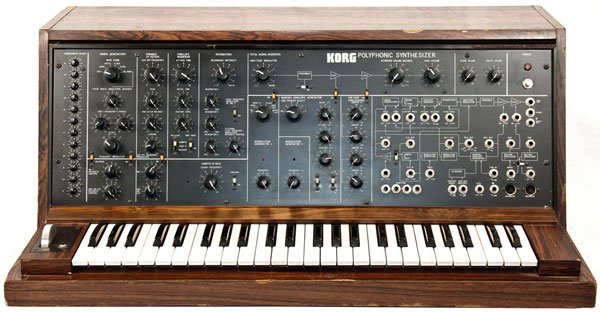
The Korg PS-3100 is first, always. It's a fully polyphonic analog synthesizer from 1977 — enormous, heavy, temperamental, and completely unlike anything else I've ever played. Each note has its own dedicated filter and tuner, which means every chord you play has its own internal weather system. It drifts. It breathes. It sounds different every single time I turn it on, and I have genuinely never gotten a sound out of it that I couldn't use for something.
I found it after watching Olafur Arnalds talk about his own PS-3100 in an interview — the way he spoke about it, almost poetically, like it was a collaborator rather than a tool, made me realize I needed one. The search took months. When I finally found it, I had it put on a plane and picked it up at the airport like cargo that needed careful handling. Which it did.
The Moog Minimoog is the other cornerstone. It's a completely different instrument — focused where the PS-3100 is sprawling, precise where the PS-3100 is unpredictable — but it has the same essential quality: warmth. A thickness in the low mids that feels almost physical when it's in the room. It's been on nearly every Six Missing track I've ever made.
For drift — the first part of my new record drift, sway — the central instrument was neither of those. It was my Fender Jazzmaster, which I've named Hanna, after the person who encouraged me to get it. It started as a Classic Player body but I've modified it into something that feels entirely my own: hand-wound Creamery pickups, a Mastery bridge and trem, a new string tree, 500k pots swapped in for a better taper, and the rhythm circuit snipped out entirely. Plugged into a Boss DD-20 on 16-second looper mode, run through delay pedals and tape machines and a Meris Mercury7 reverb that makes things sound like they're happening somewhere slightly outside of this world.
The Single Take
This is the part of my process that people find strangest when I explain it, and also the part I'm most certain about.
I don't do overdubs. Or more precisely — I try very hard not to. Most of what you hear on a Six Missing record happened in one take, in real time, with no going back to fix anything.
For drift, every track started the same way. I'd pick up Hanna, get the looper running, and begin playing. No plan. No chord chart. No idea where it was going. I'd follow the sound wherever it wanted to lead — adding layers as they felt right, letting the delay lines build up their own internal logic, playing over and around what had already accumulated in the loop until the thing had its own shape.
And then I'd stop. When it felt complete, I stopped. Not when it was perfect — it was never perfect — but when it felt like it had said what it came to say.
That decision, to stop at the right moment rather than keep fixing, is maybe the central discipline of the whole practice. It's the discipline of trusting the take. Of believing that the accidental note that happened because your finger slipped is actually the right note, because it's the honest note. The one that was there in the room that day.
I've come to think of it as the difference between music that was made and music that happened. Most of what I love most about the records I've made is in the things that happened.
What the Effects Actually Do
The gear that shapes the sound of Six Missing most is not the instruments themselves — it's what happens to the sound after it leaves them.
Reverb is the primary tool. Long, lush reverb that stretches notes beyond their natural life, lets them blur into each other, dissolves the edges between sounds until the whole thing feels less like a series of notes and more like a single breathing thing. The Meris Mercury7 is the main reverb I use for guitar work — it has an almost orchestral quality, a sense of vast physical space that I haven't found in anything else at its price point.
Delay is the other essential. The EarthQuaker Devices Avalanche Run was, genuinely, the instrument that started Six Missing. I bought it at Main Drag Music in Williamsburg, and the person ringing me up said, 'Hope you enjoy losing three days.' They were not wrong. My first Six Missing release was built entirely from improvising with that pedal — one long session of me playing and it playing back at me. It creates a kind of call-and-response with itself, a stereo spread that feels alive in a way that most digital reverb doesn't.
There are also tape machines in the chain. Vintage units with their own character — flutter, saturation, a subtle warmth that no plugin has ever fully replicated for me. The imperfections are the point. A perfectly clean recording of a synthesizer sounds like a synthesizer. A recording run through a tape machine sounds like a memory of a synthesizer. The distance is what I'm after.
The Part That Sounds Like Magic But Isn't
People sometimes ask if ambient music is just improvisation — if I'm just sitting down and playing whatever comes out and calling it a record.
The honest answer is: yes and no. The performance is improvised. The context is not.
Before I sit down to play, I've thought carefully about what I'm trying to make. Not in terms of notes or chords, but in terms of feeling. What is this piece for? What state of mind does it want to create? What's the temperature of it — warm or cool, close or distant, still or slowly moving?
Those questions are the composition. The instrument answers them. My job is to stay out of the way long enough to let the answer come, and then to recognize it when it does.
That's the part that looks like magic from the outside. But it's really just a very long practice of learning to listen — to the room, to the instrument, to whatever is moving through you on a given afternoon — and trusting what you hear.
Everything else is just signal chain.
Music for Anxiety: How Sound Can Quiet a Nervous System That Won't Stop
I've had anxiety my entire life.
Not the kind that shows up in a crisis and then leaves. The kind that's just there — a low, persistent hum underneath everything. The kind that makes you double-check whether you locked the door. That has you mentally rehearsing a difficult conversation three days before it happens. That occasionally wakes you up at 4am with a vague sense that something is wrong, even when nothing is.
High-functioning, they call it. Which is a polite way of saying it mostly stays out of the way. I've built a full life — a career I love, a studio I love, work that matters to me — and the anxiety has been there for all of it, like a second passenger who doesn't pay rent but you've learned to mostly ignore.
I'm not writing this as someone who has solved it. I'm writing it as someone who has found, over many years of trial and error, a few things that genuinely help. And one of the most consistent, most reliable, most accessible of those things is sound.
Specifically — the right sound, in the right moment. Which took me longer than I'd like to admit to figure out.
What Anxiety Actually Does to the Body
Anxiety isn't just a thought pattern. It's a physical state. The nervous system — specifically the sympathetic nervous system, the one responsible for fight-or-flight responses — is running a little too hot, a little too often. Heart rate slightly elevated. Breath a little shallower than it needs to be. Muscles carrying tension they were never asked to hold.
The mind and body are in a feedback loop. The anxious thought triggers a physical response. The physical response makes the thought feel more credible. Which triggers more physical response. And so on.
The way out of that loop isn't always through the thought. Sometimes it's through the body. And the body is exquisitely responsive to sound — more than most people realize, and more than most people are taught.
Low-frequency tones slow the breath. Slow breath activates the parasympathetic nervous system — the rest-and-digest counterpart to fight-or-flight. Once the parasympathetic system is engaged, the loop starts to break. Heart rate drops. Muscles ease. The thought that felt urgent a few minutes ago starts to feel a little less like an emergency.
This isn't alternative medicine. It's basic physiology. Sound moves through the body, not just the ears. We feel it as much as we hear it. Ambient music, built around slow tempos and resonant low-end frequencies and minimal sudden changes, is — functionally — a tool for nervous system regulation. That's not a marketing claim. It's just what the body does with it.
The Record That Came From a Hard Season
Gentle Breath is probably the most personally revealing thing I've released.
It came out of a period I don't talk about often — a stretch of months where the anxiety was harder to manage than usual. Not a breakdown, nothing dramatic. Just a sustained season of feeling like my nervous system was operating at the wrong voltage. Tired but wired. Creatively blocked in ways I hadn't experienced before. Moving through the days and doing the work but not quite landing anywhere.
I didn't set out to make a record about it. I set out to find some relief. I started going into the studio not with a plan but with a question: what does this feel like, and what does the opposite of it sound like?
What came out was quieter than anything I'd made before. More space between notes. Longer decays. Sounds that didn't resolve so much as gradually dissolve. Music that didn't ask you to follow it anywhere — it just held still and let you arrive.
I called it Gentle Breath because that's what it felt like to make it, and because that's what I hoped it would feel like to hear it. A gentle breath. The kind you didn't realize you needed until you took it.
People reach out about that one more than almost anything else I've made. A lot of them describe the same thing: they put it on during a hard moment and something in them released. Not fixed — released. There's a difference, and it matters.
What the Research Points To
I want to be careful here, because I'm a musician, not a therapist, and anxiety is a serious thing that deserves serious professional support when it calls for it.
That said: there's a meaningful and growing body of research on music and anxiety reduction. Studies consistently show that listening to slow, instrumental music — roughly 60 beats per minute or below, with minimal sudden changes in dynamics or texture — reduces cortisol, the body's primary stress hormone. It activates the vagus nerve, which is essentially the main highway of the parasympathetic nervous system. It measurably slows heart rate and breathing in anxious subjects.
One area that I find particularly interesting is something called the iso principle — a concept borrowed from music therapy, where you match music to the listener's current emotional state first, then gradually shift toward the state you want to create. You don't put on the softest, quietest music when you're at peak anxiety. You start with something that meets you where you are and slowly walks you back.
I didn't know this principle when I started making music. But when I look at the arc of certain Gentle Breath tracks — the way they begin with a little more movement and texture and gradually open into stillness — I recognize something that was intuitive before it was informed. The music knows it needs to earn the quiet.
What I Actually Do
I'm hesitant to give a prescriptive list here, because anxiety is personal and what works for one person doesn't always work for another. But these are the things that have been consistently true for me:
When the anxiety is high, I don't start with silence. Silence at peak anxiety is just a louder room for the thoughts. I put something on — something with a slow pulse, something warm and low, something that doesn't have words for my brain to follow — and I let it run for a few minutes before I ask anything else of myself.
I try to match the music to where I am, not where I want to be. When I'm wired and scattered, I need something that acknowledges that energy before it helps me move through it. Dropping straight into the most minimal, spacious music can feel jarring when the nervous system is running hot.
I use headphones differently than speakers. Headphones when I need the music to really reach me — when I need to be inside the sound rather than in the same room as it. Speakers when I want to change the quality of a space, make a room feel different without focusing on it.
And I try to remember, on the hard days, that this is a tool. A real one. Not a cure, not a substitute for the other work — therapy, medication when it's called for, all the ordinary human maintenance. But a genuine, accessible, always-available tool for turning the temperature down a few degrees.
Sometimes a few degrees is everything.
If You're In a Hard Moment Right Now
I mean this genuinely, not as a segue into a streaming link: if you're reading this in the middle of a hard stretch, you're not alone, and what you're feeling is not a character flaw.
Anxiety is the nervous system trying to protect you, doing its job a little too enthusiastically. It's not a sign that something is permanently wrong with you. It's a signal that needs a response, not a verdict on who you are.
Sound is one response. A good one. One you can access in the next thirty seconds, for free, wherever you are.
Gentle Breath is where I'd point you first, because it came from exactly this place. Made by someone who needed it, for anyone else who does.
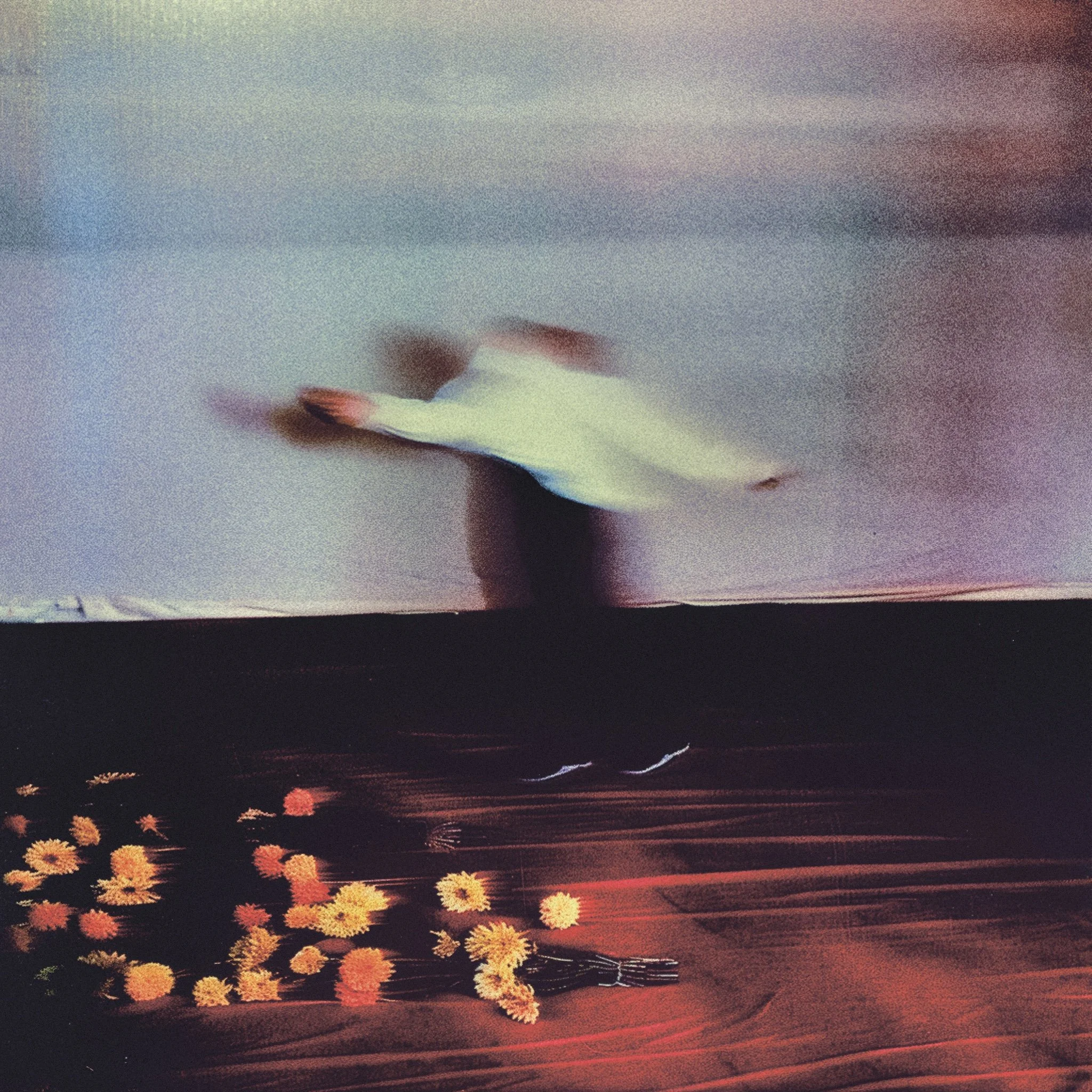
drift, sway: a new ambient album for focus, rest, and the slow return of light
There's a particular kind of creative energy that only shows up in winter. I've stopped fighting it. The days get short, the world goes quiet, and something in me starts reaching for the pedalboard.
drift, sway — my new full-length album out April 10th via Nettwerk — came from exactly that place. Ten pieces of ambient music built for the moments when you need the world to slow down: deep focus, quiet reading, the kind of sleep that actually restores something.
How it was made
I kept the approach as minimal as I could. Guitar as the primary instrument. A Boss DD-20 set to a 16-second looper mode as the spine of nearly every piece. From there: the Count to Five, the Meris Mercury 7, the EarthQuaker Devices Avalanche Run. Subtle warmth from a vintage Moog Minimoog and a Korg Polysix drifting in and out at the edges.
Nothing here was overworked. The goal was to capture a feeling — the sensation of breath, of a room settling, of time moving a little slower than usual. I've always believed that ambient music works best when it doesn't announce itself. When it just becomes part of wherever you are.
Two movements, one arc
The album splits into two halves. Drift — six pieces — leans into weightlessness. Guitar textures that float, loops that fold back on themselves, small moments held gently. Sway goes deeper: slower tempos, darker tones, more interior.
Together they move from presence to introspection. From the exhale to the stillness after.
Some of the track titles are rooted in specific memories. Afternoon walk is a quiet ode to daily walks with my wife Hanna. Sandcastles goes back further — summers on the Jersey Shore, the particular impermanence of things you build at the water's edge. Others are harder to name. They came from a season that had some weight to it, and they carry that without making a big deal of it.
Spring felt like the right time to release this. Music made in the dark, offered in the light.
For your next quiet hour
If you work better with something in the background that doesn't pull focus — this is for you. If you read before bed and need sound that doesn't follow you into your dreams — this is for you. If you've just had a hard few months and you're not quite sure how to re-enter the world — honestly, this one's for you too.
drift, sway is out April 10th everywhere. A full-length visualizer drops the same day on YouTube.
🎵 [Stream here] 📺 [Watch the visualizer]
Six Missing is the ambient project of Austin-based composer and sound designer TJ Dumser. His music has amassed over 200 million streams globally and is released via Nettwerk Music Group.

Twelve Years Sober, and Finally Going Back to the Beginning
On recovery, reinvention, and the record that ties it all together.
Today marks twelve years of sobriety for me. And if you'll allow me a few minutes, I want to talk about it — because it's the reason everything else in my life exists the way it does.
Getting sober was simultaneously the hardest and best decision I have ever made. I was terrified, really. I had never genuinely admitted to myself — beyond saying it to take the heat off my previous poor decisions — that I am an alcoholic. And I knew that the moment I truly took ownership of that, there was no going back. Because I didn't really know what life would look like without alcohol, I was petrified of what lay ahead.
But I did it — though not alone. And for that I'm entirely grateful for my family and friends who showed up for me.
The Person I Was
I wasn't a great person when I drank. While drunk, I thought the exact opposite — I thought my life was pretty good, actually. I had a job, I was making music, I had a partner, I wasn't homeless. But it wasn't until I stopped long enough to let the fog lift that I realized just how much I was hindering my own health and my own potential.
Putting down the bottle meant changing everything about how I lived, and that was hard. But not as hard as the first few days.
I had to break down the days into 15-minute segments just to get through them. I had pints of Americone Dream, Red Bull, and GIRLS loaded up on HBO. I'd say to myself: okay, you're not going to have a drink for the next 15 minutes. And when those elapsed — great job, now we're not going to have a drink for the next 15 minutes. Slowly, the days crawled by. But I could see a tiny crack of light peering through. And so I followed that.
The minutes became hours, the hours days. Days became weeks, and weeks months. Before long, I was sleeping better, I had more money in the bank, my digestion improved, I began wanting to exercise, my head un-fogged, and I could begin to see how life might look past this hurdle.
It Didn't Happen on the First Try
I want to be honest about something, because I think it matters: before this day twelve years ago, I tried and failed twice.
So if you're reading this and you're somewhere in that process, thinking I must be failing at this — no, you aren't. Everyone is different. Mine took the classic third time's the charm. Recovery isn't linear, and the attempt itself is never wasted.
The first few years were still really hard even after it finally took. But something had shifted. The crack of light got wider.
What Changed
Soon after getting sober, I started taking full control of my life in ways I never had before. I quit my job and started my own business. I went solo as an artist. I married the love of my life. I moved to a completely new city and bought a house. I signed with a music label. I clocked more hours than ever in a career I genuinely love. The list goes on.
And all of it — every single thing — comes down to that one final night before I quit. The night I was at my absolute lowest. The night I was my worst. The chapter I didn't know how to get past.
I think we try too often to rush past the hard things in life. But if I didn't have that hard night, I would've never made a change. The darkness wasn't a detour. It was the door.
Change is scary. Change is exciting. I'm just really glad I was able to make the change before things got undoable.
Where This Leads — drift, sway
So what does any of this have to do with music?
Everything, honestly.
To mark this anniversary, I'm going back to my roots as Six Missing — back to where it all began, when I was just starting out and fumbling my way through things. Me, my guitar, and some pedals. No armor, no production gloss. Just the thing itself.
drift, sway is a record about honoring your past, celebrating your courage, and looking toward the future. It's the most personally true thing I've made, and I think that's because I finally had twelve years of clarity to make it from.
If you've read this far and you're somewhere in the middle of your own hard chapter — whether that's sobriety or something else entirely — feel free to reach out. I'm happy to chat about any of it. For me, getting sober was the best decision I could've ever made. I don't say that lightly.
Here's to another twelve years.
— TJ (cheers-ing with a seltzer)
What Is Ambient Music, Really? A Guide From Someone Who Lives Inside It
People ask me this more than you'd think.
Not musicians, usually. Regular people. Someone hears a Six Missing track in a coffee shop or on a friend's playlist and something about it stops them — not in the way a song with a hook stops you, but in a quieter way. A settling. And they pull out their phone, look it up, and then wonder: what is this, exactly? What do you call it?
Ambient music. But that answer raises as many questions as it answers.
I've been making ambient music professionally for years now, signed to Nettwerk Music Group, with tens of millions of streams and a Times Square billboard I still can't quite believe was real. And I'll be honest — I still sometimes struggle to explain what it is at a dinner party. Not because it's complicated, but because the thing that makes it interesting is also the thing that makes it hard to describe. Ambient music is, almost by definition, the kind of thing you feel before you understand.
Let me try anyway.
It Started With a Missed Concert and a Delayed Flight
The origin story of ambient music as a genre — at least in its modern form — begins with Brian Eno sitting in an airport in 1978.
Eno had been in a car accident the year before and was recovering in bed when a friend came to visit and put on a record of 18th century harp music before leaving. The volume was too low — barely audible over the rain outside — and Eno was too weak to get up and turn it up. So he just lay there, listening to music that was more suggestion than sound, blending with the ambient noise of the room.
He later wrote that it was a revelation. The music wasn't asking to be listened to. It was simply present. It changed the quality of the air without demanding your attention.
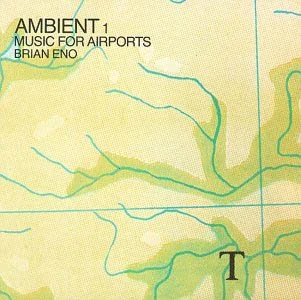
That experience led directly to Music for Airports, released in 1978 — four pieces of slow, looping, largely textureless music designed to be played in public spaces. Not elevator music, not Muzak. Something genuinely different. Eno called it ambient music, and the name stuck.
But the seed had been planted even earlier, by a French composer named Erik Satie, who wrote what he called musique d'ameublement — furniture music — in 1917. Music that was meant to be part of the environment. Music you weren't supposed to actively listen to. Satie reportedly got annoyed when audiences sat down and paid attention to it. That wasn't the point.
The point was presence without demand. It's still the point.
What It Actually Is (And Isn't)
Ambient music is, at its simplest, music that prioritizes atmosphere over structure. There's no verse, no chorus, no build toward a climax. There's usually no melody in the traditional sense, no rhythm you'd tap your foot to. What there is: texture, space, movement that's more like weather than narrative.
It's not background music, though it often gets used that way. Background music is designed to be ignored. Ambient music is designed to be present — available to you at whatever depth you want to engage with it. You can let it wash over you while you work. You can also put on headphones, close your eyes, and find entire worlds inside it. Both are valid. That range is part of what makes it unusual.
It's not the same as lo-fi, though they share some DNA. Lo-fi has beats. Lo-fi has structure. Ambient music doesn't need either.
It's not meditation music, though it's often used for meditation. It's not sleep music, though it's wonderful for sleep. It's not focus music, though it's one of the best focus tools I know. It refuses to be just one thing, which is part of why it's been so hard for the music industry to know what to do with it.
Japan Did Something Different With It
While Eno was developing ambient music in England in the late 1970s, something parallel — and in some ways more interesting — was happening in Japan.
Japanese composers began developing what they called Kankyo Ongaku, which translates roughly to environmental music. The concept was rooted in a distinctly Japanese aesthetic sensibility: ma, the idea that the space between things is as important as the things themselves. Silence not as absence but as presence. Negative space as a compositional element.
Hiroshi Yoshimura released Music for Nine Postcards in 1982 — delicate synth melodies so sparse they feel like light through blinds. Midori Takada's Through the Looking Glass, released a year later, is one of the most hypnotic records I've ever heard, percussion and texture cycling slowly like tides. Satoshi Ashikawa made music where the silence between notes felt as carefully placed as the notes themselves.
This tradition influenced everything that came after it. When I first went deep into Japanese ambient music a few years ago, I found myself listening with a different kind of attention — slower, more patient. It changed how I compose. That philosophy of negative space lives in my music now, even when I'm not consciously reaching for it.
Where It Lives Today
The genre that Eno named and Satie pre-figured and the Japanese environmental composers deepened has grown into something enormous — and also something still largely unknown to mainstream audiences, which is one of the stranger contradictions in contemporary music.
Olafur Arnalds, who works out of Iceland, blends ambient electronics with chamber strings in a way that feels both ancient and completely modern. He's the person who made me realize the Korg PS-3100 — a massive, fully polyphonic synthesizer from 1977 that I now own — could be a vehicle for genuine emotional expression. Watching him speak about that instrument in an interview sent me on a months-long search until I found one, had it put on a plane, and picked it up at the airport like a piece of precious cargo.
Nils Frahm treats the piano like a synthesizer and synthesizers like pianos, collapsing the boundary between acoustic and electronic until it dissolves entirely. Max Richter's Sleep — an eight-hour piece designed to be listened to overnight — is one of the most audacious artistic statements of the last 20 years, and also one of the most genuinely useful. I've covered one of its movements, Dream 1, as a tribute.
And then there are the artists working at the edges of the genre, doing things that don't have names yet. That's where it gets exciting.
What It Means to Me
I came to ambient music through sound design. I spent years — still do, most of the time — working as a re-recording mixer and sound designer for film, television, and advertising. That work is all about how sound creates feeling. How a particular frequency in a particular space makes a body feel safe or uneasy. How the absence of sound can be more powerful than any score.
When I started making music as Six Missing, I wasn't thinking about genre. I was thinking about space. About what it would feel like to be inside a piece of music rather than listening to it from the outside.
The name Six Missing comes from a ghost story — a real one, something that happened to me near a Revolutionary War battlefield in Pennsylvania, a night I still can't fully explain. That experience of the liminal — of something just beyond the edge of perception — is at the center of everything I make. Ambient music, more than any other genre, lives in that space. The space between what you can name and what you can only feel.
That's what it is, really. Not a tempo. Not a structure. Not a mood.
A space.
And an invitation to step into it.
Ambient Music for Sleep: What Actually Helps (and Why)
There's a particular kind of awake that happens after midnight.
It's not the kind where you're reading or watching something or doing anything useful. It's the kind where your body is exhausted and your mind just won't stop. The ceiling. The same thoughts cycling through again. The sound of the house settling, a car outside, your own breathing suddenly too loud in the quiet.
I know that kind of awake well. Austin summers are brutal and long, and more than a few times I've found myself lying there at 2am, the ceiling fan barely making a dent, thinking about nothing and everything at the same time.
What I've learned — slowly, over years — is that the solution isn't more silence. It's better sound.
Why Silence Doesn't Actually Help Most People Sleep
There's a persistent myth that the best environment for sleep is total quiet. And for a small number of people, that's true. But for most of us, silence isn't peaceful — it's just absence. And an absent room tends to fill up fast with whatever your brain has been meaning to deal with all day.
What actually helps the mind let go is something to rest against. A sound that's present without being demanding. Something that gives your nervous system a signal that the environment is safe and steady, without asking anything of your attention in return.
That's the job description of a good piece of ambient music.
Not all ambient music does this equally, though. There's a real difference between music made with genuine emotional intention and something generated to fill a playlist slot. Your nervous system notices that difference even when your conscious mind doesn't. One has texture, warmth, small variations that feel alive. The other keeps you company the way a refrigerator hum keeps you company.
What the Research Actually Says
I'm a musician, not a scientist — so take this for what it is: a working knowledge of things I've found genuinely useful to understand.
The body has a natural resting heart rate of around 60 beats per minute. Music that moves at or below that tempo tends to create what researchers call an entrainment effect — your nervous system starts to synchronize with the pace of what it's hearing. Slower music, slower breath. Slower breath, slower heart rate. Slower heart rate, sleep.
There's also something called the glymphatic system — the brain's overnight cleaning crew, essentially, that flushes out metabolic waste while you sleep. Deep, uninterrupted sleep is when this process is most active. Ambient music that helps you stay in that deeper sleep longer isn't just helping you rest; it's helping your brain actually repair itself.
And then there's the simpler thing: a steady, soft sound in the room gives your nervous system something predictable to process, which means it's less likely to startle awake at the house settling or a neighbor's car door. It creates a kind of sonic shelter.
What I Reach For
Without Mindis the record I'd point someone to first, if they were trying ambient music for sleep for the first time.
It was made in unusual circumstances — I created the original recordings as a live, improvised score for a ketamine-assisted therapy documentary. No overdubs, no going back to fix anything. Just whatever came out in the moment, in real time, in a deeply altered emotional and psychological space.
What that process produced is something that breathes. There are no hard edges, no moments that suddenly demand your attention, no places where the music announces itself. It moves like water moves — continuous, unhurried, with its own internal logic.
I've heard from a lot of people over the years who use it for sleep. A nurse in Minnesota who puts it on during night shifts. A dad in Australia who plays it for his newborn. A woman going through chemotherapy who said it was the only thing that helped her rest during treatment.
That's not something I engineered. It's something that happened, because the music was made in a genuinely quiet, genuinely open state. I think that comes through.
A Few Practical Things Worth Knowing
If you're going to try ambient music for sleep, here are the things I've found actually matter:
Start before you're trying to sleep. Put it on 20 or 30 minutes before you want to fall asleep, while you're doing your end-of-day things. Let your nervous system start winding down before you ask it to fully let go.
Volume lower than you think. It should be just barely there — present without being noticeable. If you're aware of it as music, it's slightly too loud.
No lyrics. Your brain will follow words even when you're exhausted. Instrumental music sidesteps this entirely.
Let it loop. Don't let the silence when it ends be the thing that wakes you up. Set a long playlist or let the album repeat.
Give it a few nights. The first time you try something new your brain is still evaluating it. After a few nights, it starts to become a cue — and cues are powerful.
It's Not a Cure. It's a Companion.
I want to be careful not to oversell this. Ambient music isn't medicine, and if you have serious sleep issues, you should talk to someone who actually knows what they're doing medically.
But as a companion — something to make the space a little softer, the night a little less loud, the transition from the day a little gentler — it genuinely helps. I've experienced it myself, and I've heard enough from listeners over the years to believe it's not just placebo.
There's something worth saying about the fact that the same music that helped people relax deeply enough to process trauma in a therapy setting is the same music that helps a baby fall asleep. That range tells you something about what it actually does — not what kind of experience it creates, but the quality of state it creates. Quiet. Open. Safe.
That's what I'm going for, every time.
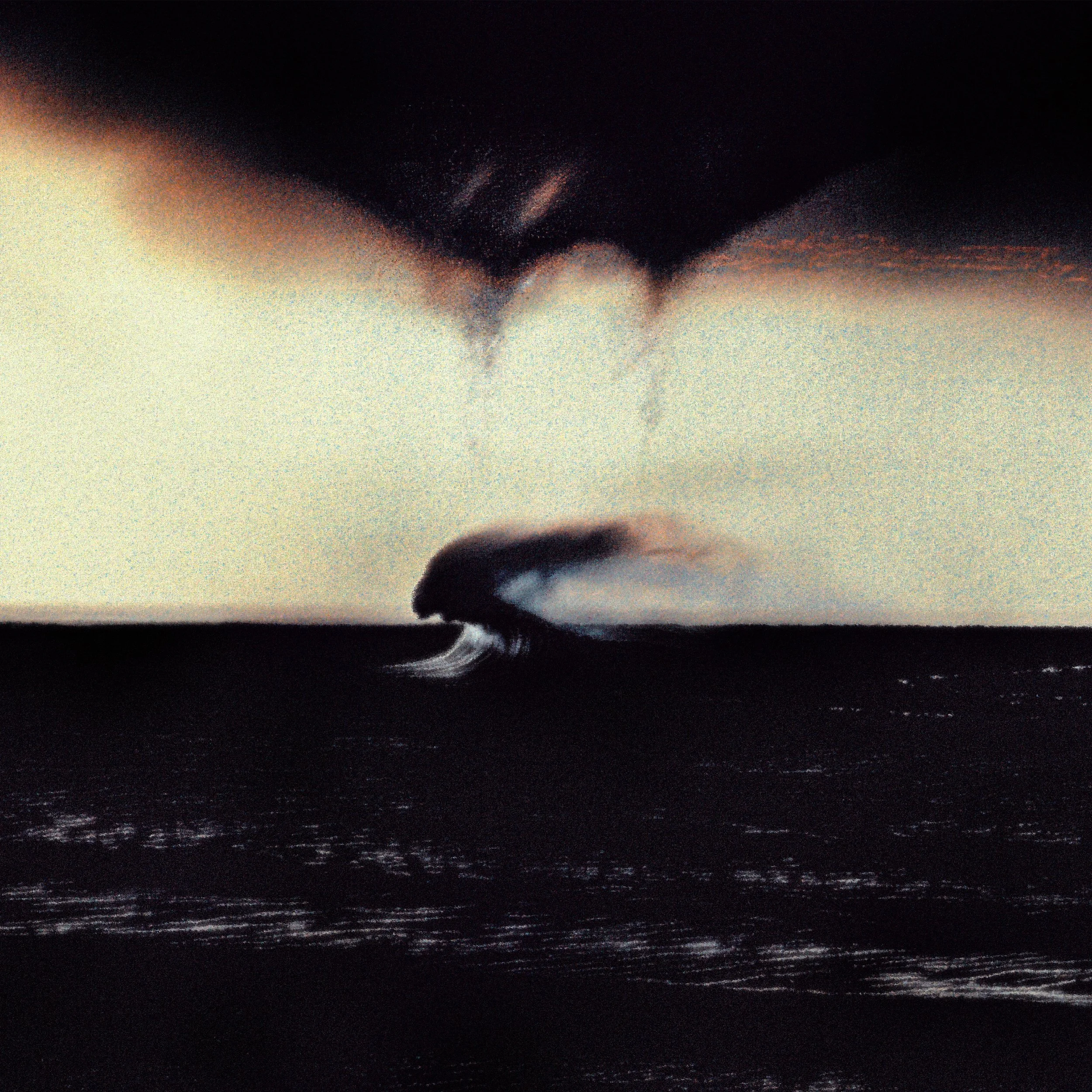
You Don't Have to Beat It — You Just Have to Outlast It
Reflections on ten years of Six Missing, survival reality TV, and why sway: breathing room exists
I want to talk about Alone. But first, let me back up — because that's actually how we got here.
SXSW just wrapped up in Austin, and while I didn't do much by way of events this year, I did get to see two old friends and one new one, which was absolutely lovely. Through chatting with one of my old pals — who had me on his podcast while he was in town (more on that soon) — we realized we've known each other for almost 30 years. How absurd is that? Three decades, and somehow it still just feels like us.
But here's the thread that ties this whole thing together: my other old friend is the one who turned us onto Alone.
The Show
If you haven't seen it, Alone is a survival reality show where contestants are dropped — completely solo — into the wilderness with minimal gear and told to last as long as they can. No camera crew. No producers. Just them, the elements, and whatever they can figure out. Season 11 is on Netflix, and my partner Hanna and I tore through it in about a week.
Reflecting on it together over the past couple of days, something started to crystallize for me.
Some contestants came in trying to dominate — to beat the game, outsmart it, conquer it. Others took a different approach entirely. They weren't trying to win against the wilderness; they were trying to exist with it. To build something sustainable. To make themselves at home in an environment that wasn't designed for them.
And in the end, the one who built the most sustainable relationship to their survival — not the strongest, not the loudest, not the most aggressive — was the one who won.
I feel the same way about my relationship to music and the music industry.
You Can't Beat It
I'm not trying to beat the music industry, because it simply can't be won. The goal posts never stop moving. Streaming payouts shift. Algorithms change. What worked last year doesn't work this year. If you orient yourself around winning that game, you will exhaust yourself chasing a finish line that doesn't exist.
But what you can do is co-exist with it. You can build sustainable workflows and habits and a body of work that allows you to quite literally outlast the other contestants.
There's an old adage: you don't always have to be the best, you just have to outlast everyone else. That's something I've been sitting with a lot lately, as I approach ten years as Six Missing this year.
Ten years. I genuinely can't believe it and also I can completely believe it, because I've never once felt like I was grinding against something. The work feeds me. It always has.
My Version of Alone
My approach to Six Missing mirrors the mindset of the best Alone contestants. Build a shelter, find food, sleep, stay alive, repeat.
For me: shelter is my body of work. Food is the inspiration and motivation. Sleep is still sleep (heh). And staying alive is continually releasing the highest quality work I can — not rushing, not forcing, but never stopping either.
I never grow tired of it. And I think that's where my real advantage lies. Another ten years? I'd do it without hesitation. I'm really only just getting started.
But here's where my version of the story diverges from the show, and it's the part that actually matters most to me.
A lot of those contestants tap out — not because they can't survive physically, but because they miss their people too much. The isolation becomes the thing that breaks them, not the cold or the hunger. And honestly? I get it completely.
Unlike them, I don't have to choose. I get to make this work with incredible artists, collaborators, and listeners who light me up just as much as the music itself does. Every collaboration teaches me something. Every conversation with someone who's actually heard the music changes the way I think about what I'm making.
And that includes you — reading this right now. You showing up here, following along, lending your ears and your time — that's what keeps me wanting to share. That's not a small thing. That might actually be the whole thing.
sway: breathing room
Which brings me to today.
I have a new single out — sway: breathing room — and its existence is pretty much a direct product of everything I just described. It's full circle in the best way: me, sitting with my guitar and my pedals, the way I used to make music when Six Missing was brand new. That intimacy, that simplicity. But sway: breathing room takes it a step further — printed to tape, slowed all the way down, given room to exist without rushing anywhere.
Mmm, tape.
It feels like a breath. Which, given everything, feels exactly right.
If you'd like to hear it, you can find it HERE. And if you haven't started Alone yet — you can thank me later, just as my friend did for us.
Your friend, TJ

Ambient Music for Deep Focus: How Sound Helps the Mind Settle
There are days when the noise inside is louder than anything in the room.
Not the kind of noise you can turn down or walk away from. The kind that sits just behind your eyes — a low hum of everything you're carrying, everything that hasn't found its place yet. On those days, what you choose to listen to isn't a small decision.
I've been making music for most of my life — as a sound designer, a mixer, a composer, and as Six Missing, my ambient project. And I'll tell you: my relationship to what I put in my ears while I work has changed a lot over the years. Not because I went looking for a system, but because I started paying close attention to how certain sounds made me feel, and how some of them quietly made everything easier.
This is what I've learned.
The Brain Doesn't Actually Want Silence
There's a misconception that deep focus requires quiet. For some people, maybe. But for most of us, the absence of sound creates a kind of restlessness — the mind, left in a vacuum, tends to fill it with whatever unfinished thought has been waiting in the wings. Worry. Distraction. The thing you said three days ago that you can't stop replaying.
What actually helps the mind settle isn't silence — it's sound that's present without being demanding. Something to rest against. Ambient music, when it's made with intention, does exactly this. It's not background noise. It's a carefully held space.
What "Made With Intention" Actually Means
Here's where I'd push back gently on just putting on any playlist labeled "focus music." A lot of what gets marketed that way is algorithmically generated — emotionally flat, designed to be inoffensive rather than genuinely useful. It keeps you company the way a blank wall keeps you company.
Music made by a human being, with real emotional intent behind it, does something different. It has warmth. Texture. Small, almost imperceptible moments of variation that your nervous system registers even when your conscious mind doesn't. There's a real difference between music that occupies space and music that creates it.
When I made drift — the first part of my new record drift, sway, which came out last Friday — I was thinking about exactly this. The whole record was built from guitar loops. Improvised, single-take performances run through delay pedals, tape machines, and space echoes, with a Boss DD-20 on 16-second looper mode at the center of it all. Each piece started as a kind of meditation: I'd begin playing, follow the sound wherever it wanted to go, and stop when it felt complete. No overdubs. No going back to fix anything.
What came out of that process was music that breathes. That moves at the pace of thought rather than the pace of a clock. That was always the goal.
The Body Notices Before the Mind Does
Something people often mention when they talk about using ambient music for focus is that the body settles first — shoulders drop, breath slows, the jaw unclenches — before they notice any real shift in concentration. I find that really beautiful, and I think it makes total sense. We're not just brains floating in space. The nervous system is listening too. And when the sound in the room signals that it's safe to be here, something releases.
That's part of why I make music the way I do. I want the listener to feel held by the sound before they've made any conscious decision about it.
A Few Simple Things That Help
Start the music a few minutes before you actually sit down to work. Give your nervous system a chance to arrive before you ask your mind to show up.
Skip anything with lyrics if you're writing or reading — your brain will follow the words whether you want it to or not. Instrumental music sidesteps this entirely.
Match the energy to what you're doing. drift is soft and spacious — it's made for the kind of work that needs unhurried attention. Writing, reading, thinking something through slowly. If your work runs faster, find something with a little more pulse.
And then let it go. The best sign that focus music is working is when you stop noticing it. The goal is presence in your work, not presence in the sound.
A Place to Start
If you've never used ambient music as a focus tool and you want a gentle entry point, drift is a good place to begin. Six tracks, each one a small study in stillness and space. Made slowly, quietly, in a studio in Austin — for exactly this kind of moment.
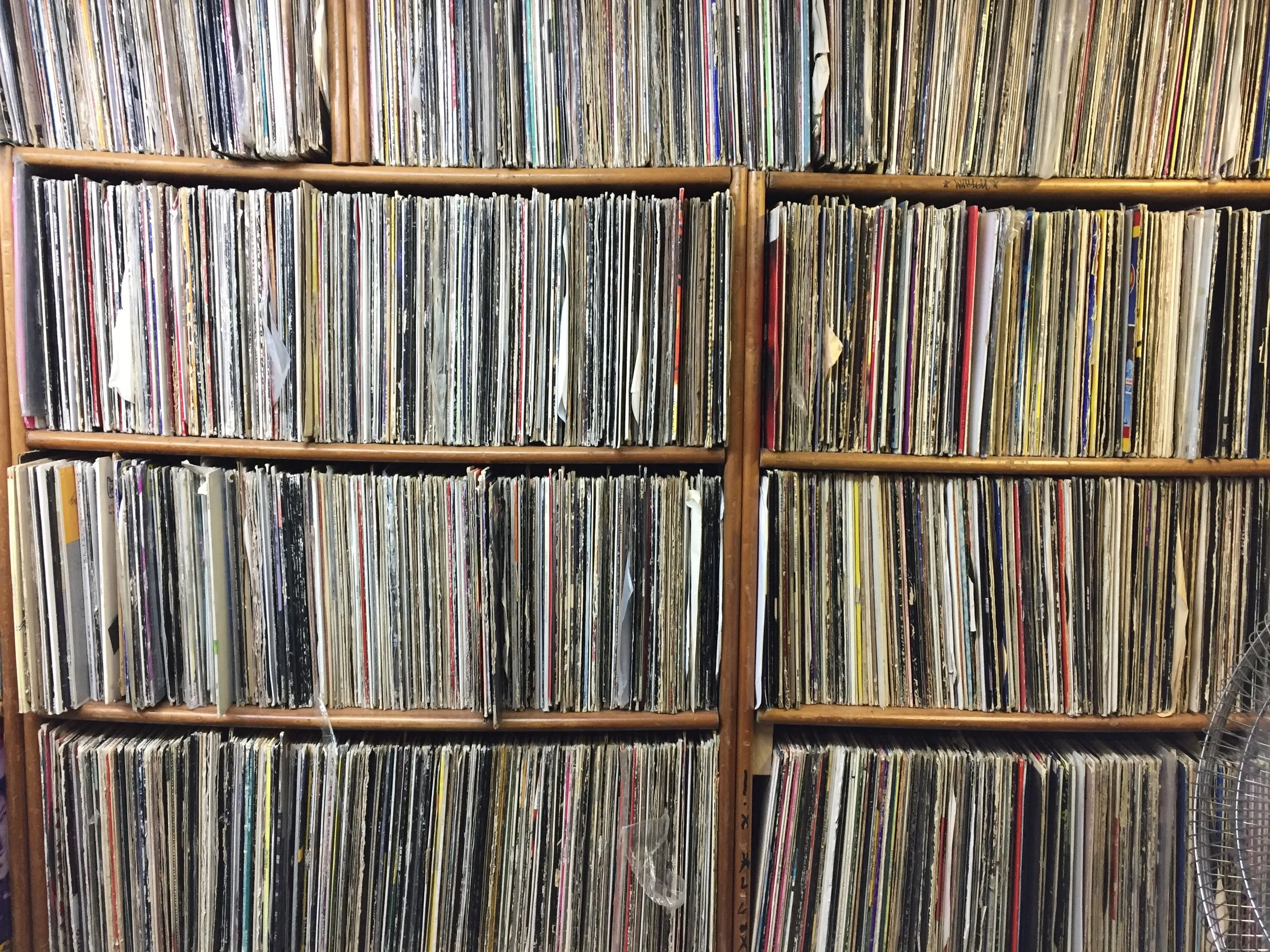
Six Hundred Records and a Brain That Finally Feels Better
My love for records started in an attic.
My grandmother's attic, specifically — that particular kind of attic that belongs to a house where a whole family grew up, where things accumulate in layers the way sediment does, each layer a different decade, a different version of people you love. I was digging around up there one afternoon as kids do, not looking for anything in particular, when I found them: my dad's and uncles' old records. Stacked and forgotten.
Led Zeppelin II.Led Zeppelin IV.
My uncle had an old turntable up there — one he'd gotten from the local library, a suitcase-style unit, the kind where the lid folds open and the speaker is built into the top half and the turntable sits in the bottom. It was not a fancy piece of equipment. It was perfect.
I put on Zeppelin IV and heard 'Black Dog' for the first time in my life and everything was different.
Not metaphorically different. Actually different. Something rearranged itself in the way I understood what music could do and what it was for. I was not prepared for the physicality of it — the way the sound came out of that little built-in speaker, the way the room felt. And then there was the object itself. I sat there and held it. Turned it over. Read the liner notes. Studied the sleeve while the music played. I had never spent time with an album before in that way — music and object together, one inseparable experience that rewarded your full presence. The record was still playing and I was completely inside it. There was also the smell. I don't know how to explain the smell of old vinyl to someone who hasn't experienced it, except to say that it is one of the most immediately transporting sensory experiences I know. One inhale and I'm a kid again in that attic with the afternoon light coming through the small window and the whole world rearranging itself quietly.
That was it. That was the beginning.
What Records Actually Are
I want to say something about what made that moment different, because I think it gets at why physical media is not nostalgia. People frame vinyl that way a lot — as a backward-looking thing, a resistance to progress, a sentimental attachment to obsolete technology. I disagree pretty strongly.
A record asks you to be present. It has a Side A and a Side B — at least — which means it has an intention baked right into the format. A shape. A sequence. A beginning and an end that someone decided on deliberately, that you have to honor by getting up, crossing the room, and turning it over. You have to handle it carefully. The ritual of playing a record is, quietly, a practice of attention — and in a world that runs on infinite scroll and algorithmic recommendation and music that plays forever until you remember to stop it, there's something genuinely countercultural about a format that asks you to participate.
I have been participating enthusiastically ever since.
The Completist Problem
I've also been a collector my entire life, which is either related to the record thing or just a separate personality trait that found its ideal expression in it. Baseball cards first. Then POGs — yes, POGs, no apologies. No Fear hats. Power Rangers. And eventually, inevitably, vintage synths and guitar pedals. Whatever the thing was, I wanted the complete set. The gap in a collection isn't a minor inconvenience to a brain like mine. It's a small, persistent hum of wrongness that doesn't resolve until the gap is filled.
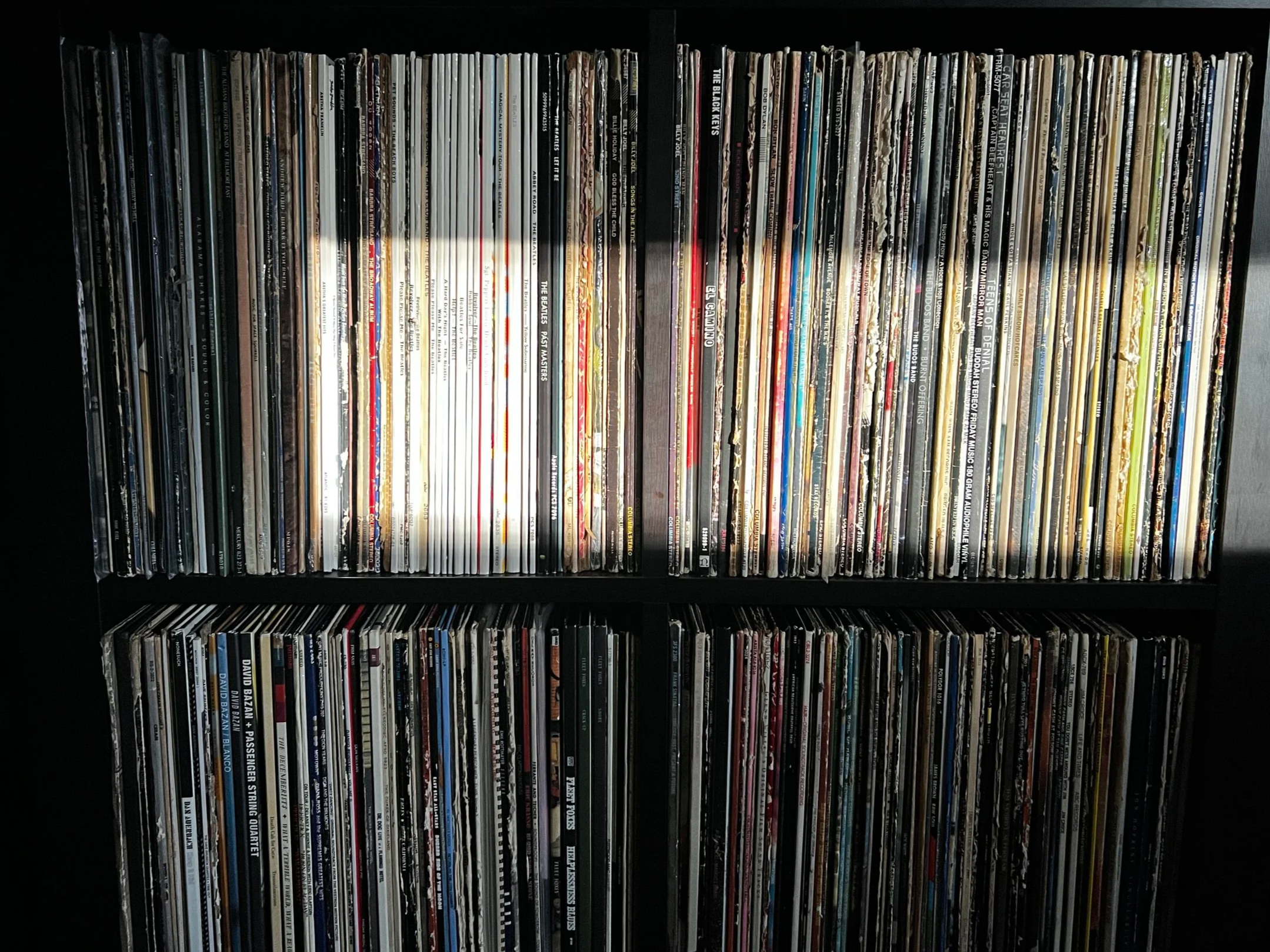
Here's the funny thing about record collecting, though: a record collection is never actually complete. That's not a bug. That's the whole point. There's always another pressing you didn't know existed, another record that slipped through, another artist you fell down a rabbit hole for at two in the morning. The collection keeps growing because it's supposed to. The completist in me found a hobby that is, by design, impossible to finish — and somehow that just makes it more fun. I'm not sure what that says about me, but I've made peace with it.
Records and this particular brain wiring were made for each other.
The collection has moved with me from Brewster to Astoria. Back to Brewster. Back to Astoria again — long story, double round trip, it made sense at the time, I promise. Then Austin. Then another home in Austin. The records are always the first thing I pack and always the first thing I unpack. Everything else can live in boxes for a few extra days. The records cannot.
The Rainy Weekend in Astoria
For years I knew what I had, roughly. But roughly is not the same as actually, and the completist in me knew the difference even when I was pretending not to. Which pressing? Which edition? Do I already own the thing I'm currently considering buying? I have gotten that last question wrong in both directions more than once.
One rainy weekend in Astoria I sat down with Discogs and fixed it. I input all of it — around 600 records, give or take, by the time I finished. Cross-referenced pressings. Tracked down matrix numbers. Made notes on condition. It took most of the weekend and I enjoyed every minute of it in a way that probably says something about me as a person.
When I finished, something in my brain genuinely felt better. Like a drawer that had been stuck for years finally sliding closed all the way. There is a particular relief that comes from having something you love properly documented — from taking it seriously enough to give it that kind of attention. My collection existed before Discogs. But it became real on Discogs, in the way that things become real when someone gives them the care of being properly cataloged.
What I didn't expect was how much I'd come to rely on it day-to-day. The ability to pull up my full collection at a glance — to be standing in a record store, see something, and know immediately whether I already own it — is something I didn't fully appreciate until I had it. The number of duplicate purchases it has saved me is genuinely funny. The completist brain does not handle duplicates gracefully. Discogs handles them for me now. I'm grateful every time I open the app.
Solo Dates and The Thing
I used to take myself on solo dates to record stores around New York City. This is something I recommend to everyone — the solo record store trip is one of the great underrated pleasures. No agenda, no one else's taste to negotiate, nowhere to be, just you and the bins and whatever you find.
I had my rotation around the city. But my Everest — the store I'd point anyone toward, the one that is genuinely indescribable to someone who hasn't been inside it — is The Thing in Greenpoint, Brooklyn.
I don't know how to explain The Thing. I'll try and fail. It is enormous and overwhelming and completely without pretension, and there is no order to it whatsoever. None. You cannot go in there with a plan, because you will fail. What you can do is surrender to it — give yourself over to the chaos, dig slowly, let the room work on you — and if you do that, the reward is the kind of discovery that simply cannot happen anywhere tidy. I have found things at The Thing that I did not know existed. I have also spent hours finding nothing and left feeling like I'd spent the afternoon well. That is the mark of a great record store.
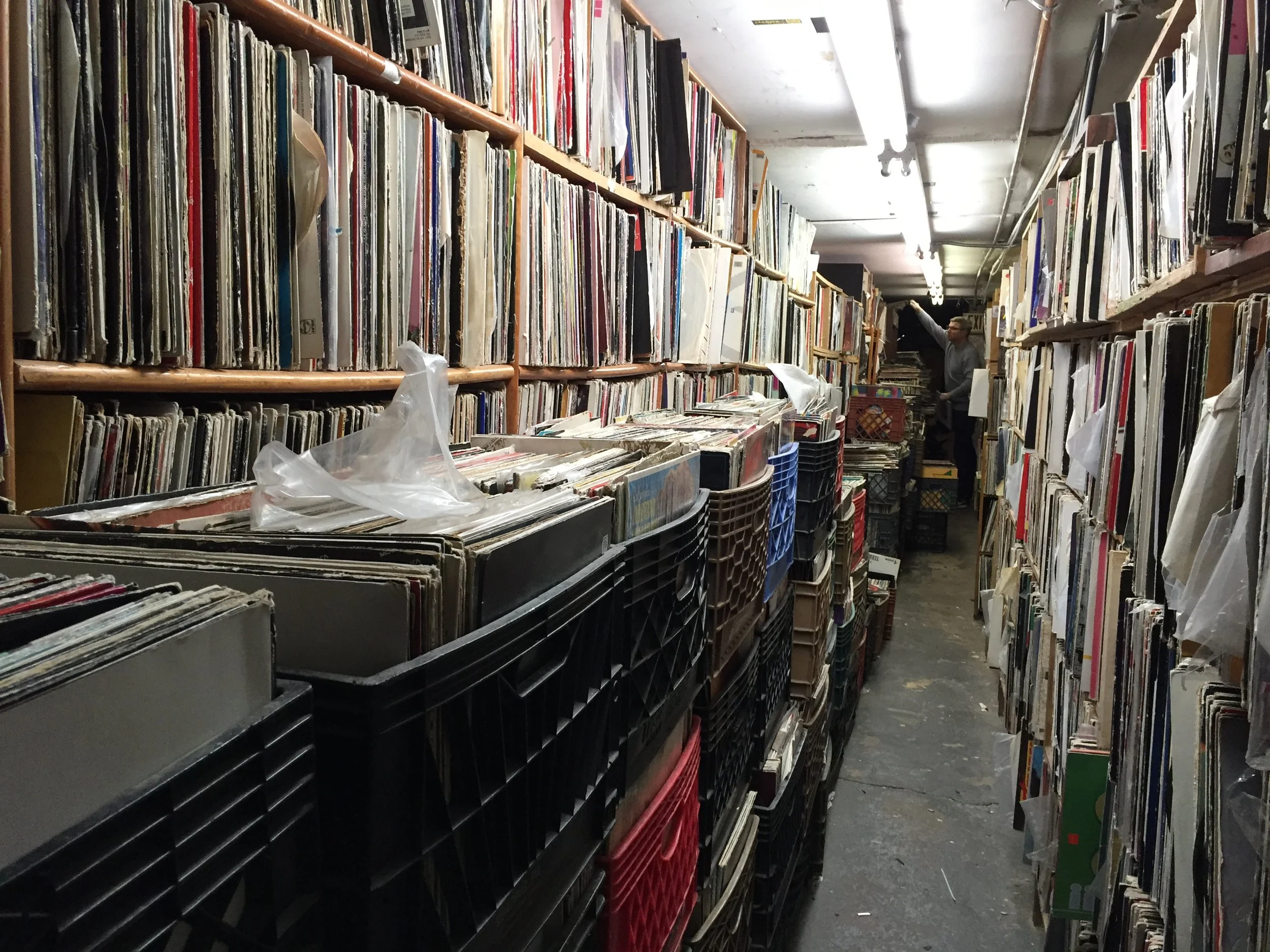
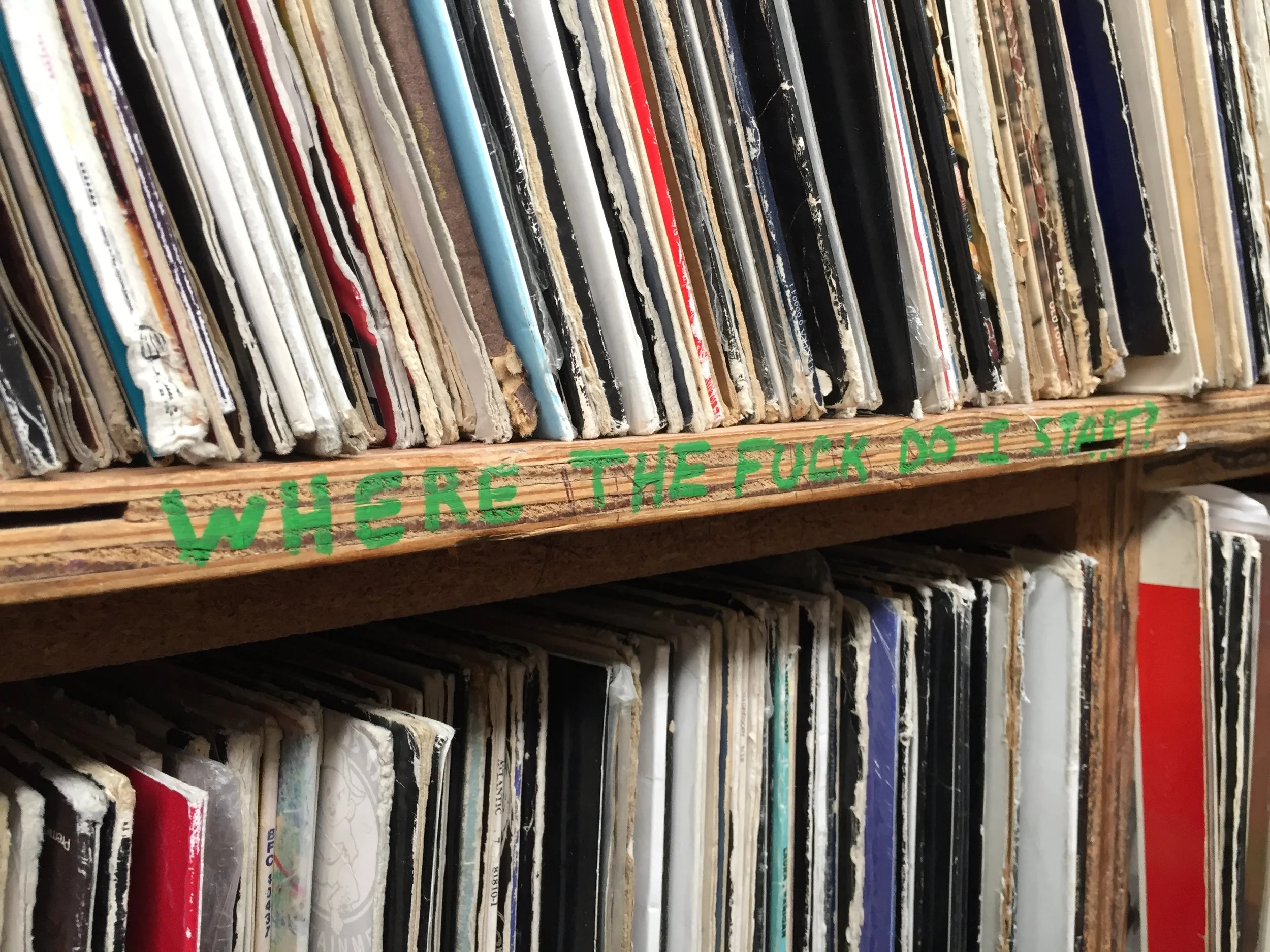

The Wood Brothers, Loaded, and Ten Years of Looking
Here is the part of this that I think about most when I think about what Discogs actually means to me.
Loaded by The Wood Brothers was one of the first records Hanna and I fell in love to. Not with — to. It soundtracked the beginning parts of our relationship, those early months when everything is new and you don't know yet that you're building something that will last, you just know that the music playing in the room feels like it belongs completely to the moment.
For ten years after that, I looked for a physical copy. In shops around New York. Online. Whenever I was somewhere with a good record store I would check. It had become one of those records — the ones that exist in your mind as slightly mythological, a thing you'd like to have but have quietly started to suspect you may never actually find. You make peace, sort of, with the digital version. You tell yourself it's fine. It is not fully fine.
Then one day, there it was on the Discogs marketplace. I stared at the listing for a long moment and genuinely wondered if it was a scam — it had been so rare, to me at least, for so long that my brain had almost stopped believing it was an obtainable object in the world. I bought it anyway. Heart in my throat a little.
It arrived. It was real. It was in great condition.
Every time I put Loaded on the turntable now, something in me smiles before the needle even hits the groove. Not because of what it cost or how long it took, but because of what it holds — the beginning of something that became the most important relationship of my life, recovered from time and distance and ten years of missed opportunities by a marketplace that takes this stuff as seriously as I do.
I am genuinely grateful to Discogs for that. In a way that might sound disproportionate until you understand what the record means.
The Record I Got to Add
There is one more Discogs moment I want to tell you about, because it felt different from all the searching and cataloging and marketplace browsing.
Without Mind — my record on Nettwerk, built from experimentations writing music for a ketamine treatment session, pressed as a triple LP — went to vinyl. A real, physical object that hadn't existed and then did.
The moment I got to add it to the Discogs database myself — to submit my own release, to give it the same catalog treatment I'd given hundreds of records by artists I'd loved for decades — I sat with that for a minute. Maybe longer than a minute.
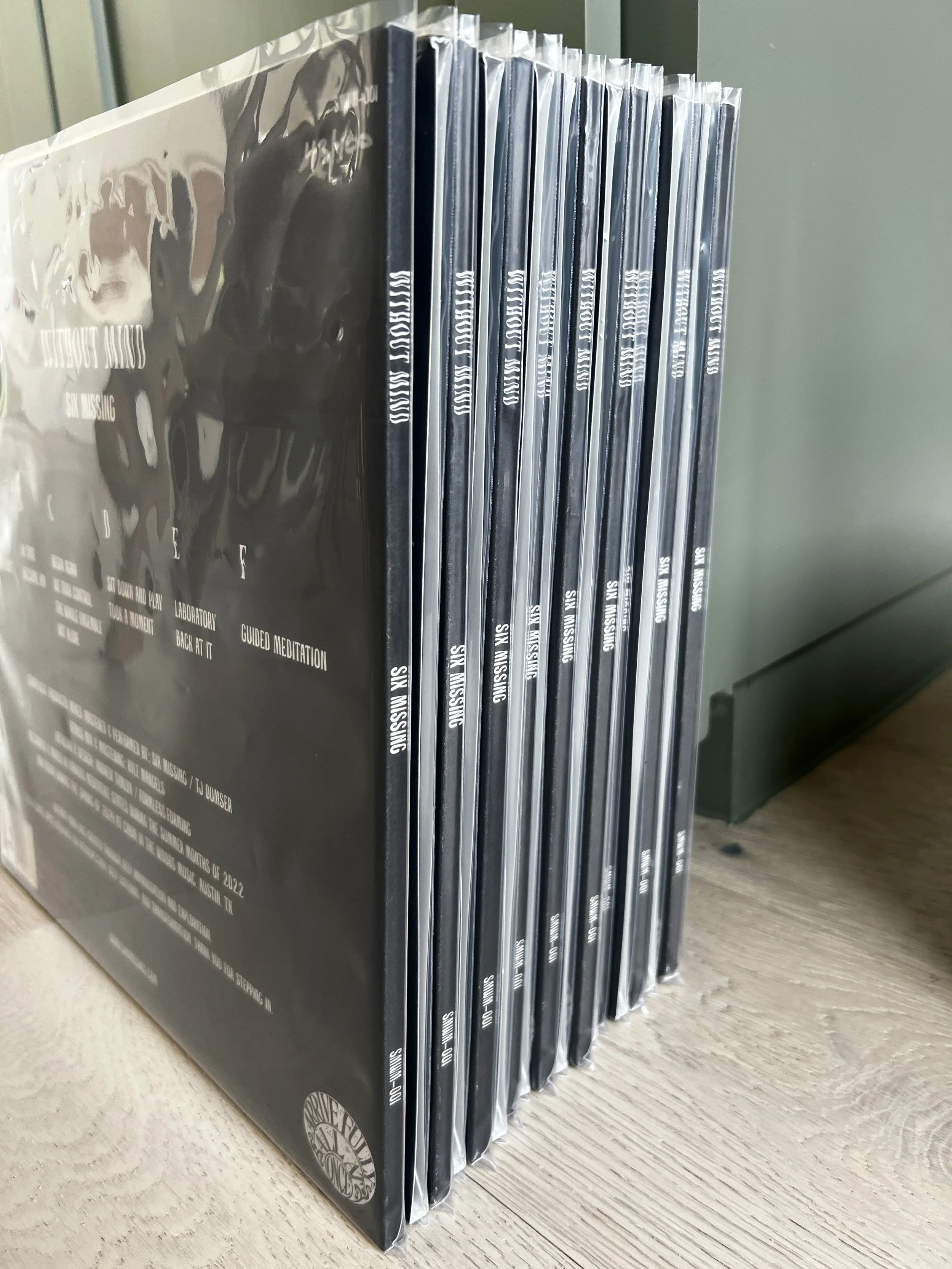
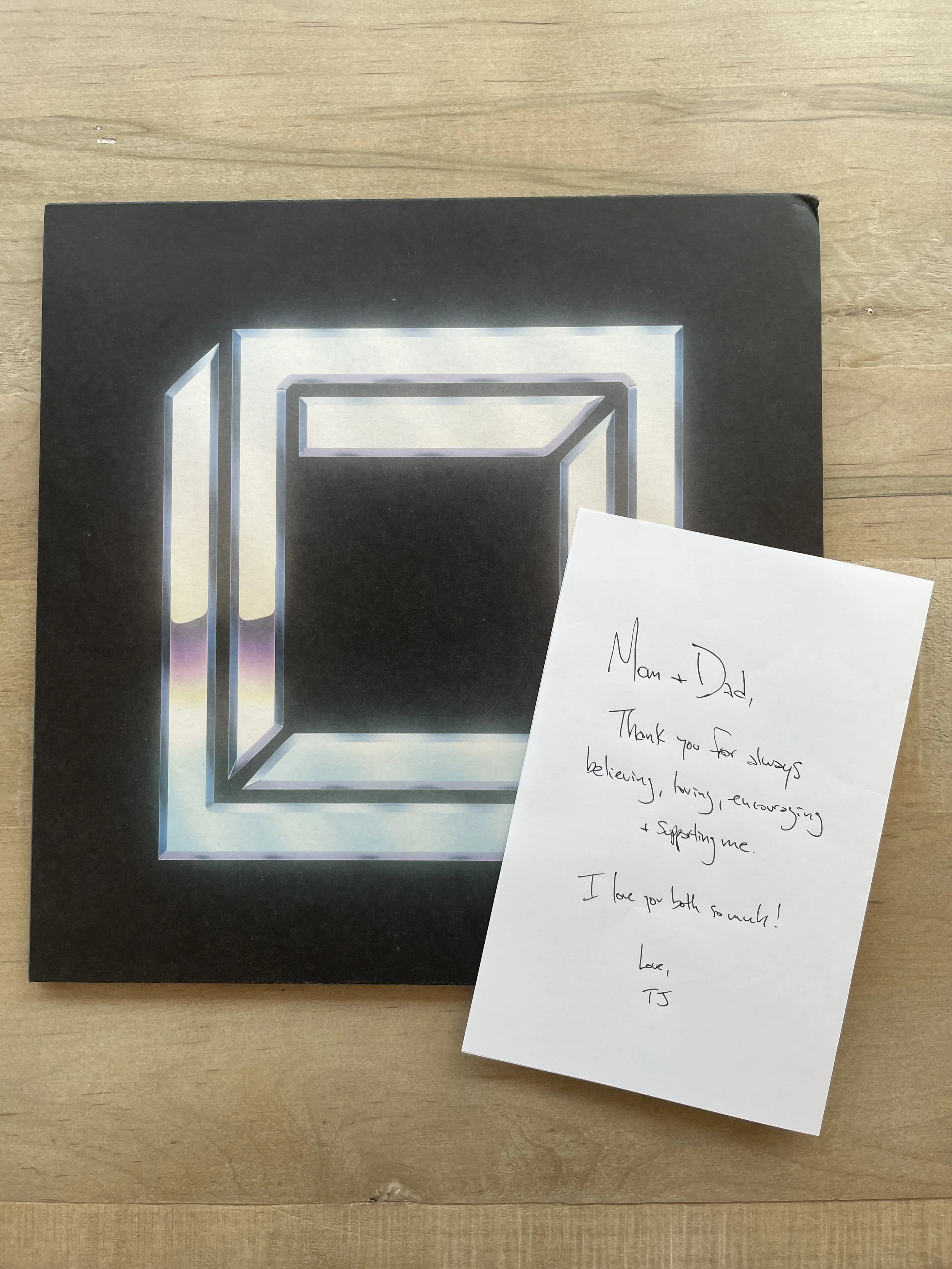
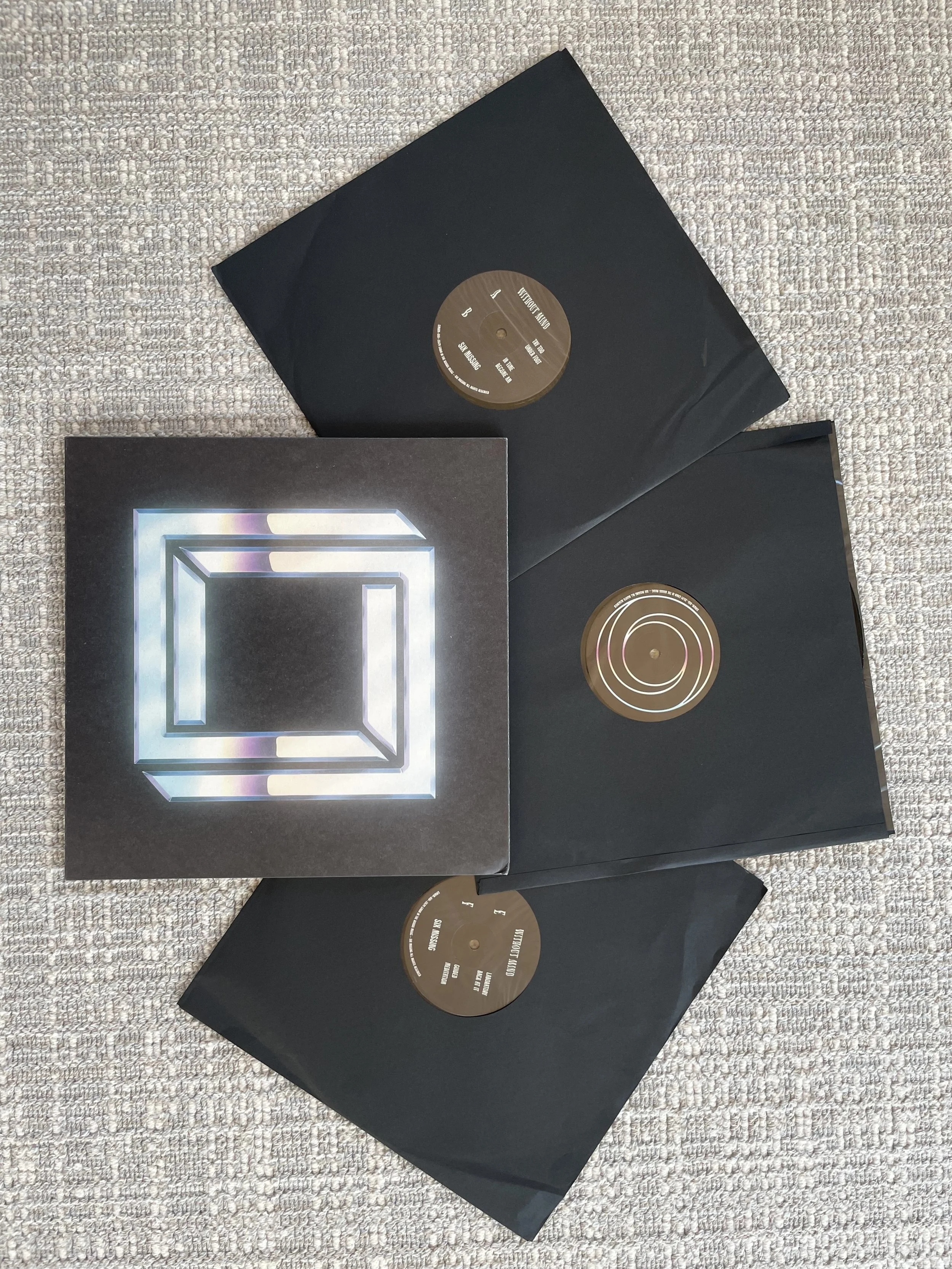
Discogs is where records live when they matter. That sounds like a simple thing to say but I mean it exactly. It's where the care lives — the pressings, the matrix numbers, the condition grades, the little notes collectors leave for each other. It's a community built entirely around taking physical music seriously, and getting to place my own work inside it felt like a kind of arrival I hadn't anticipated.
A confirmation that the thing I made was real in the same way that Zeppelin IV was real up in that attic. A physical object in the world that someone might find someday and hold and study and smell and feel something rearrange itself inside them.
That thought genuinely gets to me.
Why Six Hundred
Tom Waits said something — I'm paraphrasing because I can't locate the exact quote — about being excited to marry his partner partly because he knew he was about to inherit an incredible record collection. Or that it was going to double his. Something in that neighborhood. The specifics blur but the spirit of it has always stayed with me, because a record collection is a portrait. It tells you who a person is, what they've loved, where they've been, what they cared enough about to carry with them across distance and time.
Six hundred records is a lot of years. A lot of rooms. A lot of moods and phases and people and places compressed into shelving in Austin that I will rearrange carefully every time we move.
It's also, as I said, not finished. It's never finished. That used to feel like a problem and now it just feels like the deal — like the thing that keeps it alive. There will always be another record I didn't know I needed until the moment I found it. There will always be another copy of something I lost track of waiting on the Discogs marketplace for the right person to come along.
The records are always the first thing I pack. They are always the first thing I unpack.
Discogs is where they live when they're not playing. And for a brain like mine — for a collector who has been one since before he knew the word for it — that is not a small thing at all.
Browse the Six Missing catalog on Discogs + Grab a copy of Without Mind

I Miss Ask Jeeves
This weekend in Austin we’re getting those beautiful overcast skies that make you want to stay inside and watch movies. You know the kind — the sky is gray, the air is quiet, and suddenly the idea of leaving the house feels completely unnecessary. Honestly, I’m looking forward to it. A rainy weekend, a couch, maybe a blanket, and a good movie is one of life’s simplest pleasures.
Which brings me to something strange I’ve been feeling lately.
I’ve had this sudden urge to buy a Blu-ray player again.
I know, I know. It sounds ridiculous. We live in a world where essentially every movie ever made is floating around in the cloud somewhere, available instantly on demand. But lately I’ve been thinking about physical media again — Blu-rays, CDs, tapes. You already know how I feel about vinyl. There’s something about holding the thing in your hands, sliding it out of a case, placing it on a shelf, that makes the experience feel more intentional somehow.
Maybe that’s why I never really got on board with e-readers. I’ve always been a book person. I like pages. I like margins. I like the weight of a book in my hands. Something about the physical object slows the experience down in a way I’ve always appreciated.
Lately I’ve been wondering if this renewed interest in physical things is connected to how much of life now exists online.
The other day I was scrolling through old photos — as one does — and I stumbled across a picture my mom had sent me years ago. It was our very first computer setup at home. The thing was glorious in that late-90s way: a giant CRT monitor, the beige tower with a CD drive, and a little external desktop microphone sitting on the desk.
I posted the photo on Instagram, and my mom texted me a little while later saying she remembered exactly why she had taken that picture.

It was the first time we logged onto AOL.
When she said that, I swear it felt like someone kicked a soccer ball into my stomach. Pure nostalgia.
Because suddenly I remembered something that feels almost impossible now: the internet used to be a place you had to go to.
You sat down at the computer. You logged on. You browsed around for a while. And then eventually you logged off and went back to the rest of your life.
It wasn’t everywhere.
Some of you reading this probably don’t even remember that era, which is a slightly strange thing for me to realize as I write it. But there was a time when the entirety of human existence wasn’t digitized and living in the palm of your hand. You couldn’t ask a robot to proofread your paper. You couldn’t instantly Google whatever random thought popped into your head.
You had Ask Jeeves.
And boy did Jeeves take his time.
If you wanted to watch a show, you checked the TV Guide and waited for it to come on. If you wanted to hear a record, you put the record on. If you wanted to go online, you physically went to the computer.
Now everything is immediate. ChatGPT this, Google that, ask Siri something. Instagram, Reddit, Facebook, LinkedIn, TikTok — an endless stream of information and noise that follows us everywhere we go.
And don’t get me wrong — I love technology. Truly. Having access to the entire history of recorded music at the press of a button is still something that feels miraculous to me.
But I also think something subtle has changed along the way.
We’ve trained ourselves to expect immediate results. If we try something once and it doesn’t work right away, we assume we’re not good at it. If we can’t master something quickly, we move on to the next thing.
Creativity doesn’t really work that way.
The things that end up meaning the most to us — learning an instrument, making art, building something with care — tend to move at a much slower pace. They require repetition. Patience. Time spent failing quietly before anything good starts to emerge.
I suppose that’s part of why I’ve always been drawn to slower things.
Books instead of screens.
Vinyl instead of playlists.
And, in many ways, the kind of music I make.
Ambient music, at its best, isn’t really asking for your attention in the way so much of modern media does. It’s more like an invitation. A small pocket of space where things can unfold a little more slowly.
Which, now that I think about it, might be why the idea of buying a Blu-ray player again suddenly feels appealing. Not because I need one. But because the ritual itself feels nice to imagine — choosing a film, putting it on intentionally, letting the experience unfold without scrolling or multitasking or checking my phone every five minutes.
Maybe that’s all I’m really chasing.
Not nostalgia exactly.
Just a slightly slower rhythm.
And honestly, that’s probably the same instinct that led me to make the music I make in the first place.
If you’d like to hear the newest piece of that, my new EP drift is out now.
What the Olympics Taught Me About Devotion
I didn’t expect to tear up watching the Olympics. But I did. Not because of the gold medals — because of the devotion. It made me think about what it means to give your life to something, long before anyone is watching.
Over the weekend, while traveling to visit family, I accidentally watched a lot of the Olympics.
“Accidentally” meaning — it was just on. And I stayed.
I haven’t watched the Olympics in years. Not for any particular reason. They just hadn’t crossed my path. But this time I found myself completely transfixed.
Holy crap.
It is absolutely insane what humans are capable of.
These are people operating in the top fraction of a percent of humanity. Professionals who have dedicated their lives — truly their lives — to something most of us would consider obscure.
I kept turning to my brother-in-law and asking, “How does someone even discover they’re good at something like curling?”
Not just good. World-class.
And then beyond that — how do they love it enough to give themselves to it? To wake up early. To fall. To lose. To repeat. For years.
The drone shots behind the bobsled and speed skating really put things into perspective. That’s where you can feel the speed. The danger. The razor-thin margins between victory and heartbreak.
They are superhuman.
But here’s what actually got me.
I teared up.
Not because of the gold medals.
But because I watched two downhill skiers finish their runs — both completely exhausted, having just given everything they had. The results flashed on the board. One rejoiced. The other was crushed.
And yet — they turned to each other and embraced.
Different countries. Different languages. Years of rivalry.
Mutual respect.
It hit me harder than I expected.
Because underneath all of the flags and national anthems and commentary, what I was actually witnessing was devotion.
Years of quiet, invisible devotion.
Devotion Is Invisible Most of the Time
We only see the podium moment.
We don’t see the 5:00am practices.
The injuries.
The self-doubt.
The repetition.
The years when no one was watching.
It made me think about craft in general.
About anyone who gives themselves to something long enough that it shapes who they are.
As I sat there watching, I felt something quietly familiar.
Not in an ego way.
Not in a “compare yourself to Olympians” way.
But in a “this is what dedication looks like” way.
I’ve been playing guitar since I was twelve years old.
Long before I could really play it.
Long before I understood scales or modes or tone or discipline.
I just knew I was drawn to it. To the way it felt in my hands. To the sound vibrating through wood and air.
I’ve been chasing sound ever since.
Recording in bedrooms.
Looping in Astoria apartments.
Sitting in front of speakers adjusting a reverb tail by half a decibel.
Vintage synths humming in the background.
Field recordings captured on walks.
Sessions where nothing worked.
Sessions where everything clicked.
No medals.
No podium.
But devotion all the same.
The Long Arc of Showing Up
When I think about it, I’ve dedicated my life to sound.
Not in a glamorous way.
In a consistent way.
The kind where you show up whether you feel inspired or not.
The kind where you keep refining your ear.
The kind where you move through burnout.
Through addiction.
Through grief.
Through doubt.
Two months ago today, our sweet Nala passed.
Time since then has felt both instantaneous and eternal.
My brain has been in survival mode.
Just getting through.
And yet — even in that fog — I’ve still shown up to the studio.
Not because I had to.
Not because of an algorithm.
But because it’s what I do.
It’s my craft. It’s my way of processing. It’s my version of training.
Devotion doesn’t always look dramatic.
Sometimes it looks like quietly sitting at a piano and letting one chord ring.
Sometimes it looks like scrapping a mix and starting over.
Sometimes it looks like releasing ambient music without expectation.
Respect for the Ones Who Show Up
Watching those athletes embrace each other reminded me of something simple:
When you’ve given yourself to something fully, you recognize that same dedication in others.
It’s not about winning.
It’s about the shared understanding of what it took to get there.
There’s something deeply human about that.
In a world that feels increasingly divided — politically, socially, digitally — I found myself unexpectedly moved by the simplicity of respect.
Different countries.
Different ideologies.
Same sacrifice.
Same discipline.
Same love of craft.
And it made me think about the creative community, too.
Every artist I admire — whether ambient composers, film scorers, modular synth explorers, or painters — has devoted their life to something intangible.
We may make wildly different sounds.
We may hold different beliefs.
But underneath it all is a shared devotion to making something honest.
We Are All Training For Something
Maybe not the Olympics.
But something.
Maybe it’s parenting.
Maybe it’s healing.
Maybe it’s sobriety.
Maybe it’s building a life aligned with your values.
Maybe it’s simply trying to be a decent human in a loud world.
I think what moved me most was remembering that beneath the noise, we are all training for something.
We are all trying.
We are all tired sometimes.
We are all giving more than people see.
And when we remember that, it becomes a little easier to extend grace.
To embrace instead of divide.
To respect instead of diminish.
Devotion Over Division
The Olympics didn’t make me patriotic.
They made me reflective.
They reminded me that dedication is sacred.
That craft is worthy.
That respect is powerful.
And they reminded me that even in grief, even in uncertainty, even in survival mode — I am still devoted to what I do.
Not because it makes me special.
But because it keeps me human.
And maybe that’s the point.
We are humans.
All going through things.
Trying to do our best.
And if we can meet each other there — in the shared understanding of effort — maybe we’ll be alright.
Synth History Recommends
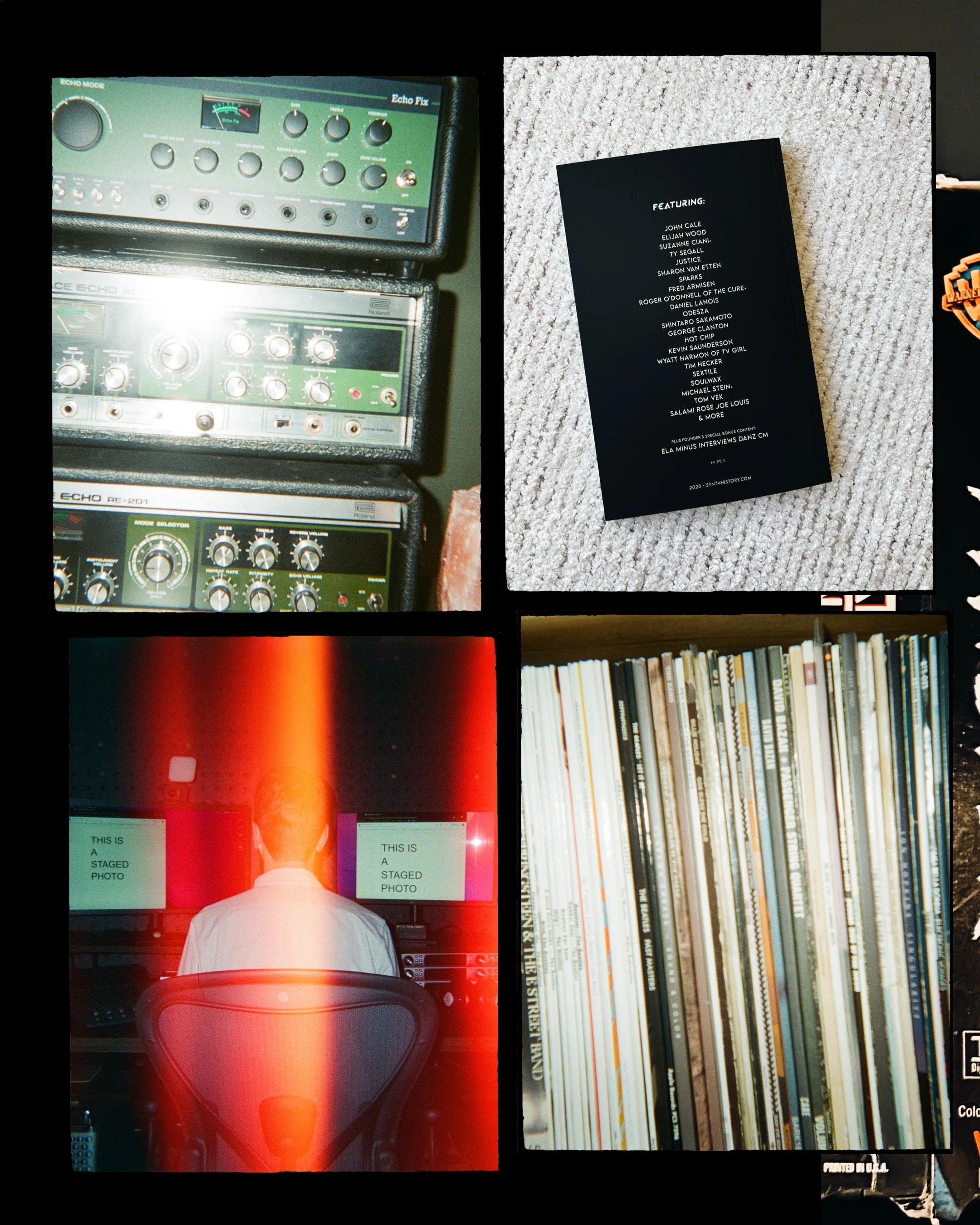
Being Featured in Synth History Vol. 5 -- Finding My Place
You can read the full Recommends feature here:
https://www.synthhistory.com/post/six-missing-recommends
I wanted to share something that genuinely stopped me in my tracks.
I’m featured in Synth History Vol. 5 — the physical zine — and also on their website as part of their Recommends Series.
That still feels surreal to type.
I first discovered Synth History on a plane, flipping through Volume 2, and immediately felt something click. The care in the layout. The tactile feel of the paper. The depth of the writing. It wasn’t just about synths — it was about why we’re drawn to these machines in the first place.
It felt like finding my place.
Fast forward a few volumes later, and now I’m somehow in actual ink, alongside artists I deeply admire. That kind of full-circle moment doesn’t happen often — and when it does, you really feel it in your chest.
Synth History as a Living Document
What Dan and the Synth History team have built is special. This isn’t gear fetishism or trend chasing — it’s documentation. Culture. Memory.
In a time when so much of music exists fleetingly on screens, there’s something grounding about a printed object that asks you to slow down, sit with it, and turn pages. That philosophy mirrors how I like to work musically — hands on, ears open, patience intact.
Holding Vol. 5 feels like holding a small piece of collective history.
The Recommends Series
For the Recommends Series, I was asked to list 10–15 studio essentials — instruments and tools that have shaped how I hear, feel, and create.
What I appreciated most about the prompt was that it wasn’t about productivity or optimization. It was about relationship.
Two pieces I spoke about in depth were my Korg PS-3100 and the EarthQuaker Devices Avalanche Run — both of which feel less like gear and more like collaborators.
The PS-3100 is big, heavy, temperamental, and already feels like it has a will of its own. It’s been in the shop more than once — and I’ll still never give it up. There’s something mystifying about it that I was actively searching for. The interface invites you to touch it, to play, to mess things up and see where they land. Watching Ólafur Arnalds speak about the PS-3100 years ago made me realize he was talking about synths the same way I do — almost poetically. That moment sent me on a long hunt until I finally found one, had it put on a plane, and picked it up at the airport like a precious artifact.
And then there’s the Avalanche Run.
I don’t say this lightly — that pedal changed the entire course of my musical life. I bought it at Main Drag Music in Williamsburg, and the person ringing me up smiled and said, “Hope you enjoy losing time for three days.” They weren’t wrong.
My first Six Missing release was born entirely out of improvising with that pedal — one long session of me playing with it and it playing back at me. It’s a universe. A texture engine. A collaborator that chews sound into something elastic and strange and beautiful. If I ever had to choose just one pedal to perform with, it would be the Avalanche Run. No question.
Gratitude
Huge thanks to Synth History for including me — both in Vol. 5 of the physical zine and online. It means more than I can properly articulate.
And thank you to everyone who listens, supports, reads, and makes space for this kind of slow, intentional work. None of it exists in isolation.
If you’re into synthesizers, ambient music, or thoughtful creative culture, I can’t recommend Synth History enough. And if you can get your hands on a physical copy — do it. Some things really are better when you can hold them.
You can read the full Recommends feature here:
https://www.synthhistory.com/post/six-missing-recommends

Why I Finally Told the Story Behind Six Missing
For years, people have asked me where the name Six Missing came from. And for years, I’ve danced around it.
I’d say it was a feeling, a phrase that stuck. Something with weight. Something personal.
And all of that is true.
But recently, I decided to share the full story—the real story—behind the name. A story I’ve carried with me since a recording trip in Pennsylvania many years ago. A story that, at the time, shook me to my core and left me wondering what exactly had happened to me in the middle of the night, deep in the woods, far from home.
This week, I released a longform video on YouTube that tells the full ghost story behind Six Missing.
It’s something I’ve only ever shared in fragments—at shows, in interviews, maybe over a drink or two with close friends. But putting it into a visual format, with intention and atmosphere, felt like the right way to honor it.
Because the truth is: I don’t know what happened to me that night.
And I think that’s what makes the story powerful.
The Story in Brief (no spoilers)
I won’t spoil the full video here—if you haven’t seen it yet, I hope you’ll watch. But I will say this:
It happened during a late-night walk back to the cottage where we were staying while recording an album. There was a feeling…
Then silence.
Then cold.
Then something else. Something that felt ancient. Heavy. Not quite malevolent—but not indifferent either.
In the days that followed, I started researching the land. The deeper I went, the more unsettling the connections became. When I came across an old casualty report listing six missing soldiers from a nearby Revolutionary War battle, something inside me clicked.
I knew that name—Six Missing—was mine to carry.
Why I’m Sharing It Now
I’ve always believed that the unknown deserves to be respected, not ignored. Whether you call it spiritual, energetic, ancestral, or just part of the great cosmic mystery… I don’t pretend to have answers. But I try to listen.
And for me, telling this story is a way of listening back.
A way of acknowledging that something happened.
And that maybe we’re not as alone as we think.
Over the years, I’ve shared this story with listeners in casual conversations, during ambient sets, and occasionally in interviews. Every time, someone leans in. People feel it. They recognize something familiar in the shape of the unknown.
That’s why I wanted to finally tell it right.
In my voice. In my words. With the same care and intention I put into my music.
Watch the Full Video
This video is part personal memory, part ghost story, part tribute to the unseen.
I hope it gives you chills. I hope it makes you wonder.
And maybe—if you’ve ever had an experience you couldn’t explain—I hope it reminds you that you’re not alone in that mystery.
In Honor of What We Can’t Explain
Naming this project Six Missing wasn’t just about a ghost story.
It was about honoring something that doesn’t fit neatly into language.
It was about giving space to the things we can’t pin down—whether that’s grief, memory, or something more spiritual.
It was about trust.
In the unseen.
In the unexplained.
In the resonance of feeling something beyond words.
Thanks for listening.
Thanks for watching.
Thanks for being part of this story now, too.
— TJ
(Six Missing)

Without Mind: An Album Designed for Deep Listening in a Distracted World
In a world where music is often consumed in fragments — a playlist here, a 15-second clip there — Without Mind was always meant to be something else entirely. It’s not background noise, it’s not a quick dopamine hit, and it’s certainly not made for skipping through. This record asks you to lean in, stay awhile, and let the sound pull you somewhere quieter.
When I began Without Mind, it was in the context of a single, transformative experience: creating an improvised soundtrack for ketamine-assisted therapy. The music unfolded in real time, with no edits, no plan — just instinct, emotion, and the tools around me. Modular synths, my Moog Matriarch, Minimoog, and the physical space itself all conspired to create textures that felt alive and unpredictable. That spirit carried through the entire trilogy.
I chose to release it in three parts before the full album dropped — a deliberate push against the “all at once, onto the next” mentality that dominates streaming culture. I wanted each section to have its own breathing room, to give listeners a chance to live inside it before moving on. Now that it’s all together, all 12 tracks, it feels like the record I always envisioned: big, dense, and immersive, but with moments of stillness that invite you to exhale.
The title, Without Mind, comes from the idea of being fully present without the constant narration of thought — the meditative state where awareness expands beyond words. That’s the listening posture I hope for: no pressure, no expectation, just allowing yourself to be carried.
If you can, try listening front to back in one sitting. Put your phone on the other side of the room. Maybe close your eyes. Let the room change shape. Let the layers reveal themselves. You’ll hear the deliberate imperfections, the subtle tape warble, the spaces where the gear was breathing on its own. That’s where the humanity is. That’s where I’m most at home.
And if you prefer something physical, the limited-edition 3xLP vinyl is out now — hand-numbered, beautifully packaged, and meant to be as much an art object as a listening experience.


