
Music for Grief: How Ambient Sound Holds What Words Can't
I want to tell you about Nala.
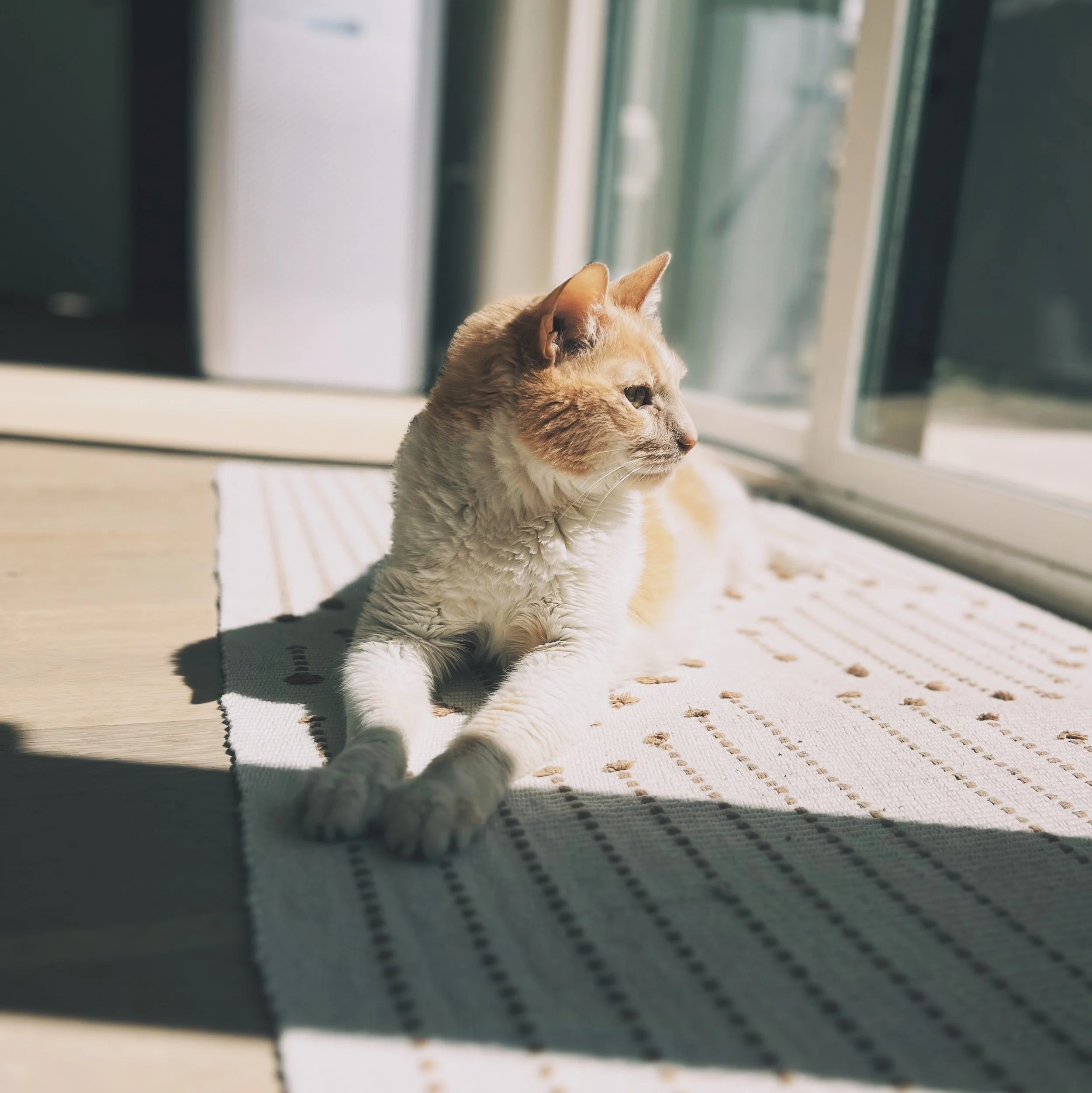
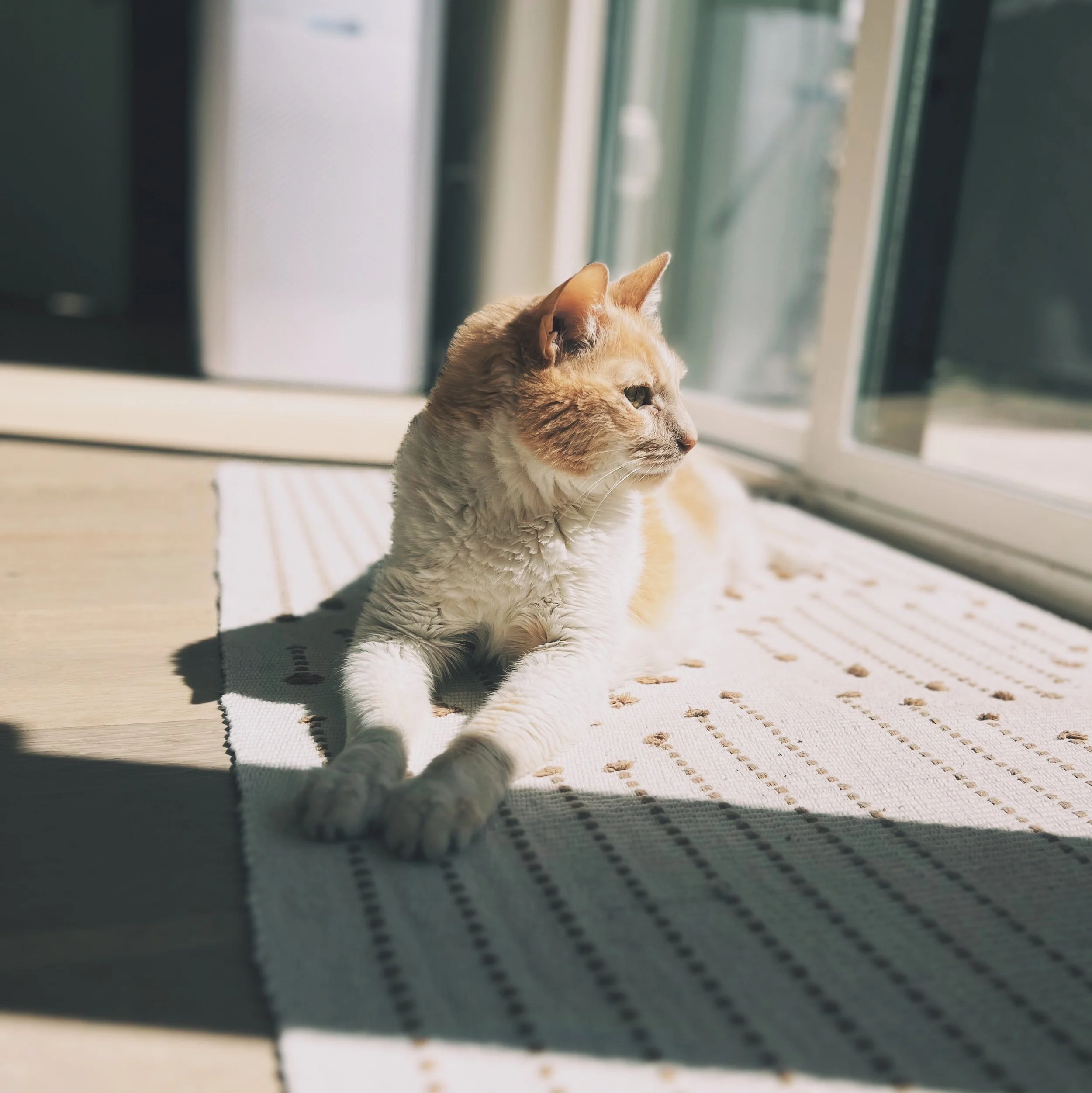
She was my cat — my companion, my studio mate, my entire universe for the years she was with me. She had diabetes, which meant years of careful management: insulin, blood glucose checks, the particular vigilance of loving something that needs you in a very specific and daily way. Hanna and I learned more about feline endocrinology than we ever expected to know. We gave her injections twice a day without blinking. We adjusted her diet, tracked her numbers, advocated hard for her at every vet visit. She was worth every bit of it and more.
When she passed, the studio went quiet in a way that had nothing to do with sound.
I'd been in that room with her for years — she had a spot, the way cats always have a spot, somewhere warm and elevated where she could keep an eye on things. On me. I'd look over mid-session and she'd be there, watching whatever I was doing with that particular quality of feline attention that manages to be both completely indifferent and deeply present at the same time. I didn't realize how much of my sense of not being alone in the studio came from her until she was gone and the room felt like a completely different place.
Hanna and I grieved her together. That matters — loss shared is still loss, but it is a different kind of weight when someone else in the room knew her too, loved her too, feels the same absence in the same spaces. We were a team in caring for her. We were a team in losing her.
Grief is strange. It doesn't announce itself cleanly. It arrives in the wrong moments, triggered by the wrong things — a spot on the couch, a food bowl you haven't moved yet, the particular silence of a room that used to have a small warm presence in it. It's nonlinear and irrational and it doesn't care about your schedule or your deadlines or the fact that you have work to do.
Music was there for us in that time. Specifically the kind of music I make, and the kind I turn to when language has nothing useful left to offer.
Why Grief and Words Don't Get Along
There's a reason the first thing most people reach for when someone they love dies is not a book or a podcast or a conversation. It's music.
Language is a tool for precision. For naming, categorizing, explaining. It works beautifully when the thing you're trying to express has edges — a specific thought, a logical argument, a story with a beginning and end. Grief doesn't have edges. Grief is the feeling that something has been removed from the world that cannot be replaced or explained or argued with. It exists in the body before it exists in the mind. It lives below the level of words.
Music lives there too. And ambient music lives there most of all.
There are no lyrics to follow, no narrative to track. No one is telling you how to feel or walking you through what the emotion means. There's just sound — texture and space and time passing slowly — and whatever you bring to it gets held by the music rather than redirected by it. You don't have to translate your grief into language and then translate it back. You can just be inside the sound and feel what you feel and let it move at its own pace.
That's a rare thing. And in the weeks after Nala passed, it was the thing we needed most.
What the Music Actually Does
I've thought a lot about the mechanics of this — why music helps in grief when so many other things don't, or can't, or only help partially.
Part of it is physiological. Grief is held in the body — in the chest, the throat, the jaw, the places where we physically brace against pain. The nervous system is doing something specific during grief, cycling between activation and collapse, between the sharp edges of a new loss and the strange flatness that follows. Slow, low, continuous music intervenes in that cycle in a quiet way. It gives the nervous system something steady to orient around. Something that says: the world is still moving, still breathing, still here.
But there's something beyond the physiological that I find harder to articulate and more important.
Ambient music, at its best, doesn't try to resolve. It doesn't build to a climax and release you on the other side. It holds a state — it exists inside a feeling without trying to move you out of it. For grief, that quality of non-resolution is not a flaw. It's the whole point. Grief doesn't resolve. It transforms, slowly, over time, into something you carry differently. Music that understands that — music that isn't trying to cheer you up or walk you through stages or land you somewhere tidier than where you started — that music is a companion in the truest sense.
It sits with you. That's all. That's everything.
The Records That Were There
Without Mindis the record I made in the most open, most psychologically unguarded state of my career — improvised scores for a ketamine-assisted therapy process, nothing planned, nothing fixed afterward. That quality of openness, of having nowhere to hide, is in the music. People use it for all kinds of things. But the messages I receive from people who listened to it in grief are the ones that stay with me longest.
Gentle Breath came from a different kind of hard season — the slow, sustained weight of burnout and anxiety that had been accumulating for longer than I'd admitted to myself. It's quieter than almost anything else I've made. More space, longer decays, less happening. I've come to think of it as music that knows when to stop talking. Which is maybe the most useful quality anything can have when you're in pain.
Both records were made from real emotional places. I think that's why they work for grief. Not because they were designed for it — they weren't — but because they were made honestly, and honesty has a quality that the grieving can feel. You can't fake your way into that frequency. Either the music came from somewhere real or it didn't. And people who are hurting are very, very good at knowing the difference.
A Few Things Worth Knowing
Grief is not a problem to be solved, and music is not a solution. I want to be clear about that. If you are in the acute pain of a fresh loss, please reach toward the people in your life, toward professional support if you need it, toward whatever holds you. Music is a companion on that road, not a substitute for the road itself.
But as a companion — something to sit with you in the hard hours, something to make the room feel a little less empty, something that asks nothing of you and offers presence in return — it is genuinely, practically, meaningfully useful. I have experienced this myself. I have heard it from hundreds of listeners. It is real.
The specific loss doesn't matter to the music. Nala was a cat. You might be grieving a parent, a partner, a friendship, a version of yourself you had to leave behind. Grief is grief. The music doesn't ask you to justify the size of your loss before it agrees to be present.
It just holds the room.
The same way she used to.
What Is Ambient Music, Really? A Guide From Someone Who Lives Inside It
People ask me this more than you'd think.
Not musicians, usually. Regular people. Someone hears a Six Missing track in a coffee shop or on a friend's playlist and something about it stops them — not in the way a song with a hook stops you, but in a quieter way. A settling. And they pull out their phone, look it up, and then wonder: what is this, exactly? What do you call it?
Ambient music. But that answer raises as many questions as it answers.
I've been making ambient music professionally for years now, signed to Nettwerk Music Group, with tens of millions of streams and a Times Square billboard I still can't quite believe was real. And I'll be honest — I still sometimes struggle to explain what it is at a dinner party. Not because it's complicated, but because the thing that makes it interesting is also the thing that makes it hard to describe. Ambient music is, almost by definition, the kind of thing you feel before you understand.
Let me try anyway.
It Started With a Missed Concert and a Delayed Flight
The origin story of ambient music as a genre — at least in its modern form — begins with Brian Eno sitting in an airport in 1978.
Eno had been in a car accident the year before and was recovering in bed when a friend came to visit and put on a record of 18th century harp music before leaving. The volume was too low — barely audible over the rain outside — and Eno was too weak to get up and turn it up. So he just lay there, listening to music that was more suggestion than sound, blending with the ambient noise of the room.
He later wrote that it was a revelation. The music wasn't asking to be listened to. It was simply present. It changed the quality of the air without demanding your attention.
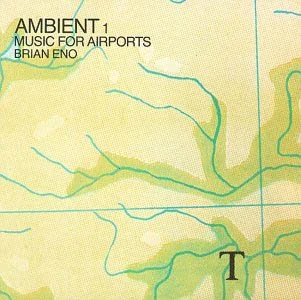
That experience led directly to Music for Airports, released in 1978 — four pieces of slow, looping, largely textureless music designed to be played in public spaces. Not elevator music, not Muzak. Something genuinely different. Eno called it ambient music, and the name stuck.
But the seed had been planted even earlier, by a French composer named Erik Satie, who wrote what he called musique d'ameublement — furniture music — in 1917. Music that was meant to be part of the environment. Music you weren't supposed to actively listen to. Satie reportedly got annoyed when audiences sat down and paid attention to it. That wasn't the point.
The point was presence without demand. It's still the point.
What It Actually Is (And Isn't)
Ambient music is, at its simplest, music that prioritizes atmosphere over structure. There's no verse, no chorus, no build toward a climax. There's usually no melody in the traditional sense, no rhythm you'd tap your foot to. What there is: texture, space, movement that's more like weather than narrative.
It's not background music, though it often gets used that way. Background music is designed to be ignored. Ambient music is designed to be present — available to you at whatever depth you want to engage with it. You can let it wash over you while you work. You can also put on headphones, close your eyes, and find entire worlds inside it. Both are valid. That range is part of what makes it unusual.
It's not the same as lo-fi, though they share some DNA. Lo-fi has beats. Lo-fi has structure. Ambient music doesn't need either.
It's not meditation music, though it's often used for meditation. It's not sleep music, though it's wonderful for sleep. It's not focus music, though it's one of the best focus tools I know. It refuses to be just one thing, which is part of why it's been so hard for the music industry to know what to do with it.
Japan Did Something Different With It
While Eno was developing ambient music in England in the late 1970s, something parallel — and in some ways more interesting — was happening in Japan.
Japanese composers began developing what they called Kankyo Ongaku, which translates roughly to environmental music. The concept was rooted in a distinctly Japanese aesthetic sensibility: ma, the idea that the space between things is as important as the things themselves. Silence not as absence but as presence. Negative space as a compositional element.
Hiroshi Yoshimura released Music for Nine Postcards in 1982 — delicate synth melodies so sparse they feel like light through blinds. Midori Takada's Through the Looking Glass, released a year later, is one of the most hypnotic records I've ever heard, percussion and texture cycling slowly like tides. Satoshi Ashikawa made music where the silence between notes felt as carefully placed as the notes themselves.
This tradition influenced everything that came after it. When I first went deep into Japanese ambient music a few years ago, I found myself listening with a different kind of attention — slower, more patient. It changed how I compose. That philosophy of negative space lives in my music now, even when I'm not consciously reaching for it.
Where It Lives Today
The genre that Eno named and Satie pre-figured and the Japanese environmental composers deepened has grown into something enormous — and also something still largely unknown to mainstream audiences, which is one of the stranger contradictions in contemporary music.
Olafur Arnalds, who works out of Iceland, blends ambient electronics with chamber strings in a way that feels both ancient and completely modern. He's the person who made me realize the Korg PS-3100 — a massive, fully polyphonic synthesizer from 1977 that I now own — could be a vehicle for genuine emotional expression. Watching him speak about that instrument in an interview sent me on a months-long search until I found one, had it put on a plane, and picked it up at the airport like a piece of precious cargo.
Nils Frahm treats the piano like a synthesizer and synthesizers like pianos, collapsing the boundary between acoustic and electronic until it dissolves entirely. Max Richter's Sleep — an eight-hour piece designed to be listened to overnight — is one of the most audacious artistic statements of the last 20 years, and also one of the most genuinely useful. I've covered one of its movements, Dream 1, as a tribute.
And then there are the artists working at the edges of the genre, doing things that don't have names yet. That's where it gets exciting.
What It Means to Me
I came to ambient music through sound design. I spent years — still do, most of the time — working as a re-recording mixer and sound designer for film, television, and advertising. That work is all about how sound creates feeling. How a particular frequency in a particular space makes a body feel safe or uneasy. How the absence of sound can be more powerful than any score.
When I started making music as Six Missing, I wasn't thinking about genre. I was thinking about space. About what it would feel like to be inside a piece of music rather than listening to it from the outside.
The name Six Missing comes from a ghost story — a real one, something that happened to me near a Revolutionary War battlefield in Pennsylvania, a night I still can't fully explain. That experience of the liminal — of something just beyond the edge of perception — is at the center of everything I make. Ambient music, more than any other genre, lives in that space. The space between what you can name and what you can only feel.
That's what it is, really. Not a tempo. Not a structure. Not a mood.
A space.
And an invitation to step into it.
What the Olympics Taught Me About Devotion
I didn’t expect to tear up watching the Olympics. But I did. Not because of the gold medals — because of the devotion. It made me think about what it means to give your life to something, long before anyone is watching.
Over the weekend, while traveling to visit family, I accidentally watched a lot of the Olympics.
“Accidentally” meaning — it was just on. And I stayed.
I haven’t watched the Olympics in years. Not for any particular reason. They just hadn’t crossed my path. But this time I found myself completely transfixed.
Holy crap.
It is absolutely insane what humans are capable of.
These are people operating in the top fraction of a percent of humanity. Professionals who have dedicated their lives — truly their lives — to something most of us would consider obscure.
I kept turning to my brother-in-law and asking, “How does someone even discover they’re good at something like curling?”
Not just good. World-class.
And then beyond that — how do they love it enough to give themselves to it? To wake up early. To fall. To lose. To repeat. For years.
The drone shots behind the bobsled and speed skating really put things into perspective. That’s where you can feel the speed. The danger. The razor-thin margins between victory and heartbreak.
They are superhuman.
But here’s what actually got me.
I teared up.
Not because of the gold medals.
But because I watched two downhill skiers finish their runs — both completely exhausted, having just given everything they had. The results flashed on the board. One rejoiced. The other was crushed.
And yet — they turned to each other and embraced.
Different countries. Different languages. Years of rivalry.
Mutual respect.
It hit me harder than I expected.
Because underneath all of the flags and national anthems and commentary, what I was actually witnessing was devotion.
Years of quiet, invisible devotion.
Devotion Is Invisible Most of the Time
We only see the podium moment.
We don’t see the 5:00am practices.
The injuries.
The self-doubt.
The repetition.
The years when no one was watching.
It made me think about craft in general.
About anyone who gives themselves to something long enough that it shapes who they are.
As I sat there watching, I felt something quietly familiar.
Not in an ego way.
Not in a “compare yourself to Olympians” way.
But in a “this is what dedication looks like” way.
I’ve been playing guitar since I was twelve years old.
Long before I could really play it.
Long before I understood scales or modes or tone or discipline.
I just knew I was drawn to it. To the way it felt in my hands. To the sound vibrating through wood and air.
I’ve been chasing sound ever since.
Recording in bedrooms.
Looping in Astoria apartments.
Sitting in front of speakers adjusting a reverb tail by half a decibel.
Vintage synths humming in the background.
Field recordings captured on walks.
Sessions where nothing worked.
Sessions where everything clicked.
No medals.
No podium.
But devotion all the same.
The Long Arc of Showing Up
When I think about it, I’ve dedicated my life to sound.
Not in a glamorous way.
In a consistent way.
The kind where you show up whether you feel inspired or not.
The kind where you keep refining your ear.
The kind where you move through burnout.
Through addiction.
Through grief.
Through doubt.
Two months ago today, our sweet Nala passed.
Time since then has felt both instantaneous and eternal.
My brain has been in survival mode.
Just getting through.
And yet — even in that fog — I’ve still shown up to the studio.
Not because I had to.
Not because of an algorithm.
But because it’s what I do.
It’s my craft. It’s my way of processing. It’s my version of training.
Devotion doesn’t always look dramatic.
Sometimes it looks like quietly sitting at a piano and letting one chord ring.
Sometimes it looks like scrapping a mix and starting over.
Sometimes it looks like releasing ambient music without expectation.
Respect for the Ones Who Show Up
Watching those athletes embrace each other reminded me of something simple:
When you’ve given yourself to something fully, you recognize that same dedication in others.
It’s not about winning.
It’s about the shared understanding of what it took to get there.
There’s something deeply human about that.
In a world that feels increasingly divided — politically, socially, digitally — I found myself unexpectedly moved by the simplicity of respect.
Different countries.
Different ideologies.
Same sacrifice.
Same discipline.
Same love of craft.
And it made me think about the creative community, too.
Every artist I admire — whether ambient composers, film scorers, modular synth explorers, or painters — has devoted their life to something intangible.
We may make wildly different sounds.
We may hold different beliefs.
But underneath it all is a shared devotion to making something honest.
We Are All Training For Something
Maybe not the Olympics.
But something.
Maybe it’s parenting.
Maybe it’s healing.
Maybe it’s sobriety.
Maybe it’s building a life aligned with your values.
Maybe it’s simply trying to be a decent human in a loud world.
I think what moved me most was remembering that beneath the noise, we are all training for something.
We are all trying.
We are all tired sometimes.
We are all giving more than people see.
And when we remember that, it becomes a little easier to extend grace.
To embrace instead of divide.
To respect instead of diminish.
Devotion Over Division
The Olympics didn’t make me patriotic.
They made me reflective.
They reminded me that dedication is sacred.
That craft is worthy.
That respect is powerful.
And they reminded me that even in grief, even in uncertainty, even in survival mode — I am still devoted to what I do.
Not because it makes me special.
But because it keeps me human.
And maybe that’s the point.
We are humans.
All going through things.
Trying to do our best.
And if we can meet each other there — in the shared understanding of effort — maybe we’ll be alright.

A blog.
Well, here we go. A blog.
So, you might ask yourself, “what is TJ doing writing a blog? Doesn’t he already do so much?” And the answer is well…I don’t know and…yes.
I thought it could be fun to start a longer form writing practice as I’ve found my newsletters can get a little wordy. But that’s the thing - I am so passionate about what I do and how I do it that I find it nearly impossible to condense it down to what are essentially bullet-pointed thoughts in a newsletter.
Alas, we’ve arrived at “the blog.”
I suppose you could say I missed the boat back in the early 2000s when everyone was blogging and writing posts - I think it would’ve probably helped me become more popular within the Instagram world earlier too had I done that. But I was too busy occupying myself with other things - namely music. Truthfully, I didn’t even really understand the purpose of Instagram when it first started. Share photos? Why? But very quickly the photos became a way to reach people and then people saw the power of that and figured out a way to upload videos. But then the videos could be used as a way to brand yourself and now you’re competing with actual brands so your videos had to get better; look better, sound better, be snappier. And now we’re making Reels and the trend is to make a 6 second reel, so on and so on…
It’s massively overwhelming being an artist, period. I don’t care what time you were or are one, it’s hard. Off the bat you’re a person who likely “feels” more than your average person so you’re acutely aware of human emotions, the human condition, nature, animals, all of it. Take that “feelingmachine” and drop it into a world where you have to advocate for yourself and your art 24 hours a day and you’ve got yourself quite the situation. But I actually love it. I love sharing my work and who I am and how I make my art. I truly enjoy hearing about the connections it makes with people and not in the self-stroking-ego way, but in the way that makes me feel truly good that I was able to drop some positivity into this chaotic world.
Here we are now. Coming back to the blog.
Is blogging more or less journaling? Maybe I’ll use it that way. There are already so many people out there using longform blogs as a way to catalogue their methods and work so I don’t feel the need to fill that void. Rather, I want to share more about who I am and the person that is behind my work. Perhaps you’ll find things that you connect with and say “hey, I feel that too!”
Okay, so. Blogging. Blogging.
Time see where this goes!