
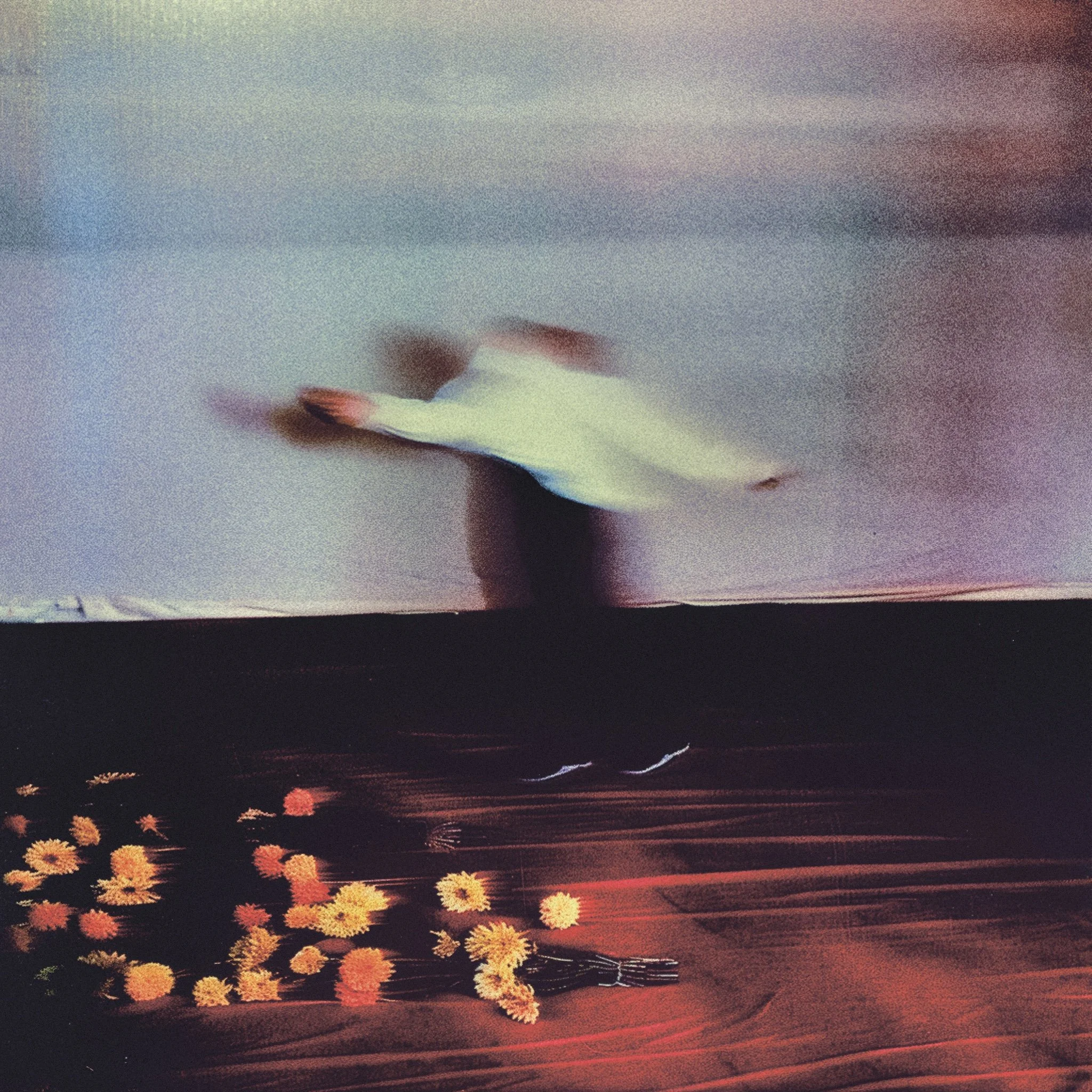
drift, sway: a new ambient album for focus, rest, and the slow return of light
There's a particular kind of creative energy that only shows up in winter. I've stopped fighting it. The days get short, the world goes quiet, and something in me starts reaching for the pedalboard.
drift, sway — my new full-length album out April 10th via Nettwerk — came from exactly that place. Ten pieces of ambient music built for the moments when you need the world to slow down: deep focus, quiet reading, the kind of sleep that actually restores something.
How it was made
I kept the approach as minimal as I could. Guitar as the primary instrument. A Boss DD-20 set to a 16-second looper mode as the spine of nearly every piece. From there: the Count to Five, the Meris Mercury 7, the EarthQuaker Devices Avalanche Run. Subtle warmth from a vintage Moog Minimoog and a Korg Polysix drifting in and out at the edges.
Nothing here was overworked. The goal was to capture a feeling — the sensation of breath, of a room settling, of time moving a little slower than usual. I've always believed that ambient music works best when it doesn't announce itself. When it just becomes part of wherever you are.
Two movements, one arc
The album splits into two halves. Drift — six pieces — leans into weightlessness. Guitar textures that float, loops that fold back on themselves, small moments held gently. Sway goes deeper: slower tempos, darker tones, more interior.
Together they move from presence to introspection. From the exhale to the stillness after.
Some of the track titles are rooted in specific memories. Afternoon walk is a quiet ode to daily walks with my wife Hanna. Sandcastles goes back further — summers on the Jersey Shore, the particular impermanence of things you build at the water's edge. Others are harder to name. They came from a season that had some weight to it, and they carry that without making a big deal of it.
Spring felt like the right time to release this. Music made in the dark, offered in the light.
For your next quiet hour
If you work better with something in the background that doesn't pull focus — this is for you. If you read before bed and need sound that doesn't follow you into your dreams — this is for you. If you've just had a hard few months and you're not quite sure how to re-enter the world — honestly, this one's for you too.
drift, sway is out April 10th everywhere. A full-length visualizer drops the same day on YouTube.
🎵 [Stream here] 📺 [Watch the visualizer]
Six Missing is the ambient project of Austin-based composer and sound designer TJ Dumser. His music has amassed over 200 million streams globally and is released via Nettwerk Music Group.
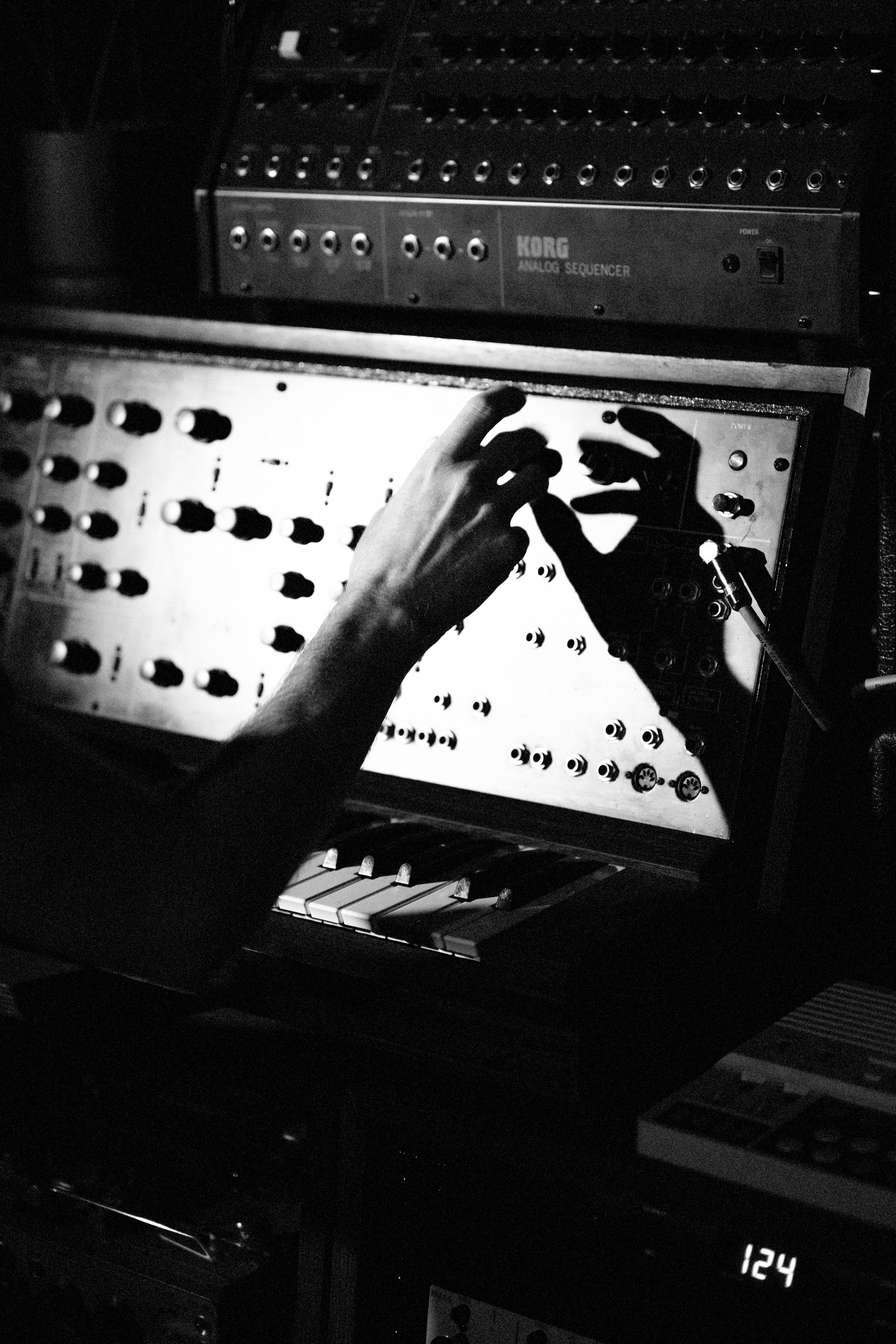
The Gear That Shaped My Sound (Part 1)
The Gear That Shaped My Sound
Every artist has a toolkit—an array of instruments, effects, and processes that define their creative language. For me, that toolkit is built on texture, space, and the unpredictability of sound. Six Missing wouldn’t exist without the instruments that have shaped my sonic world, from vintage synths to looping techniques that stretch time itself.
The Role of Vintage Synths
For better or worse, I have a lot of gear—and I happen to love it all. To prevent this blog from running too long, this will likely turn into a multi-part series or a recurring feature to cover all my gear babies. Synthesizers have been at the heart of my exploration into ambient music. Early in my journey, I discovered that not all synths are created equal—there’s something undeniably human about vintage analog gear. Their slight imperfections, the unpredictability of their oscillators, and the warmth of their tone make them feel alive.
Some of the most influential synths in my setup include:
Moog Matriarch – A semi-modular powerhouse that allows for deep, organic sound design. The way its filter interacts with evolving patches has been central to my compositions.
Moog Minimoog Model D – One of the most legendary synthesizers of all time, its unmistakable tone brings warmth and character to any track.
Korg PS-3100 – A polyphonic monster with rich modulation possibilities, perfect for creating vast, evolving soundscapes.
These synths have become more than just tools—they're collaborators in my creative process, each adding its own voice to the sonic conversation.
Delay & The Art of Sound-On-Sound
Before I ever touched a synthesizer, I was obsessed with delay pedals. There’s something hypnotic about hearing a note repeat, degrade, and take on a life of its own. This obsession led me to experiment with sound-on-sound looping, a technique where repeated layers of sound evolve organically over time.
Some of my go-to delay and looping tools include:
Boss DD-20 Giga Delay – My introduction to long-form looping, allowing me to create lush, evolving textures with extended delay times.
Strymon El Capistan – A tape-style delay that captures the character of vintage tape echoes, adding warmth and unpredictability.
EarthQuaker Devices Avalanche Run – A pedal that blends delay and reverb into one ethereal wash of sound, perfect for ambient compositions.
By layering loops with subtle modulations, I create evolving atmospheres that feel immersive and organic, allowing each piece to develop naturally over time.
The Studio Workflow
Though I started with Pro Tools, I transitioned to Ableton Live in 2018 and never looked back. Its non-linear workflow makes it perfect for experimenting with loops, textures, and unpredictable signal chains. Whether I’m routing synths through a chain of analog delays or resampling a field recording into granular synthesis, my approach to recording is fluid and exploratory.
At the heart of my studio is an ethos: let the sound guide the process. Whether it’s a synth patch that unfolds in an unexpected way or a delay trail that becomes the foundation of a new piece, I embrace happy accidents. It’s in those moments of unpredictability that the real magic happens.
Why Gear Matters and Doesn't
At the end of the day, gear is just a means to an end—but the right tools can unlock something deeper. That said, I could accomplish this with far less gear, and I fully acknowledge that. If you're just starting out, don’t feel pressured to amass a collection—some of my favorite pieces of music started with just a single instrument and a simple effect. The process takes time, and the journey should be fun. Experiment, learn what works for you, and remember that creativity isn’t about how much gear you have—it’s about how you use it. Each synth, pedal, and effect in my setup has shaped Six Missing in its own way, providing the textures and colors that define my sound. While I’ll always experiment with new tools, it’s the ones that inspire me to listen differently that truly matter.
Until next time, Your fellow human just being.
Six Missing

The Origins of Six Missing: A Project Born from Exploration
The Origins of Six Missing: A Project Born from Exploration
Six Missing was never meant to be a project—it was simply a personal exploration of sound. But, like many of the most meaningful creative endeavors, it took on a life of its own. What started as looping guitar textures in a quiet room grew into an immersive sonic world, and over time, it became clear that people connected with it in ways I never anticipated.
The First Explorations
Before Six Missing had a name, it was just me, my guitar, and an obsession with delay. My first real experiments with looping came from playing with an EarthQuaker Devices Avalanche Run, a pedal that immediately reshaped how I thought about sound. There was something hypnotic about the way loops stacked on top of each other, morphing and dissolving into infinite variations. That feeling of endless possibility became a central theme in my work.
In those early days, my setup was minimal—just a handful of pedals and a Fender Deluxe Reverb. But I found that simplicity gave me room to explore, to push the limits of what I could create with just a guitar and a delay loop. Over time, my experiments expanded. I brought in more effects, more layers, more intention. Eventually, my sonic palette grew beyond guitar-based looping into something more expansive.
The Shift to Synths & Ambient Soundscapes
As I refined my approach, I realized that I wasn’t just interested in playing music—I was interested in sculpting sound. That shift led me to synthesizers, which opened up an entirely new world of textures. My first synth, a Korg Minilogue, was an introduction into synthesis, but it was my discovery of vintage synths that truly changed everything.
The Moog Matriarch, Moog Minimoog, and Prophet-6 were my first foundational synths, shaping the sound of Six Missing. These instruments had a warmth and character that modern synths often lack, and each one brought a unique voice to my compositions. The imperfections—the slight warbles, the unpredictable modulation—made the sound feel alive. It was around this time that Six Missing began to take form as more than just a series of experiments.
The Name & The Meaning Behind It
The name Six Missing came from an eerie, almost supernatural experience in West Chester, PA. I was staying at a friend’s studio near the site of the Battle of Brandywine, and late one night, I felt an overwhelming presence—something I couldn't explain. It was as if I was being watched, and for a brief moment, I felt a cold sensation press against my back. It wasn’t until later that I learned about six soldiers who were unaccounted for from that battle. The experience stuck with me, and when it came time to put a name to my music, Six Missing felt inevitable.
Finding an Audience
For a long time, these pieces were just for me—an outlet, a meditative process. But when I started sharing them, something unexpected happened: people resonated with them. Listeners told me they used my music to focus, to meditate, to calm anxiety. It became clear that Six Missing wasn’t just about me—it was about creating space for others to feel something, too.
When I officially released my first collection of ambient compositions, I was floored by the response. The music found its way to people who needed it, and that encouraged me to keep going. I leaned further into the emotional core of the project, refining the way I approached sound design and composition.
What Six Missing Represents Today
Today, Six Missing is more than just an experiment—it’s a way of being. It’s a reminder that music can be a space for reflection, for stillness, for deep listening. Every piece I create is rooted in the idea of giving listeners a moment to breathe, to reset, to simply be in the present moment.
This blog will continue to explore the themes that have shaped Six Missing, from my struggles with addiction to my relationship with running, meditation, and self-discovery. Music is the thread that ties it all together, and I’m grateful to share this journey with you.
Until next time, Your fellow human just being.
Six Missing