
Six Hundred Records and a Brain That Finally Feels Better
My love for records started in an attic.
My grandmother's attic, specifically — that particular kind of attic that belongs to a house where a whole family grew up, where things accumulate in layers the way sediment does, each layer a different decade, a different version of people you love. I was digging around up there one afternoon as kids do, not looking for anything in particular, when I found them: my dad's and uncles' old records. Stacked and forgotten.
Led Zeppelin II.Led Zeppelin IV.
My uncle had an old turntable up there — one he'd gotten from the local library, a suitcase-style unit, the kind where the lid folds open and the speaker is built into the top half and the turntable sits in the bottom. It was not a fancy piece of equipment. It was perfect.
I put on Zeppelin IV and heard 'Black Dog' for the first time in my life and everything was different.
Not metaphorically different. Actually different. Something rearranged itself in the way I understood what music could do and what it was for. I was not prepared for the physicality of it — the way the sound came out of that little built-in speaker, the way the room felt. And then there was the object itself. I sat there and held it. Turned it over. Read the liner notes. Studied the sleeve while the music played. I had never spent time with an album before in that way — music and object together, one inseparable experience that rewarded your full presence. The record was still playing and I was completely inside it. There was also the smell. I don't know how to explain the smell of old vinyl to someone who hasn't experienced it, except to say that it is one of the most immediately transporting sensory experiences I know. One inhale and I'm a kid again in that attic with the afternoon light coming through the small window and the whole world rearranging itself quietly.
That was it. That was the beginning.
What Records Actually Are
I want to say something about what made that moment different, because I think it gets at why physical media is not nostalgia. People frame vinyl that way a lot — as a backward-looking thing, a resistance to progress, a sentimental attachment to obsolete technology. I disagree pretty strongly.
A record asks you to be present. It has a Side A and a Side B — at least — which means it has an intention baked right into the format. A shape. A sequence. A beginning and an end that someone decided on deliberately, that you have to honor by getting up, crossing the room, and turning it over. You have to handle it carefully. The ritual of playing a record is, quietly, a practice of attention — and in a world that runs on infinite scroll and algorithmic recommendation and music that plays forever until you remember to stop it, there's something genuinely countercultural about a format that asks you to participate.
I have been participating enthusiastically ever since.
The Completist Problem
I've also been a collector my entire life, which is either related to the record thing or just a separate personality trait that found its ideal expression in it. Baseball cards first. Then POGs — yes, POGs, no apologies. No Fear hats. Power Rangers. And eventually, inevitably, vintage synths and guitar pedals. Whatever the thing was, I wanted the complete set. The gap in a collection isn't a minor inconvenience to a brain like mine. It's a small, persistent hum of wrongness that doesn't resolve until the gap is filled.
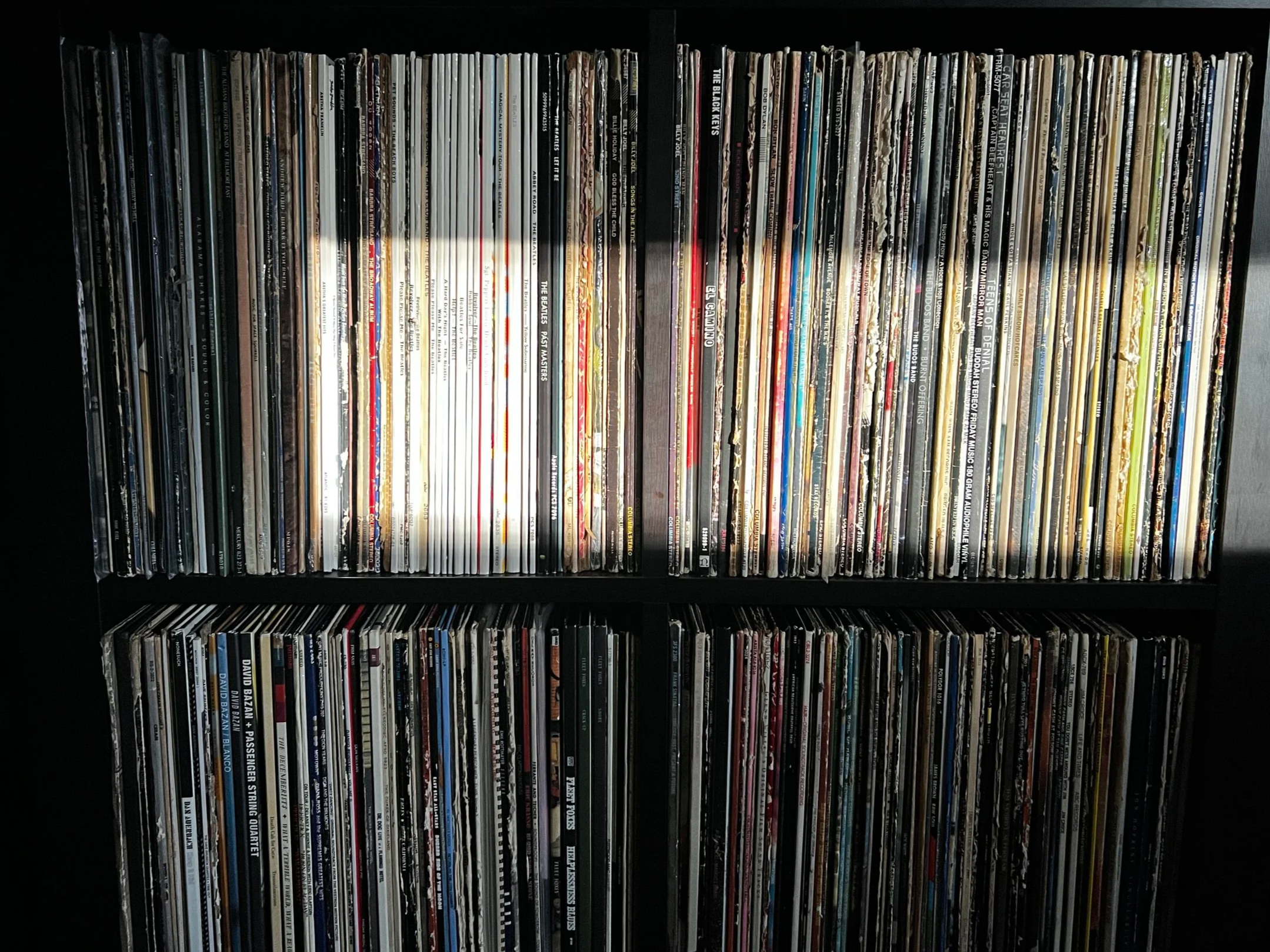
Here's the funny thing about record collecting, though: a record collection is never actually complete. That's not a bug. That's the whole point. There's always another pressing you didn't know existed, another record that slipped through, another artist you fell down a rabbit hole for at two in the morning. The collection keeps growing because it's supposed to. The completist in me found a hobby that is, by design, impossible to finish — and somehow that just makes it more fun. I'm not sure what that says about me, but I've made peace with it.
Records and this particular brain wiring were made for each other.
The collection has moved with me from Brewster to Astoria. Back to Brewster. Back to Astoria again — long story, double round trip, it made sense at the time, I promise. Then Austin. Then another home in Austin. The records are always the first thing I pack and always the first thing I unpack. Everything else can live in boxes for a few extra days. The records cannot.
The Rainy Weekend in Astoria
For years I knew what I had, roughly. But roughly is not the same as actually, and the completist in me knew the difference even when I was pretending not to. Which pressing? Which edition? Do I already own the thing I'm currently considering buying? I have gotten that last question wrong in both directions more than once.
One rainy weekend in Astoria I sat down with Discogs and fixed it. I input all of it — around 600 records, give or take, by the time I finished. Cross-referenced pressings. Tracked down matrix numbers. Made notes on condition. It took most of the weekend and I enjoyed every minute of it in a way that probably says something about me as a person.
When I finished, something in my brain genuinely felt better. Like a drawer that had been stuck for years finally sliding closed all the way. There is a particular relief that comes from having something you love properly documented — from taking it seriously enough to give it that kind of attention. My collection existed before Discogs. But it became real on Discogs, in the way that things become real when someone gives them the care of being properly cataloged.
What I didn't expect was how much I'd come to rely on it day-to-day. The ability to pull up my full collection at a glance — to be standing in a record store, see something, and know immediately whether I already own it — is something I didn't fully appreciate until I had it. The number of duplicate purchases it has saved me is genuinely funny. The completist brain does not handle duplicates gracefully. Discogs handles them for me now. I'm grateful every time I open the app.
Solo Dates and The Thing
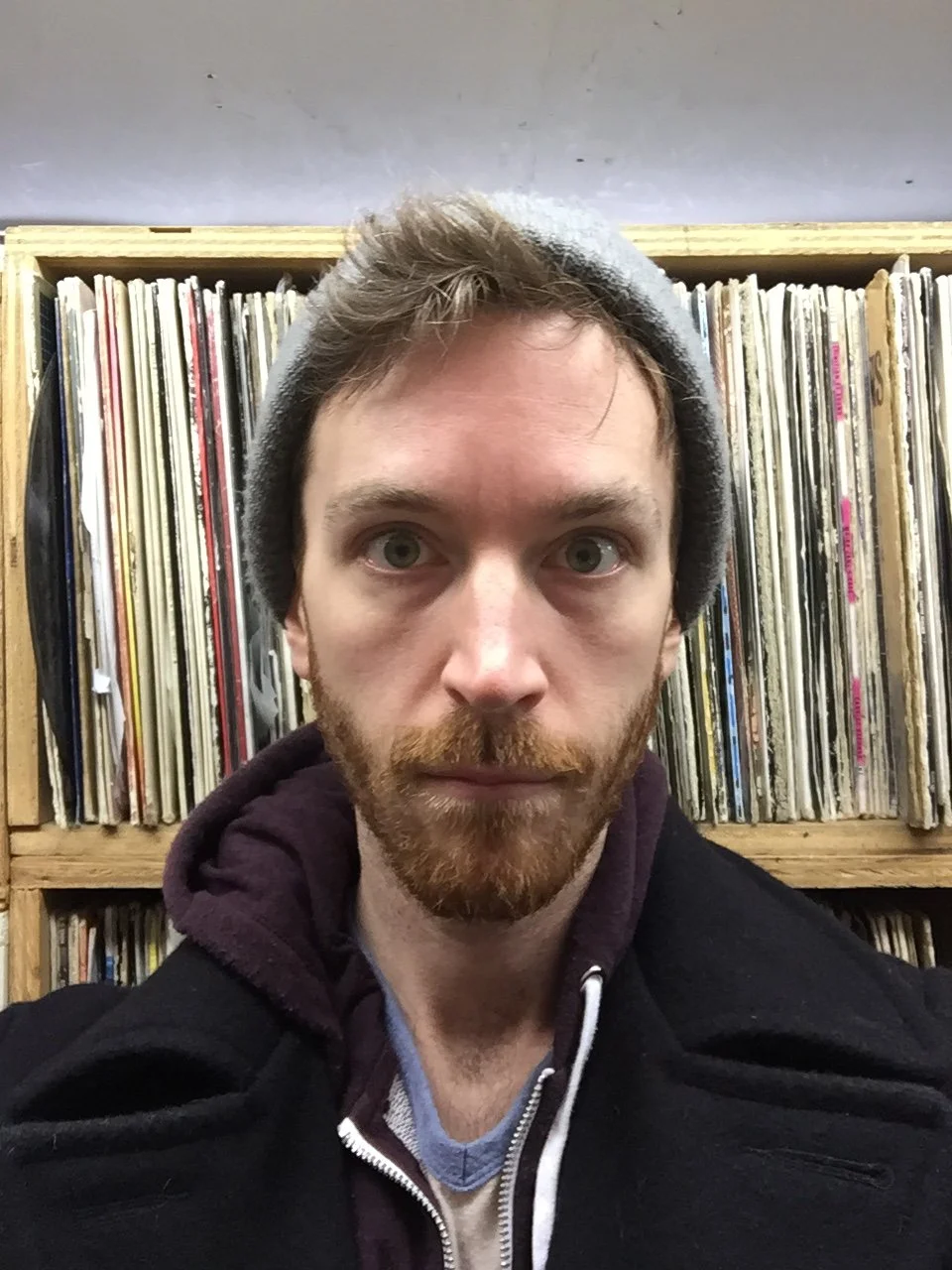
I used to take myself on solo dates to record stores around New York City. This is something I recommend to everyone — the solo record store trip is one of the great underrated pleasures. No agenda, no one else's taste to negotiate, nowhere to be, just you and the bins and whatever you find.
I had my rotation around the city. But my Everest — the store I'd point anyone toward, the one that is genuinely indescribable to someone who hasn't been inside it — is The Thing in Greenpoint, Brooklyn.
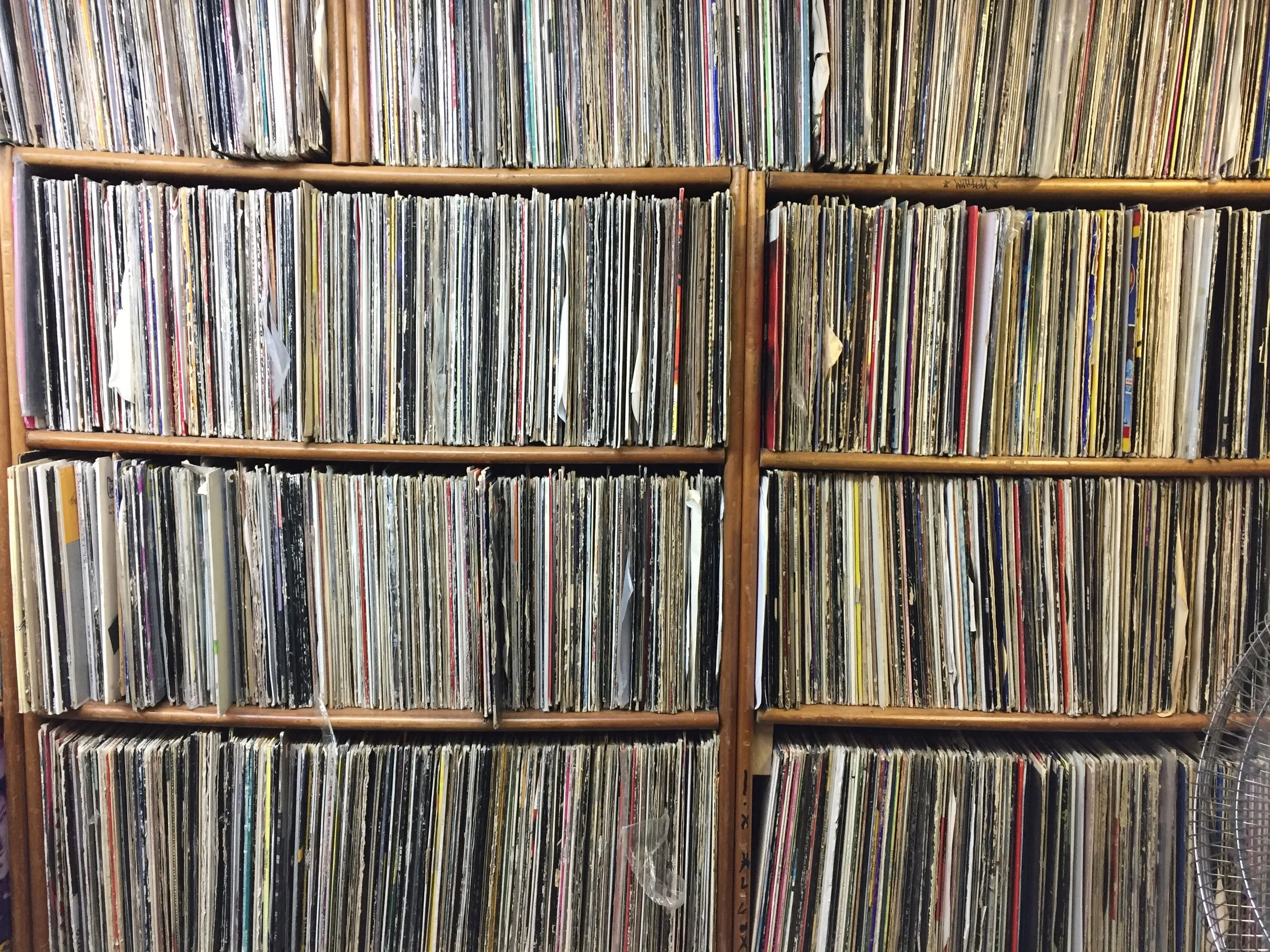
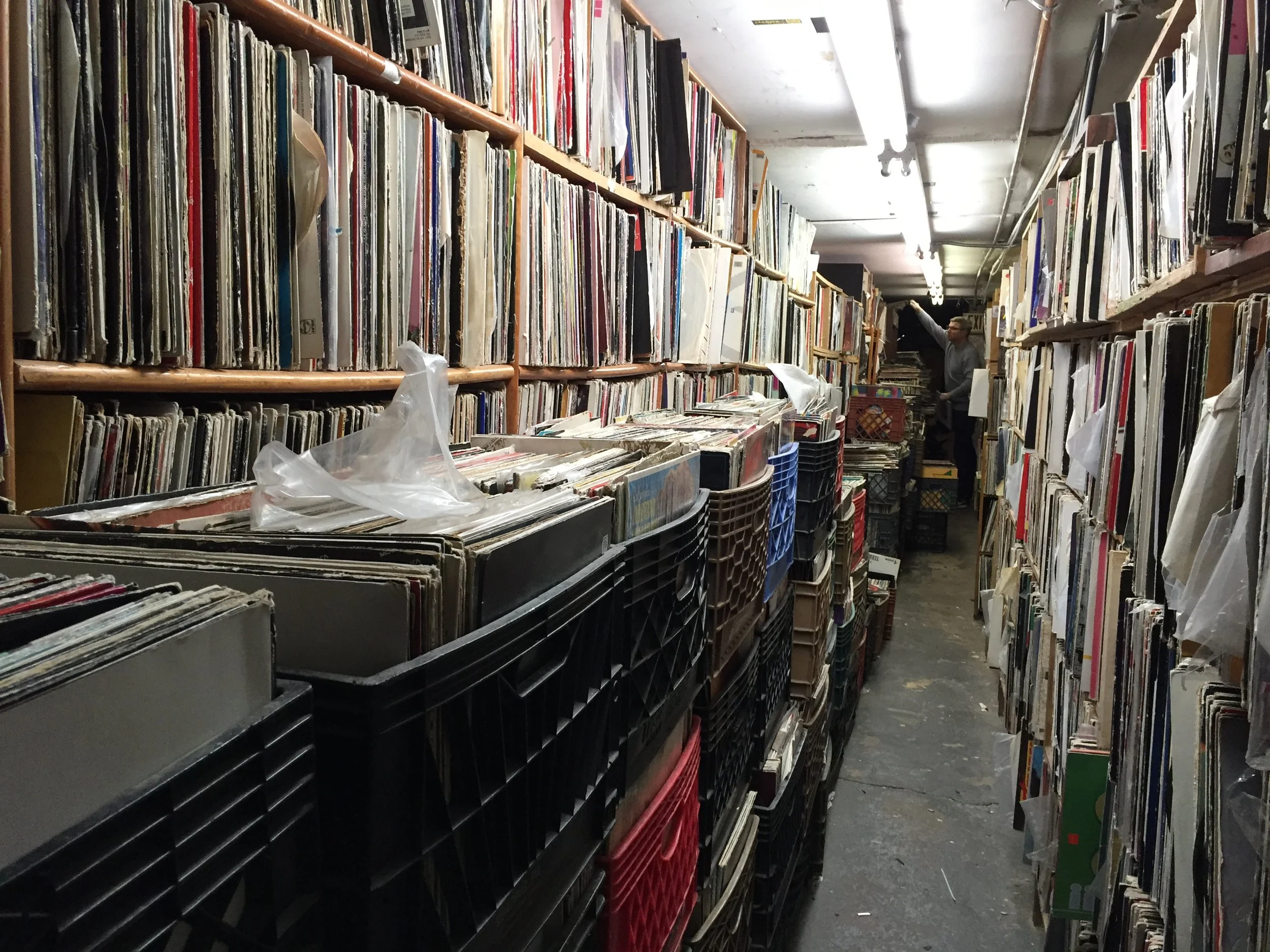
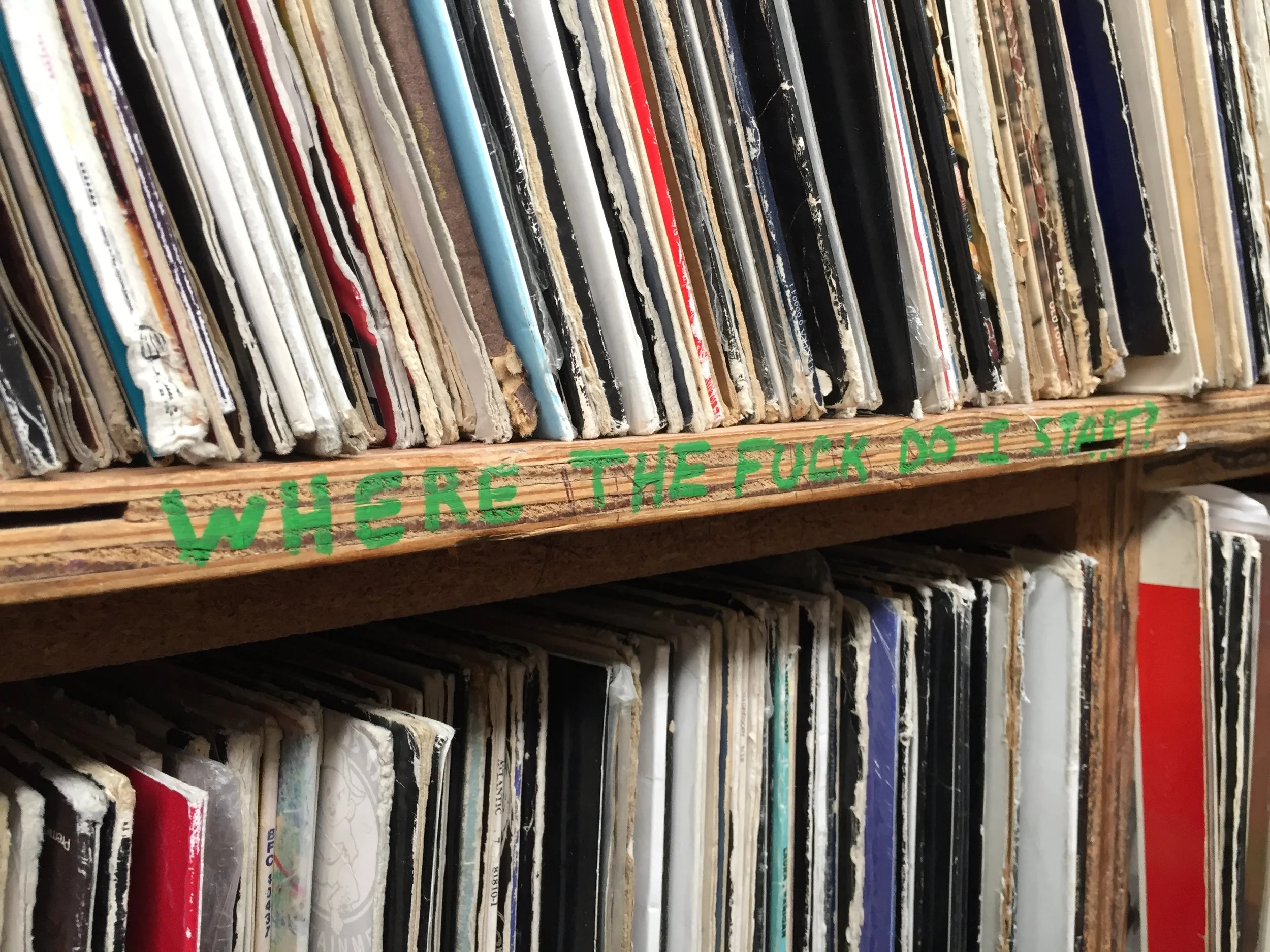
I don't know how to explain The Thing. I'll try and fail. It is enormous and overwhelming and completely without pretension, and there is no order to it whatsoever. None. You cannot go in there with a plan, because you will fail. What you can do is surrender to it — give yourself over to the chaos, dig slowly, let the room work on you — and if you do that, the reward is the kind of discovery that simply cannot happen anywhere tidy. I have found things at The Thing that I did not know existed. I have also spent hours finding nothing and left feeling like I'd spent the afternoon well. That is the mark of a great record store.
The Wood Brothers, Loaded, and Ten Years of Looking
Here is the part of this that I think about most when I think about what Discogs actually means to me.
Loaded by The Wood Brothers was one of the first records Hanna and I fell in love to. Not with — to. It soundtracked the beginning parts of our relationship, those early months when everything is new and you don't know yet that you're building something that will last, you just know that the music playing in the room feels like it belongs completely to the moment.
For ten years after that, I looked for a physical copy. In shops around New York. Online. Whenever I was somewhere with a good record store I would check. It had become one of those records — the ones that exist in your mind as slightly mythological, a thing you'd like to have but have quietly started to suspect you may never actually find. You make peace, sort of, with the digital version. You tell yourself it's fine. It is not fully fine.
Then one day, there it was on the Discogs marketplace. I stared at the listing for a long moment and genuinely wondered if it was a scam — it had been so rare, to me at least, for so long that my brain had almost stopped believing it was an obtainable object in the world. I bought it anyway. Heart in my throat a little.
It arrived. It was real. It was in great condition.
Every time I put Loaded on the turntable now, something in me smiles before the needle even hits the groove. Not because of what it cost or how long it took, but because of what it holds — the beginning of something that became the most important relationship of my life, recovered from time and distance and ten years of missed opportunities by a marketplace that takes this stuff as seriously as I do.
I am genuinely grateful to Discogs for that. In a way that might sound disproportionate until you understand what the record means.
The Record I Got to Add
There is one more Discogs moment I want to tell you about, because it felt different from all the searching and cataloging and marketplace browsing.
Without Mind — my record on Nettwerk, built from experimentations writing music for a ketamine treatment session, pressed as a triple LP — went to vinyl. A real, physical object that hadn't existed and then did.
The moment I got to add it to the Discogs database myself — to submit my own release, to give it the same catalog treatment I'd given hundreds of records by artists I'd loved for decades — I sat with that for a minute. Maybe longer than a minute.
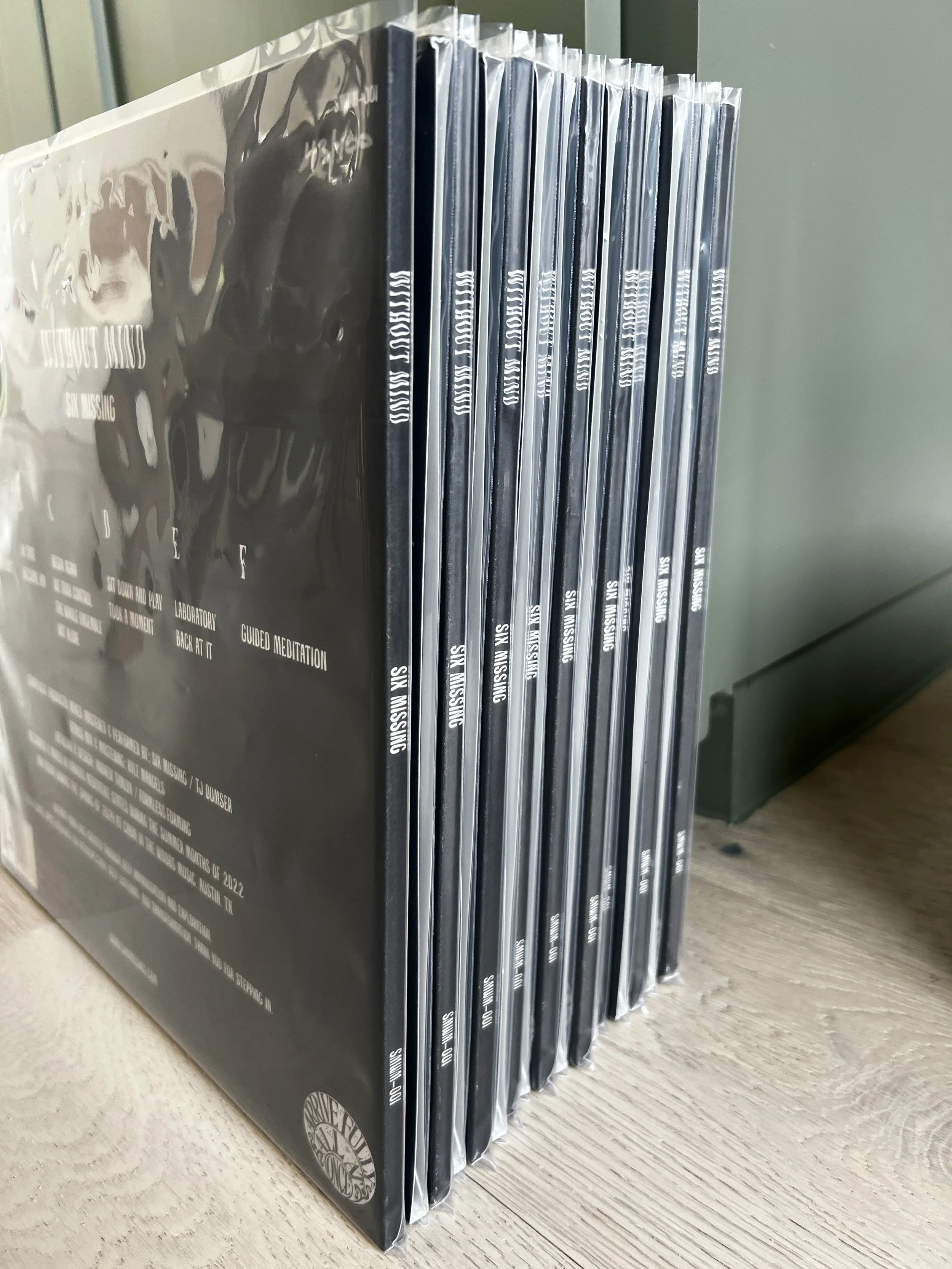
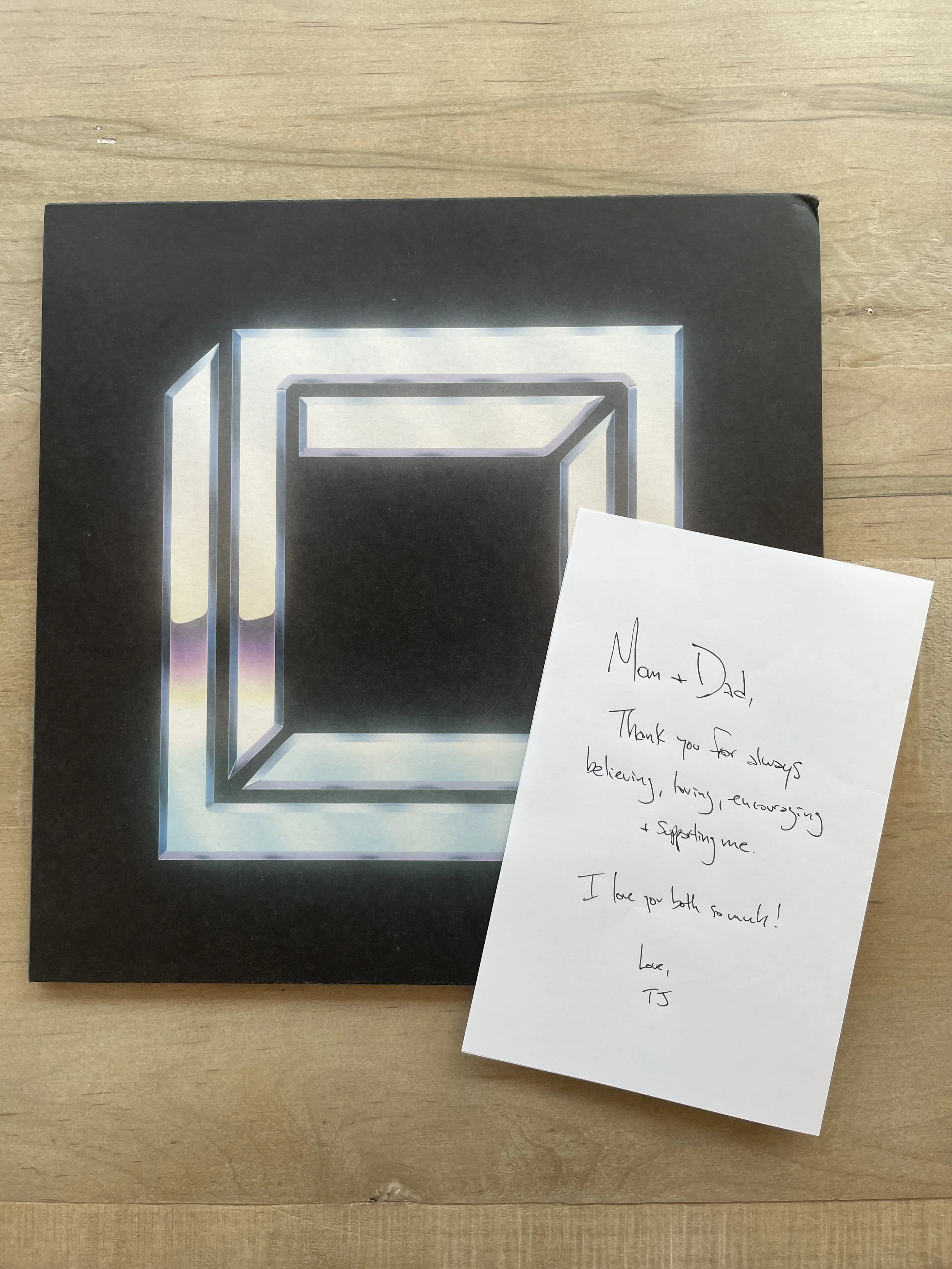
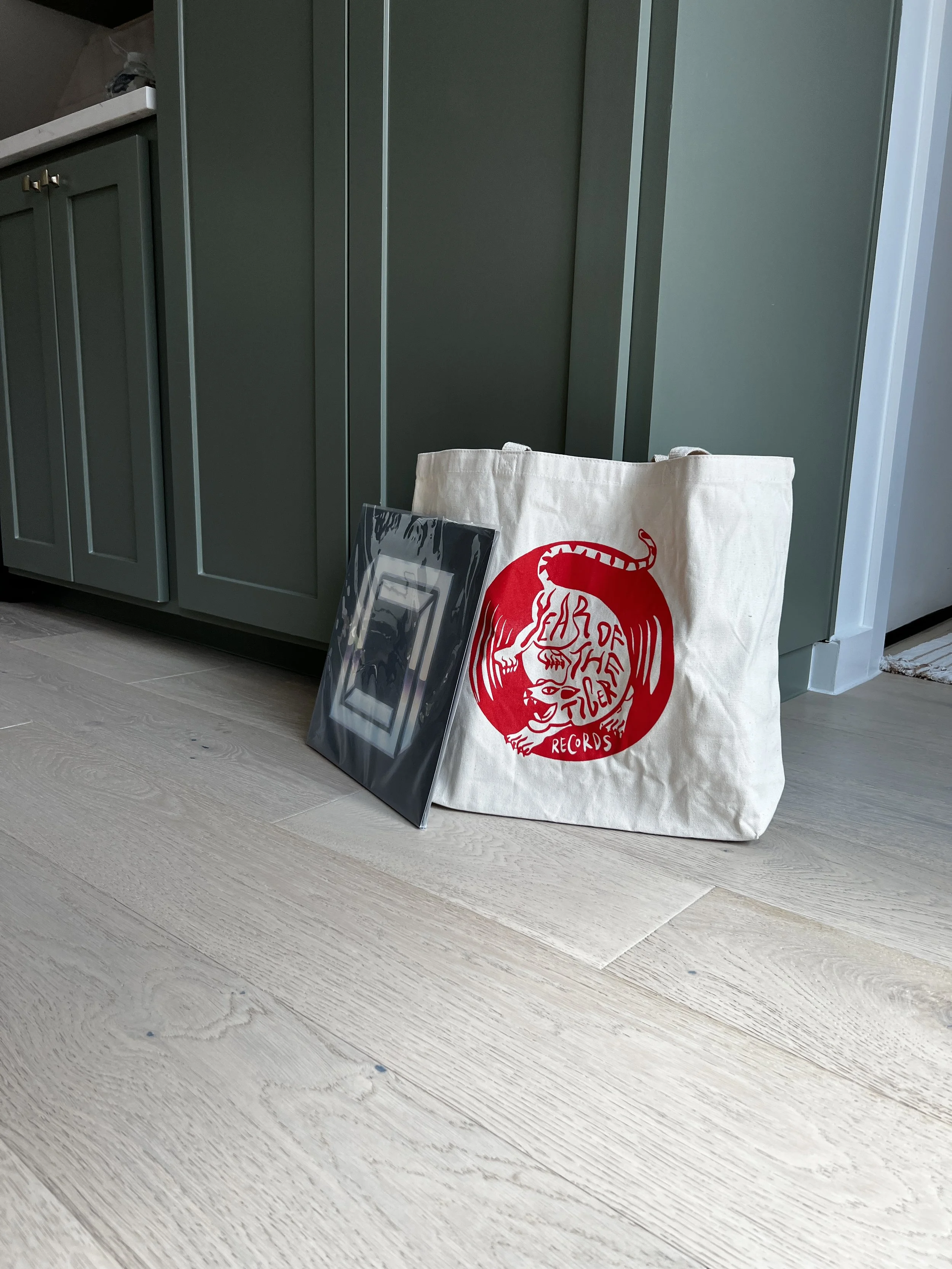
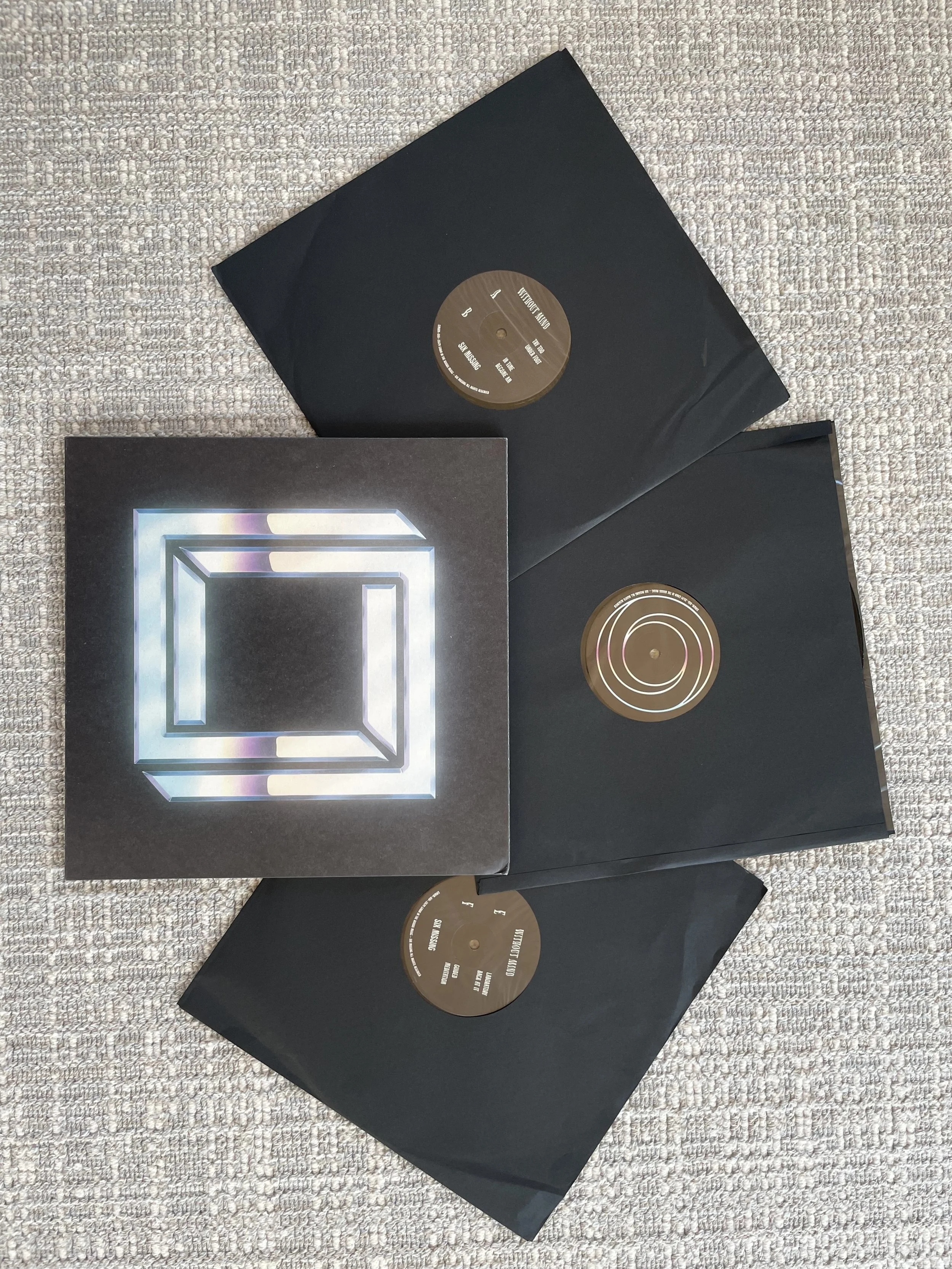
Discogs is where records live when they matter. That sounds like a simple thing to say but I mean it exactly. It's where the care lives — the pressings, the matrix numbers, the condition grades, the little notes collectors leave for each other. It's a community built entirely around taking physical music seriously, and getting to place my own work inside it felt like a kind of arrival I hadn't anticipated.
A confirmation that the thing I made was real in the same way that Zeppelin IV was real up in that attic. A physical object in the world that someone might find someday and hold and study and smell and feel something rearrange itself inside them.
That thought genuinely gets to me.
Why Six Hundred
Tom Waits said something — I'm paraphrasing because I can't locate the exact quote — about being excited to marry his partner partly because he knew he was about to inherit an incredible record collection. Or that it was going to double his. Something in that neighborhood. The specifics blur but the spirit of it has always stayed with me, because a record collection is a portrait. It tells you who a person is, what they've loved, where they've been, what they cared enough about to carry with them across distance and time.
Six hundred records is a lot of years. A lot of rooms. A lot of moods and phases and people and places compressed into shelving in Austin that I will rearrange carefully every time we move.
It's also, as I said, not finished. It's never finished. That used to feel like a problem and now it just feels like the deal — like the thing that keeps it alive. There will always be another record I didn't know I needed until the moment I found it. There will always be another copy of something I lost track of waiting on the Discogs marketplace for the right person to come along.
The records are always the first thing I pack. They are always the first thing I unpack.
Discogs is where they live when they're not playing. And for a brain like mine — for a collector who has been one since before he knew the word for it — that is not a small thing at all.
Browse the Six Missing catalog on Discogs + Grab a copy of Without Mind
