
The Instruments Behind the Sound: An Ambient Music Gear Guide From Someone Who Actually Uses This Stuff
I want to start with something that might be counterintuitive coming from someone who is about to describe a room full of vintage synthesizers.
The gear is not the point.
I know how that sounds. But I mean it genuinely, and I think it's the most important thing I can say before walking you through what actually lives in my studio. Because gear has a seductive way of presenting itself as the answer — as the thing standing between you and the sound you're trying to make. Buy this synthesizer. Add this pedal. The right equipment will unlock the right music.
It won't. Or more precisely: it might help, in specific and limited ways, once you already know what you're trying to make and why. But the instrument is not where the music comes from. The music comes from somewhere much less purchasable than that.
I also want to be honest about something before we go any further: this room took years to build. Some of these instruments scared me to buy even when I had the money sitting there. I lost sleep over a few of them. And I started with almost nothing — a laptop, a free DAW trial, a MIDI keyboard I got secondhand, and an internet connection. If that's where you are right now, you are not behind. You are exactly where I was.
So: here's the honest version. What I use, why I use it, what it actually does — and what you can use right now, for free or close to it, to get to the same place.
Start Here: You Don't Need Any of What I'm About to Describe
I mean this. Before I get into vintage synthesizers and boutique pedals, I want to spend a moment on what's available to anyone with a laptop and a few hours of curiosity, because it genuinely changed what was possible for people getting started — and it didn't exist when I was coming up.
Arturia's BruteStep, the Arturia V Collection, Cherry Audio's catalog — these companies make software emulations of iconic hardware synths that are, in some cases, startlingly good. Korg has their own line of iOS and desktop virtual instruments, including a Polysix and an M1 emulation, that capture a real amount of what makes those hardware instruments work. The Minimoog I'll describe below? Arturia makes a software version called the Mini V. It is not the same thing. But it is in the same neighborhood, and it costs less than dinner out.
For reverb and delay — the two most essential effects in ambient music — there are free and low-cost VST plugins that will take you very far. Valhalla makes a free reverb plugin called ValhallaSupermassive that I would genuinely recommend to anyone. It is not a budget option. It is simply a great option that happens to be free. I've heard it on professional records. I've probably used it myself.
GarageBand, which comes free on every Mac, has more than enough to make a complete ambient record. Ableton Live Lite, which ships with almost every piece of hardware you'd ever buy, is where a lot of real careers began. REAPER costs $60 and has a genuinely indefinite free trial with no crippled features.
I'm not saying this to be dismissive of the hardware I'm about to describe. I'm saying it because I was fourteen once, or close enough, and I would have given anything for someone to tell me clearly: you can start today, with what you have, and make something real. The vintage stuff came much, much later. And the music I made before I had any of it still mattered.
The Holy Grail: Korg PS-3100
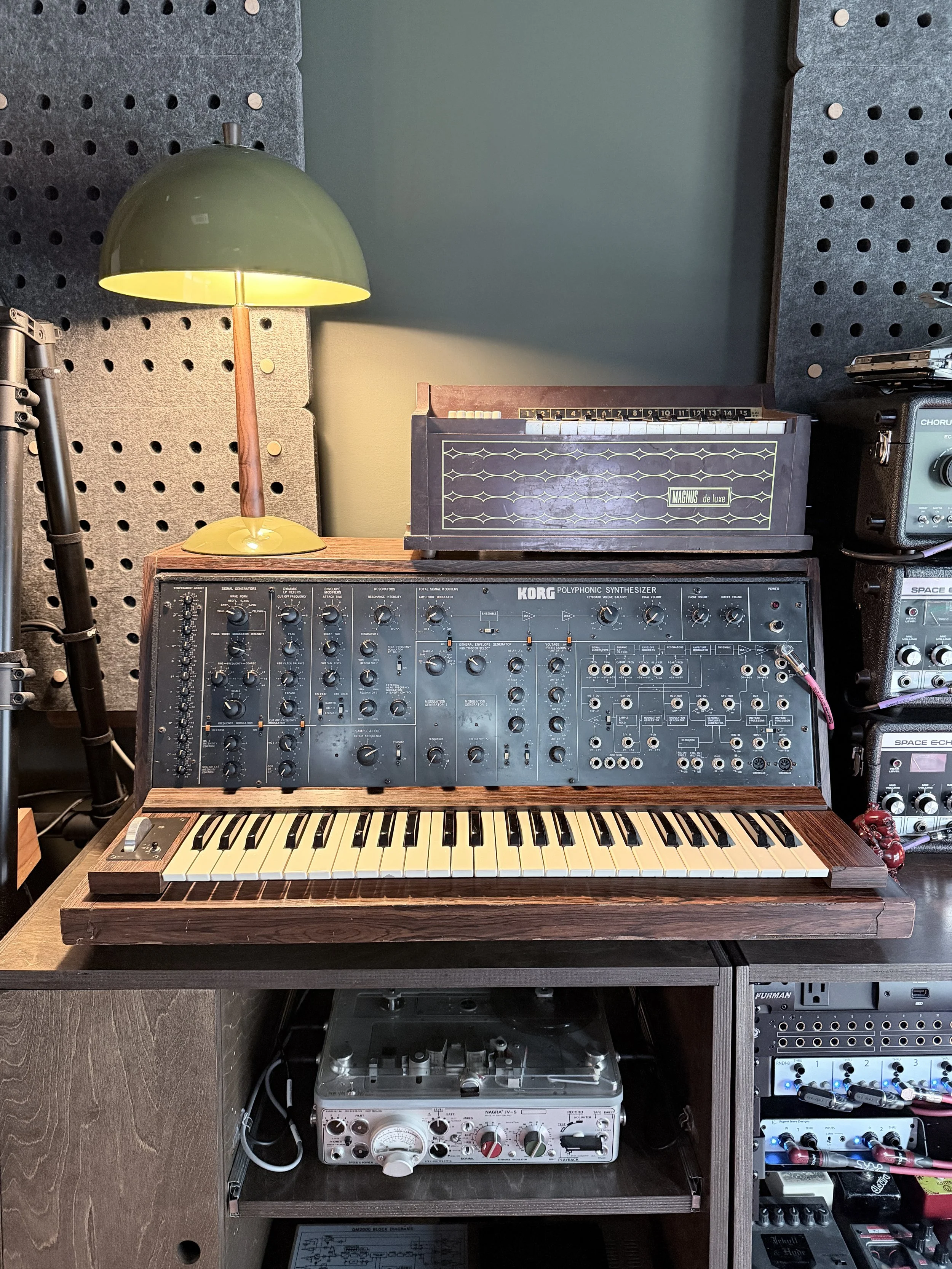
If you've spent any time in the ambient music world, you've probably heard someone speak about a piece of gear with a reverence that sounds slightly unhinged. A synth that changed everything. An instrument they would never sell under any circumstances. Something they describe less like a tool and more like a collaborator.
For me, that instrument is the Korg PS-3100.
It was made in 1977. It is enormous — the kind of thing that commands an entire section of a studio rather than sitting politely on a shelf. It is fully polyphonic in a way that was genuinely rare for its era: every single note has its own dedicated filter and tuner, which means every chord you play has its own internal ecosystem. No two notes are treated identically. No two performances are quite the same. It drifts. It breathes. It sounds different every time I turn it on, and I have genuinely never gotten a sound out of it that I couldn't use for something.
I found it because of Olafur Arnalds. I watched an interview where he spoke about his own PS-3100 almost poetically — the way it responds, the way it has opinions, the way it resists being controlled entirely. Something about that description resonated with how I think about creativity in general. The best work tends to happen in the space between your intention and the instrument's resistance to it.
I spent months searching for one. When I finally tracked one down, I had it put on a plane and picked it up at the airport like precious cargo. It has been in the shop more than once. I will never sell it.
I will also be straight with you: instruments like this run several thousand dollars on a good day, more on a bad one, and they require maintenance costs that sneak up on you. This was not an impulsive buy. It was a years-long aspiration that I worked toward deliberately. And even knowing I wanted it, even knowing I had saved for it, I still hesitated at the end. There's a particular kind of fear that comes with spending a significant amount of money on something you want rather than something you need — and I sat with that feeling for longer than I expected.
It was worth it. But I want you to know that the hesitation was real, the timeline was long, and nobody starts here.
VST ALTERNATIVE: Cherry Audio's PS-3300 is the software instrument I'd point you toward here. It's modeled on the Korg PS-3300 — the PS-3100's bigger sibling — and it can absolutely nail the sounds I'm describing: that full, drifting polyphony, the organic movement between notes, the sense that each chord has its own internal life. It won't drift the way analog hardware drifts, but it gets you into the same sonic territory for a fraction of the cost and without anyone putting anything on a plane.
The Foundation: Moog Minimoog
The Minimoog is where everything started for me in terms of vintage synthesis. It was the first real-deal vintage synth I bought — a significant investment that Hanna encouraged me to make when I was hesitating, which I think about every time I use it.
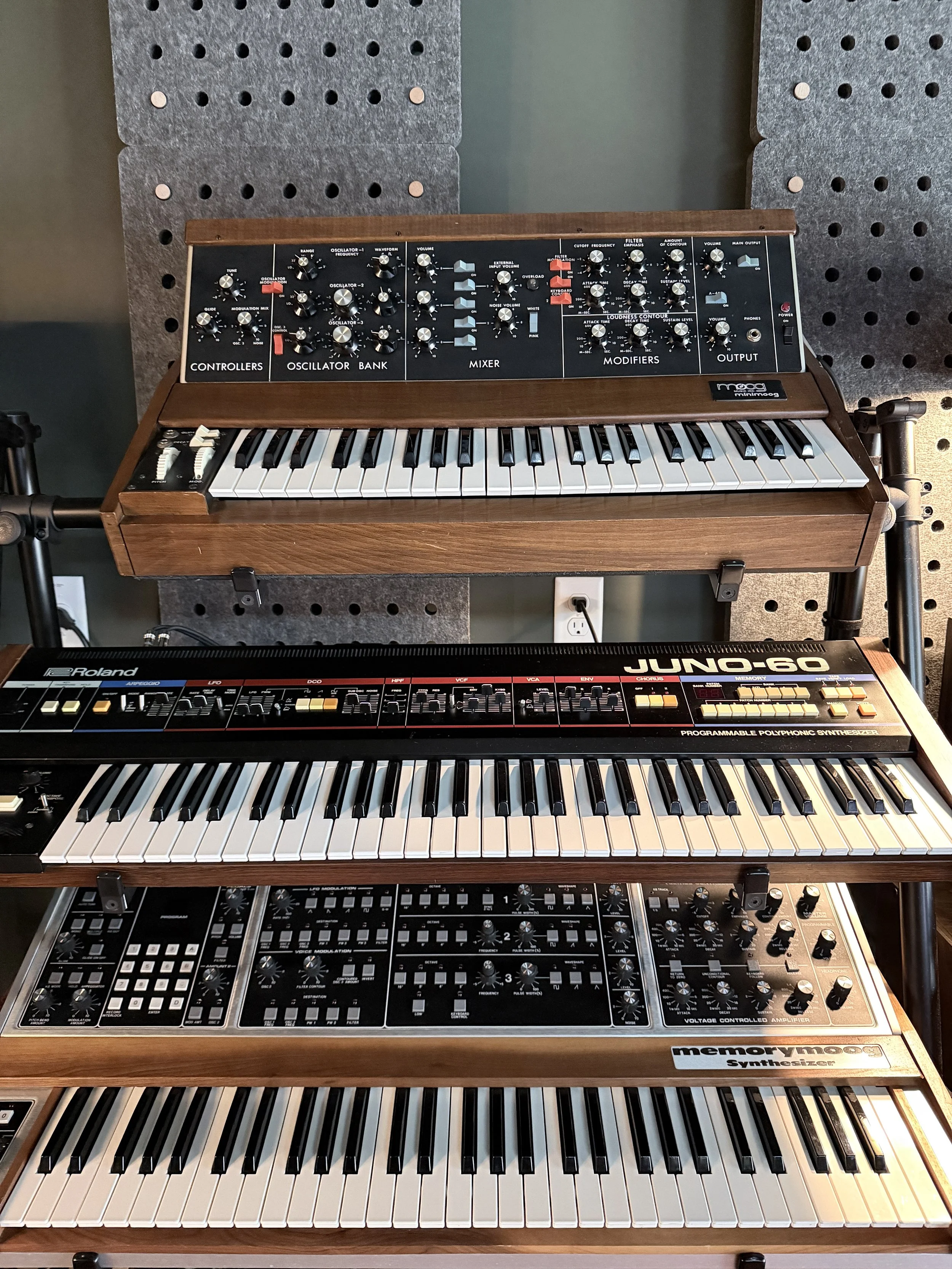
She was right, as she tends to be about these things.
The Minimoog is a completely different instrument from the PS-3100 — focused where the PS-3100 is sprawling, monophonic where the PS-3100 is polyphonic, precise where the PS-3100 is unpredictable. But it shares the essential quality: warmth. A physical thickness in the low midrange that you feel in your chest when it's in the room at the right volume. It has been on nearly every Six Missing track I've ever made, often doing something you can't quite identify — a low texture, a barely-there foundation — that you'd notice immediately if it were removed.
Vintage Minimoogs are not cheap — they're collector's items at this point — and the reissued Minimoog Model D, when Moog was still producing it, was still a serious purchase. I took my time getting here too. This was not the first synth I owned. It was the one I worked toward after I already knew I was serious.
VST ALTERNATIVE: Arturia's Mini V is a software emulation of the Minimoog that a lot of working producers rely on. It's part of the Arturia V Collection, which gives you emulations of dozens of classic synths for a single annual subscription fee — or you can buy instruments individually. If I were starting today, this is where I'd spend my first fifty dollars.
The Guitar Named Hanna
Not every instrument in the Six Missing studio is a synthesizer.
My Fender Jazzmaster is the guitar I used to make drift — the first part of my record drift, sway — and it has become one of the most important instruments I own. I've named her Hanna, after the person who encouraged me to get her, because that felt right and because some instruments earn a name.
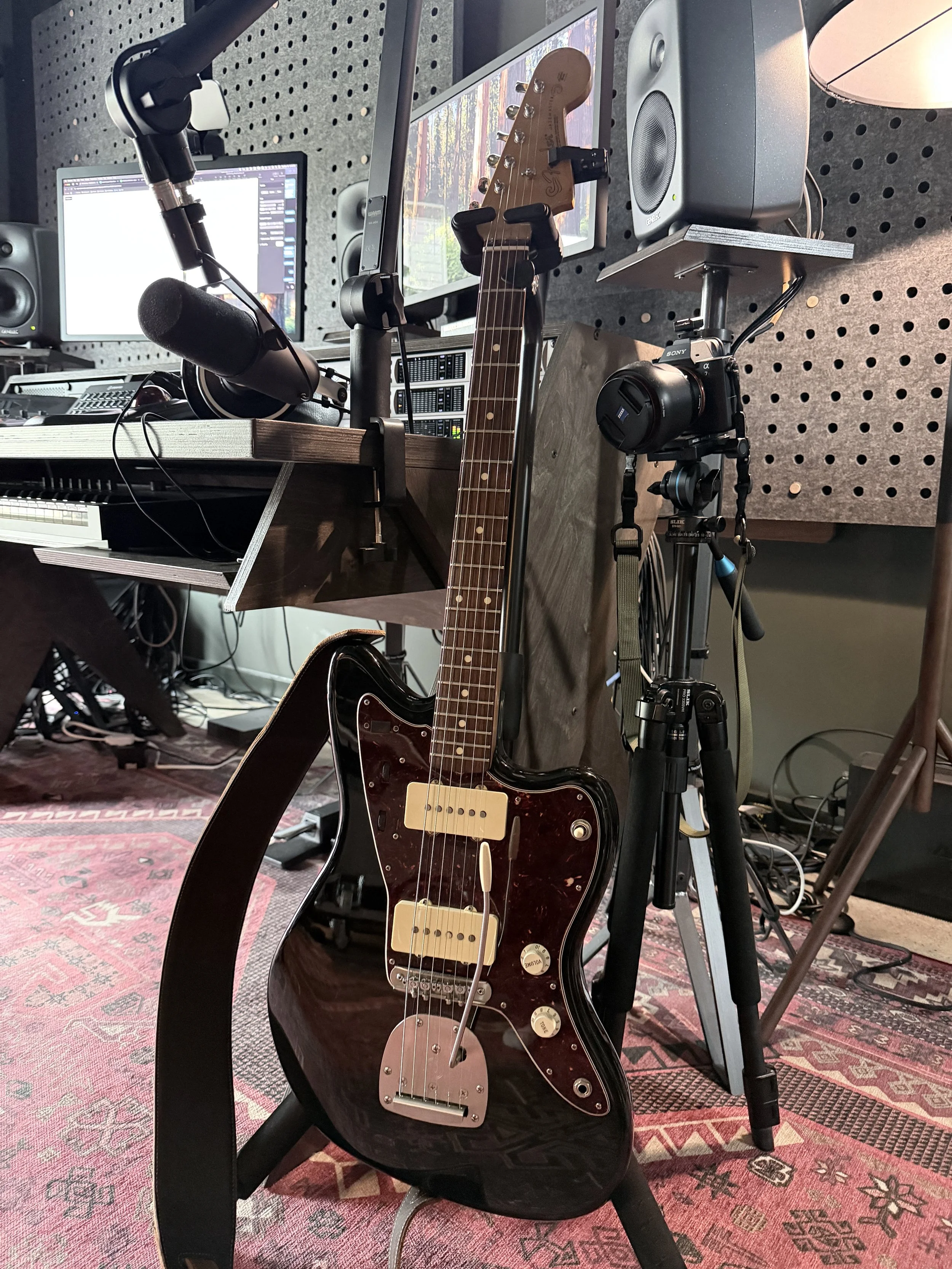
She started as a Classic Player body but I've modified her into something that feels entirely my own over time. Hand-wound Creamery pickups that give her a warmth and complexity the stock pickups couldn't touch. A Mastery bridge and trem for better intonation and stability. A new string tree, 500k pots swapped in for a better taper, and the rhythm circuit removed entirely because it was a solution to a problem I didn't have.
What came out the other side is an instrument that plays like it was built for exactly what I do with it. The mods accumulated over time — none of it happened at once. The pickups first, when I understood what I needed. The bridge later, after I'd lived with the intonation problem long enough. The pots last. This is how guitars actually evolve in working musicians' hands: not in one definitive purchase but in slow, considered layers.
If you're starting with guitar for ambient music, a used Squier or a budget Jazzmaster-style guitar will do the same fundamental thing. The Creamery pickups are a refinement, not a prerequisite. A guitar that sustains well and a delay pedal you love — or a free delay plugin — is the whole foundation.
The Pedal That Started Everything: EarthQuaker Devices Avalanche Run
I've told this story before but it bears repeating because it's true and because the pedal deserves the credit.
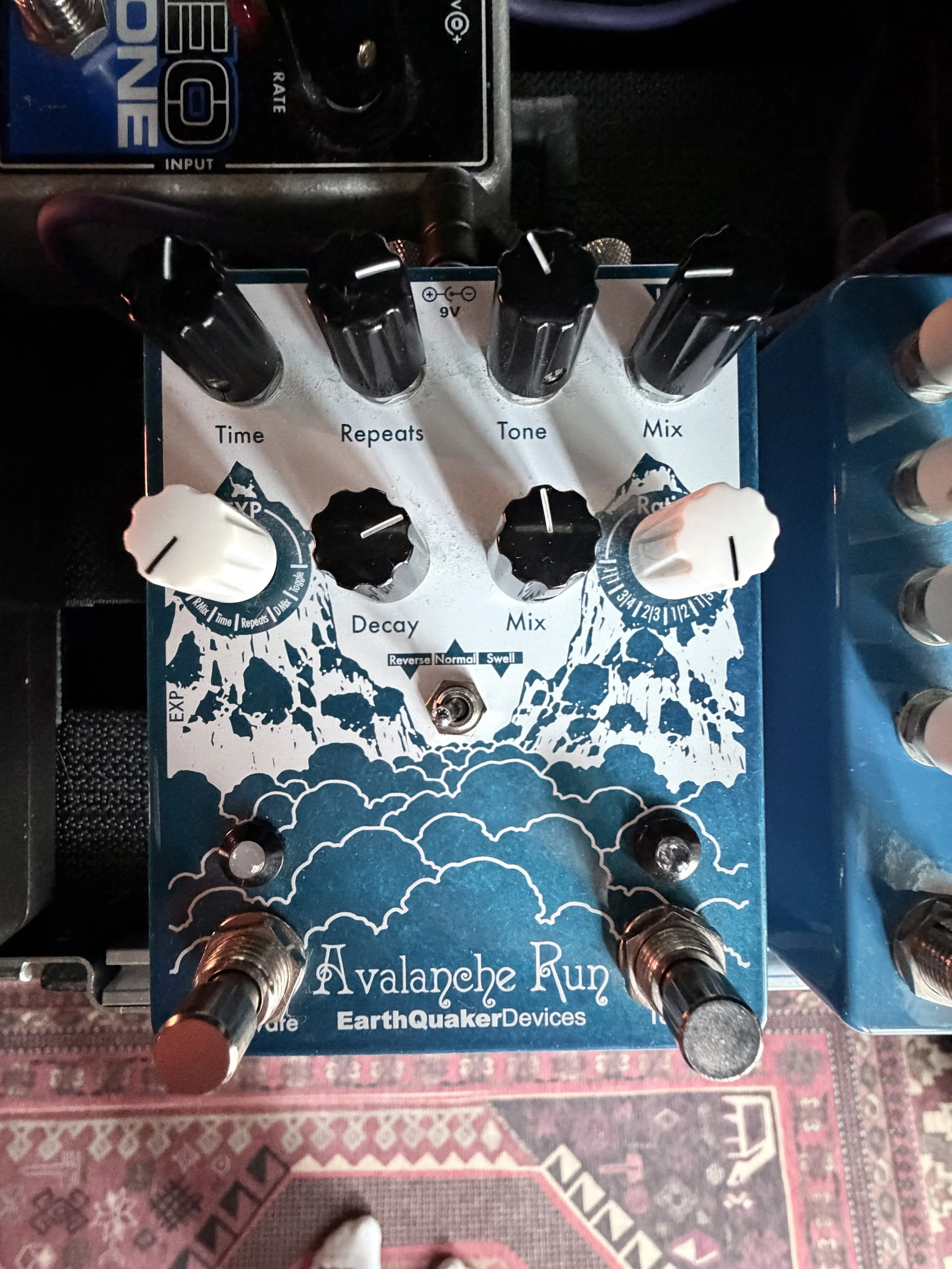
I bought the Avalanche Run at Main Drag Music in Williamsburg, New York. The person ringing me up looked at it and said, without particular ceremony, 'Hope you enjoy losing three days.' They were not wrong.
My first Six Missing release was built entirely from one long session of improvising with this pedal. Me playing, the pedal playing back at me, a call-and-response building into something I hadn't planned and couldn't have predicted. It creates a stereo delay with a depth and movement that feels genuinely alive — the echoes don't just repeat, they transform, they breathe, they interact with each other in ways that the dry signal alone never could.
The Avalanche Run is a real purchase — boutique pedals run in the $200–300 range — and it took me a while to pull the trigger on it even then. But of everything in this room, it might be the best argument for spending money on a physical object rather than a plugin. There's something about the hands-on interaction with a delay pedal — turning the knobs in real time while you play, feeling the music respond immediately — that changes how you perform. It turns a technical tool into a conversation.
FREE ALTERNATIVE: ValhallaSupermassive is free, full stop, and creates enormous delay and reverb spaces that will carry you a long way. For something closer to the Avalanche Run's character, the Valhalla Delay plugin is not free but is very fairly priced. Kilohearts Essentials also offers a solid free delay. Start there. The hardware pedal will still be there when you're ready for it.
Space and Depth: Meris Mercury7
Reverb is the atmosphere of ambient music. The space between notes. The sense of physical location — whether you're in a cathedral, a cave, a vast open room, or somewhere that doesn't exist in the physical world at all.
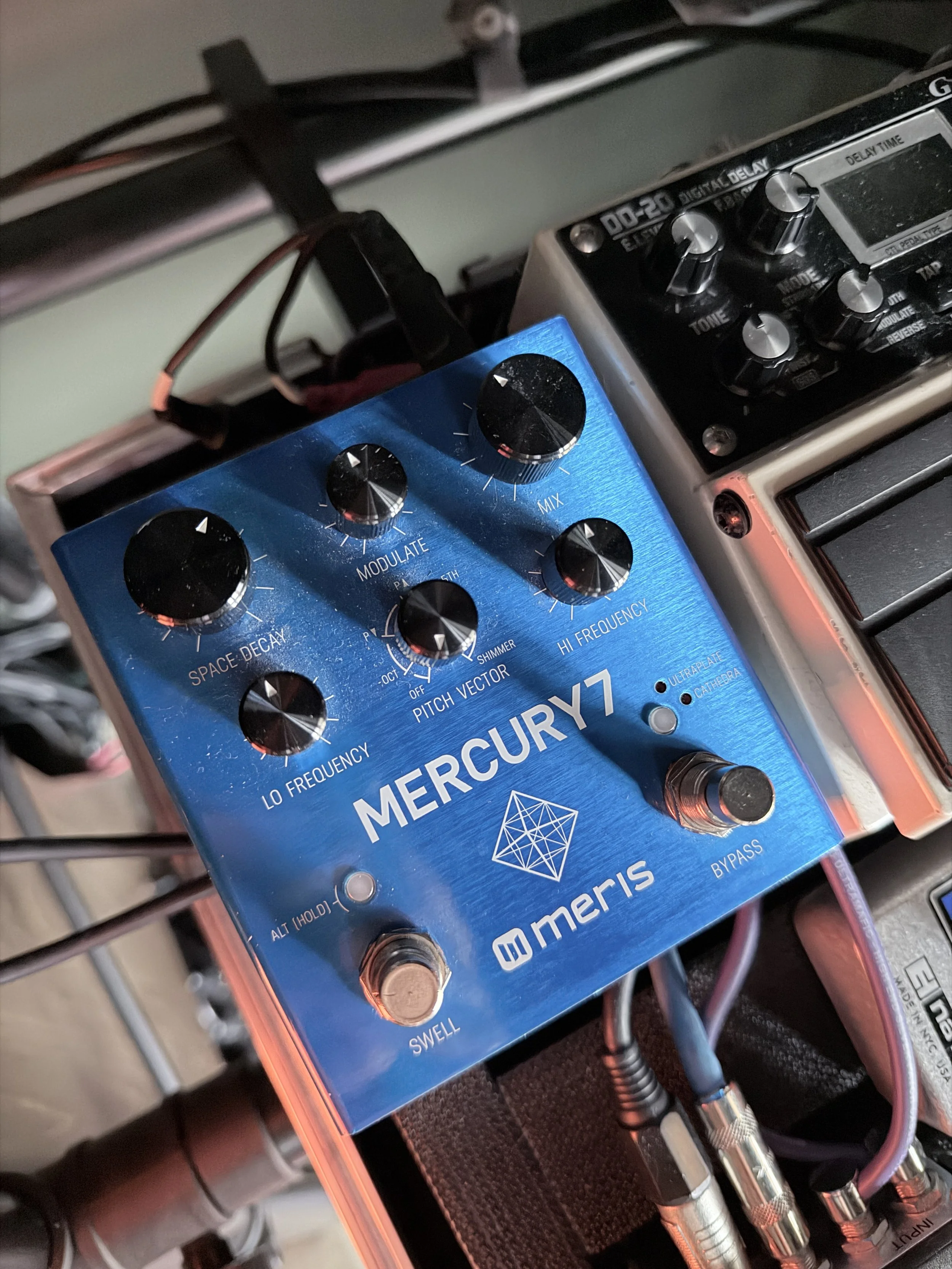
The Meris Mercury7 is named after a NASA spacecraft, which tells you something about what it's going for. The reverbs it generates are enormous without being muddy, detailed without being clinical. There's an algorithmic intelligence to how it handles the tail of a sound — the way a note decays into the space — that I find irreplaceable for guitar work.
This was also a purchase I sat on. Meris makes boutique-level pedals and prices them accordingly. I researched it for months before buying. And then I used it on drift within the first week of owning it, which tells you something.
FREE ALTERNATIVE: This is where I come back to ValhallaSupermassive. I know I've already mentioned it, but it genuinely belongs in this conversation twice. It creates exactly this kind of enormous, spacious reverb at zero cost. The Oril River reverb plugin is another free option with impressive depth. These are not compromises. They are legitimate tools.
The Imperfection Machines: Tape
I want to say something about tape, because I think it's the least understood element of the Six Missing sound and in some ways the most important.
Vintage tape machines — reel-to-reel units from the same era as the PS-3100, built when magnetic tape was the primary medium for recorded sound — introduce a set of qualities that no digital plugin has ever fully replicated to my ears. Flutter. Saturation. A gentle compression that feels like the sound is being held rather than processed. A warmth in the upper midrange that makes things feel slightly worn, slightly human, slightly like a memory rather than a document.
A perfectly clean recording of a synthesizer sounds like a synthesizer. The same recording run through a tape machine sounds like a feeling you had once about a synthesizer. The distance is subtle but it's real, and it is the difference between music that sounds like it was made and music that sounds like it happened.
I want my music to sound like it happened.
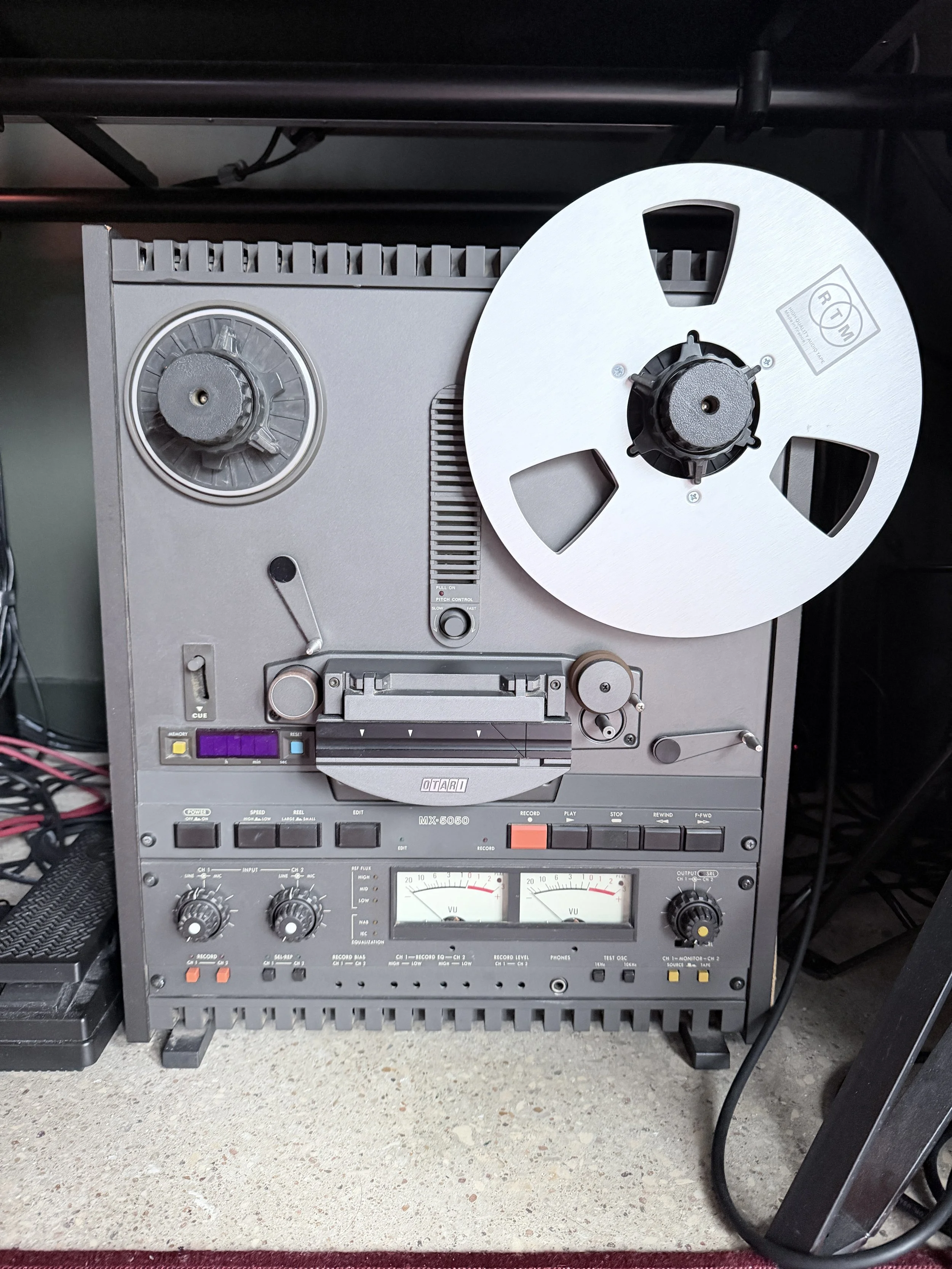
Vintage tape machines are also heavy, temperamental, expensive to maintain, and occasionally smell alarming. I love mine. I would not recommend starting here.
VST ALTERNATIVE: Tape emulation plugins have gotten genuinely good. IK Multimedia's TASCAM Tape Collection, Arturia's Tape MELLO-FI, and even the tape saturation options built into Ableton Live get you meaningfully closer to that warmth without the physical object. These are affordable starting points that capture the spirit, if not the full unpredictability, of the real thing.
What None of This Actually Matters Without
I said at the beginning that the gear is not the point, and I want to close there, because I mean it.
Every instrument I've described is a tool for accessing something that has to already be there — a genuine intention, a real emotional state, a question you're actually trying to answer. The PS-3100 is extraordinary, but it cannot make music that means something if the person playing it doesn't mean something. The Avalanche Run will generate beautiful textures all day, but textures in the absence of feeling are just decoration.
The reason I'm being honest about the timelines and the costs and the hesitation is not to make the hardware seem less desirable. It's to make the point clearly: the music I was making before I had any of this still mattered. The music you can make with a free DAW and a free reverb plugin matters. The instrument is not the source of the feeling. You are.
What I've learned over years of doing this is that the instruments that serve me best are the ones that resist me a little. That have opinions. That drift and breathe and occasionally do something I didn't ask for that turns out to be exactly right. You can find that quality in a thousand-dollar vintage synthesizer. You can also find it in a free plugin you've learned deeply enough that it surprises you.
Start where you are. Use what you have. The gear you dream about will still be there — and by the time you reach it, you'll know exactly what to do with it.
Everything else is just listening.
