
How I Make Ambient Music: The Studio, the Gear, and the Space Between Notes
People assume that ambient music must be the easiest kind to make.
No lyrics to write. No chord progressions to nail. No drummer to book. Just... press a key and let it ring, right?
I understand why it looks that way from the outside. And I won't pretend it has the same kind of technical demands as, say, a string quartet arrangement or a jazz improvisation. But making ambient music that actually does something — that genuinely changes the quality of a room, that gives a listener's nervous system something to rest against — that's a different kind of hard. It's the hard of restraint. The hard of knowing when to stop. The hard of trusting that the thing you just played, imperfect and unresolved as it is, is already what it needs to be.
That last one is the hardest thing I've learned in years of doing this.
Here's how the music actually gets made.
It Starts Before I Touch Anything
There's a ritual to getting into the studio that I don't talk about much but that matters more than almost anything in the signal chain.
Before a single note is played, before a fader is moved, I almost always begin with scent. Incense, usually. Sometimes Palo Santo. I let the smoke move through the room while things warm up — the synths need time, the tape machines need time, the room itself needs time. I'm not being precious about it. It's just that I've noticed, over years of paying attention, that this small act of intention changes how I enter the session. The air shifts. Something in me shifts with it.
Ambient music is made in a particular state of mind — or more accurately, a particular state of body. Relaxed but present. Open but not scattered. The ritual helps me get there before I start asking the instruments to go there first.
The Instruments That Actually Matter
I have a studio full of gear. More than I need, probably. But the things that show up on nearly every Six Missing recording are a surprisingly short list.
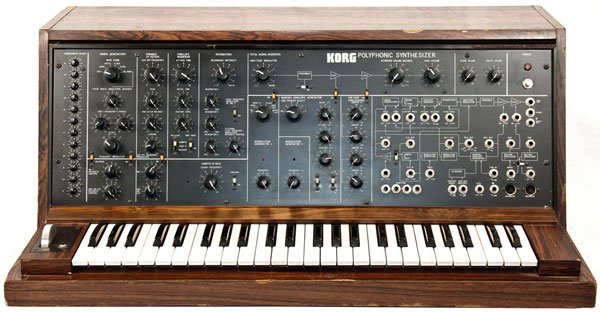
The Korg PS-3100 is first, always. It's a fully polyphonic analog synthesizer from 1977 — enormous, heavy, temperamental, and completely unlike anything else I've ever played. Each note has its own dedicated filter and tuner, which means every chord you play has its own internal weather system. It drifts. It breathes. It sounds different every single time I turn it on, and I have genuinely never gotten a sound out of it that I couldn't use for something.
I found it after watching Olafur Arnalds talk about his own PS-3100 in an interview — the way he spoke about it, almost poetically, like it was a collaborator rather than a tool, made me realize I needed one. The search took months. When I finally found it, I had it put on a plane and picked it up at the airport like cargo that needed careful handling. Which it did.
The Moog Minimoog is the other cornerstone. It's a completely different instrument — focused where the PS-3100 is sprawling, precise where the PS-3100 is unpredictable — but it has the same essential quality: warmth. A thickness in the low mids that feels almost physical when it's in the room. It's been on nearly every Six Missing track I've ever made.
For drift — the first part of my new record drift, sway — the central instrument was neither of those. It was my Fender Jazzmaster, which I've named Hanna, after the person who encouraged me to get it. It started as a Classic Player body but I've modified it into something that feels entirely my own: hand-wound Creamery pickups, a Mastery bridge and trem, a new string tree, 500k pots swapped in for a better taper, and the rhythm circuit snipped out entirely. Plugged into a Boss DD-20 on 16-second looper mode, run through delay pedals and tape machines and a Meris Mercury7 reverb that makes things sound like they're happening somewhere slightly outside of this world.
The Single Take
This is the part of my process that people find strangest when I explain it, and also the part I'm most certain about.
I don't do overdubs. Or more precisely — I try very hard not to. Most of what you hear on a Six Missing record happened in one take, in real time, with no going back to fix anything.
For drift, every track started the same way. I'd pick up Hanna, get the looper running, and begin playing. No plan. No chord chart. No idea where it was going. I'd follow the sound wherever it wanted to lead — adding layers as they felt right, letting the delay lines build up their own internal logic, playing over and around what had already accumulated in the loop until the thing had its own shape.
And then I'd stop. When it felt complete, I stopped. Not when it was perfect — it was never perfect — but when it felt like it had said what it came to say.
That decision, to stop at the right moment rather than keep fixing, is maybe the central discipline of the whole practice. It's the discipline of trusting the take. Of believing that the accidental note that happened because your finger slipped is actually the right note, because it's the honest note. The one that was there in the room that day.
I've come to think of it as the difference between music that was made and music that happened. Most of what I love most about the records I've made is in the things that happened.
What the Effects Actually Do
The gear that shapes the sound of Six Missing most is not the instruments themselves — it's what happens to the sound after it leaves them.
Reverb is the primary tool. Long, lush reverb that stretches notes beyond their natural life, lets them blur into each other, dissolves the edges between sounds until the whole thing feels less like a series of notes and more like a single breathing thing. The Meris Mercury7 is the main reverb I use for guitar work — it has an almost orchestral quality, a sense of vast physical space that I haven't found in anything else at its price point.
Delay is the other essential. The EarthQuaker Devices Avalanche Run was, genuinely, the instrument that started Six Missing. I bought it at Main Drag Music in Williamsburg, and the person ringing me up said, 'Hope you enjoy losing three days.' They were not wrong. My first Six Missing release was built entirely from improvising with that pedal — one long session of me playing and it playing back at me. It creates a kind of call-and-response with itself, a stereo spread that feels alive in a way that most digital reverb doesn't.
There are also tape machines in the chain. Vintage units with their own character — flutter, saturation, a subtle warmth that no plugin has ever fully replicated for me. The imperfections are the point. A perfectly clean recording of a synthesizer sounds like a synthesizer. A recording run through a tape machine sounds like a memory of a synthesizer. The distance is what I'm after.
The Part That Sounds Like Magic But Isn't
People sometimes ask if ambient music is just improvisation — if I'm just sitting down and playing whatever comes out and calling it a record.
The honest answer is: yes and no. The performance is improvised. The context is not.
Before I sit down to play, I've thought carefully about what I'm trying to make. Not in terms of notes or chords, but in terms of feeling. What is this piece for? What state of mind does it want to create? What's the temperature of it — warm or cool, close or distant, still or slowly moving?
Those questions are the composition. The instrument answers them. My job is to stay out of the way long enough to let the answer come, and then to recognize it when it does.
That's the part that looks like magic from the outside. But it's really just a very long practice of learning to listen — to the room, to the instrument, to whatever is moving through you on a given afternoon — and trusting what you hear.
Everything else is just signal chain.
What Is Ambient Music, Really? A Guide From Someone Who Lives Inside It
People ask me this more than you'd think.
Not musicians, usually. Regular people. Someone hears a Six Missing track in a coffee shop or on a friend's playlist and something about it stops them — not in the way a song with a hook stops you, but in a quieter way. A settling. And they pull out their phone, look it up, and then wonder: what is this, exactly? What do you call it?
Ambient music. But that answer raises as many questions as it answers.
I've been making ambient music professionally for years now, signed to Nettwerk Music Group, with tens of millions of streams and a Times Square billboard I still can't quite believe was real. And I'll be honest — I still sometimes struggle to explain what it is at a dinner party. Not because it's complicated, but because the thing that makes it interesting is also the thing that makes it hard to describe. Ambient music is, almost by definition, the kind of thing you feel before you understand.
Let me try anyway.
It Started With a Missed Concert and a Delayed Flight
The origin story of ambient music as a genre — at least in its modern form — begins with Brian Eno sitting in an airport in 1978.
Eno had been in a car accident the year before and was recovering in bed when a friend came to visit and put on a record of 18th century harp music before leaving. The volume was too low — barely audible over the rain outside — and Eno was too weak to get up and turn it up. So he just lay there, listening to music that was more suggestion than sound, blending with the ambient noise of the room.
He later wrote that it was a revelation. The music wasn't asking to be listened to. It was simply present. It changed the quality of the air without demanding your attention.
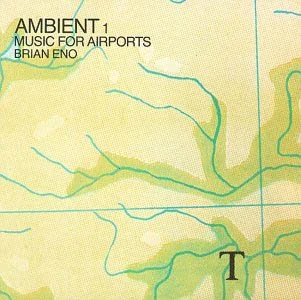
That experience led directly to Music for Airports, released in 1978 — four pieces of slow, looping, largely textureless music designed to be played in public spaces. Not elevator music, not Muzak. Something genuinely different. Eno called it ambient music, and the name stuck.
But the seed had been planted even earlier, by a French composer named Erik Satie, who wrote what he called musique d'ameublement — furniture music — in 1917. Music that was meant to be part of the environment. Music you weren't supposed to actively listen to. Satie reportedly got annoyed when audiences sat down and paid attention to it. That wasn't the point.
The point was presence without demand. It's still the point.
What It Actually Is (And Isn't)
Ambient music is, at its simplest, music that prioritizes atmosphere over structure. There's no verse, no chorus, no build toward a climax. There's usually no melody in the traditional sense, no rhythm you'd tap your foot to. What there is: texture, space, movement that's more like weather than narrative.
It's not background music, though it often gets used that way. Background music is designed to be ignored. Ambient music is designed to be present — available to you at whatever depth you want to engage with it. You can let it wash over you while you work. You can also put on headphones, close your eyes, and find entire worlds inside it. Both are valid. That range is part of what makes it unusual.
It's not the same as lo-fi, though they share some DNA. Lo-fi has beats. Lo-fi has structure. Ambient music doesn't need either.
It's not meditation music, though it's often used for meditation. It's not sleep music, though it's wonderful for sleep. It's not focus music, though it's one of the best focus tools I know. It refuses to be just one thing, which is part of why it's been so hard for the music industry to know what to do with it.
Japan Did Something Different With It
While Eno was developing ambient music in England in the late 1970s, something parallel — and in some ways more interesting — was happening in Japan.
Japanese composers began developing what they called Kankyo Ongaku, which translates roughly to environmental music. The concept was rooted in a distinctly Japanese aesthetic sensibility: ma, the idea that the space between things is as important as the things themselves. Silence not as absence but as presence. Negative space as a compositional element.
Hiroshi Yoshimura released Music for Nine Postcards in 1982 — delicate synth melodies so sparse they feel like light through blinds. Midori Takada's Through the Looking Glass, released a year later, is one of the most hypnotic records I've ever heard, percussion and texture cycling slowly like tides. Satoshi Ashikawa made music where the silence between notes felt as carefully placed as the notes themselves.
This tradition influenced everything that came after it. When I first went deep into Japanese ambient music a few years ago, I found myself listening with a different kind of attention — slower, more patient. It changed how I compose. That philosophy of negative space lives in my music now, even when I'm not consciously reaching for it.
Where It Lives Today
The genre that Eno named and Satie pre-figured and the Japanese environmental composers deepened has grown into something enormous — and also something still largely unknown to mainstream audiences, which is one of the stranger contradictions in contemporary music.
Olafur Arnalds, who works out of Iceland, blends ambient electronics with chamber strings in a way that feels both ancient and completely modern. He's the person who made me realize the Korg PS-3100 — a massive, fully polyphonic synthesizer from 1977 that I now own — could be a vehicle for genuine emotional expression. Watching him speak about that instrument in an interview sent me on a months-long search until I found one, had it put on a plane, and picked it up at the airport like a piece of precious cargo.
Nils Frahm treats the piano like a synthesizer and synthesizers like pianos, collapsing the boundary between acoustic and electronic until it dissolves entirely. Max Richter's Sleep — an eight-hour piece designed to be listened to overnight — is one of the most audacious artistic statements of the last 20 years, and also one of the most genuinely useful. I've covered one of its movements, Dream 1, as a tribute.
And then there are the artists working at the edges of the genre, doing things that don't have names yet. That's where it gets exciting.
What It Means to Me
I came to ambient music through sound design. I spent years — still do, most of the time — working as a re-recording mixer and sound designer for film, television, and advertising. That work is all about how sound creates feeling. How a particular frequency in a particular space makes a body feel safe or uneasy. How the absence of sound can be more powerful than any score.
When I started making music as Six Missing, I wasn't thinking about genre. I was thinking about space. About what it would feel like to be inside a piece of music rather than listening to it from the outside.
The name Six Missing comes from a ghost story — a real one, something that happened to me near a Revolutionary War battlefield in Pennsylvania, a night I still can't fully explain. That experience of the liminal — of something just beyond the edge of perception — is at the center of everything I make. Ambient music, more than any other genre, lives in that space. The space between what you can name and what you can only feel.
That's what it is, really. Not a tempo. Not a structure. Not a mood.
A space.
And an invitation to step into it.
Synth History Recommends
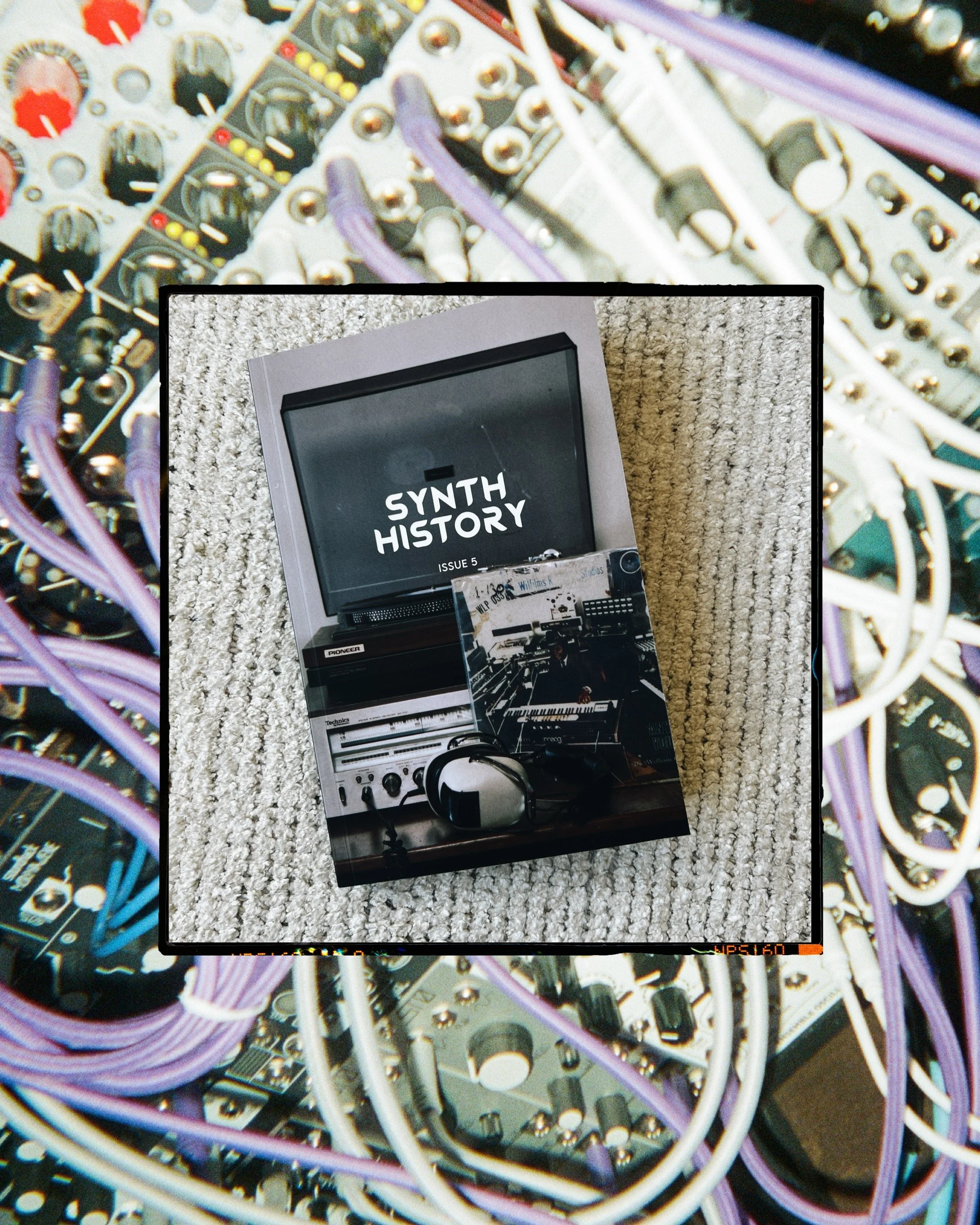
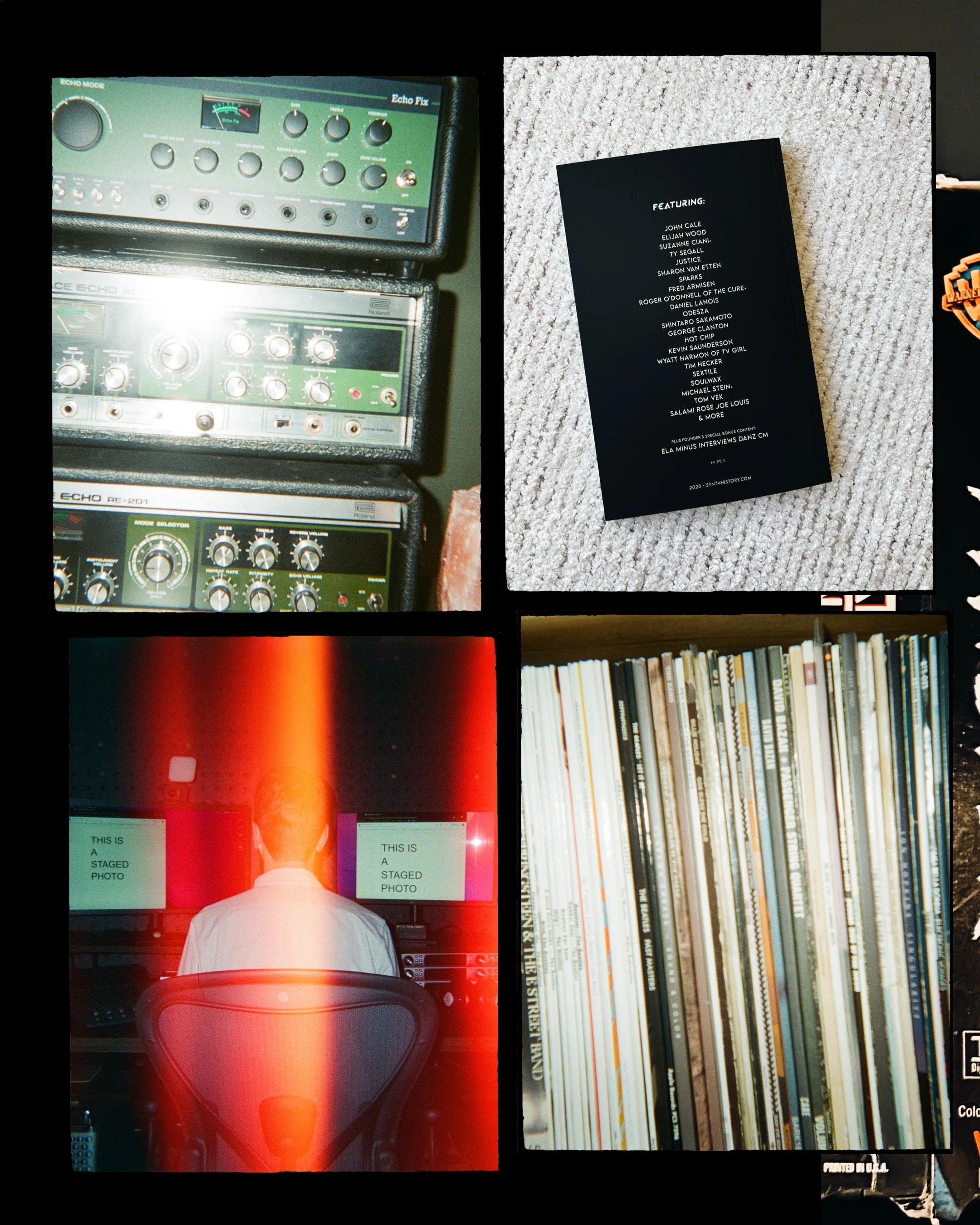
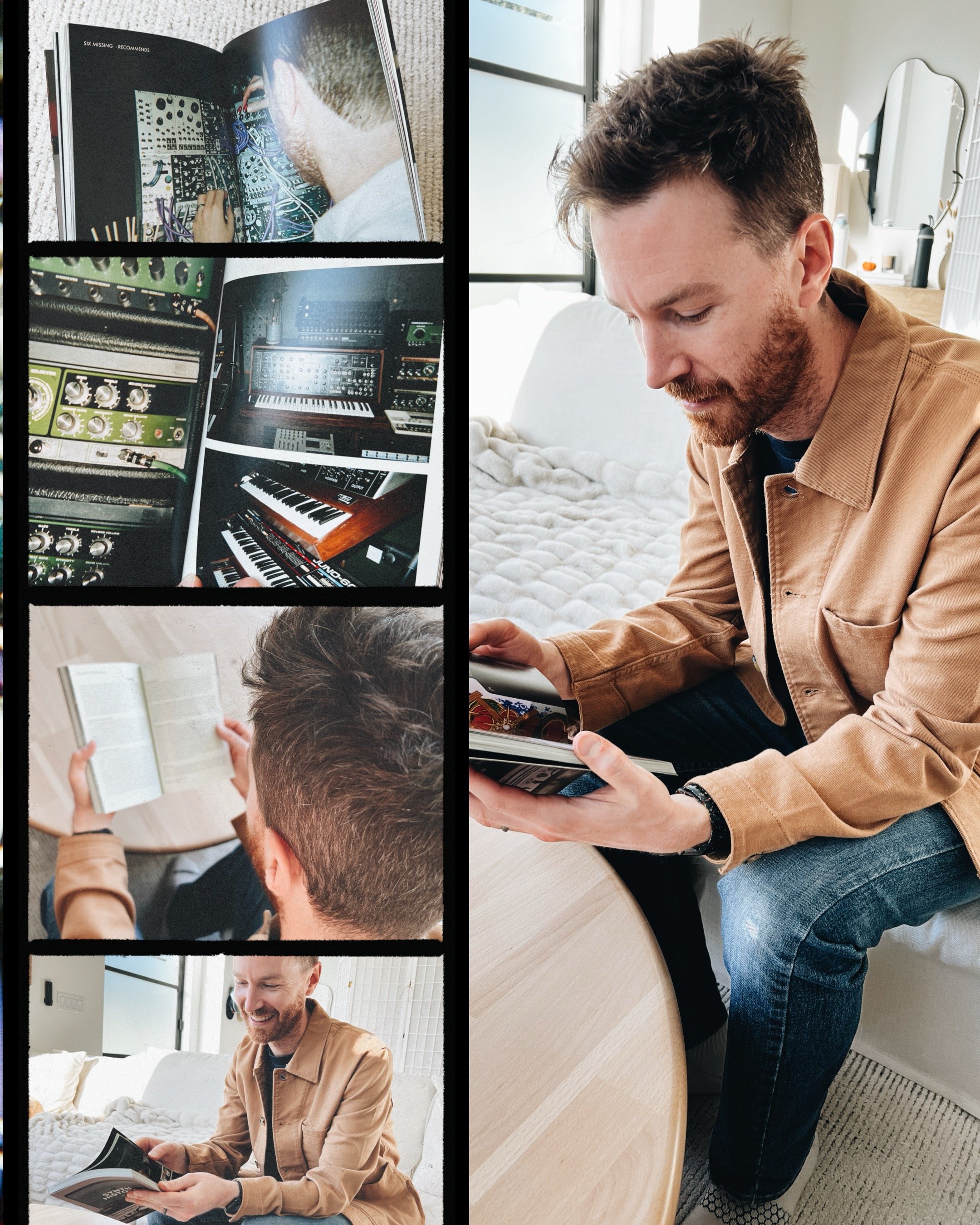
Being Featured in Synth History Vol. 5 -- Finding My Place
You can read the full Recommends feature here:
https://www.synthhistory.com/post/six-missing-recommends
I wanted to share something that genuinely stopped me in my tracks.
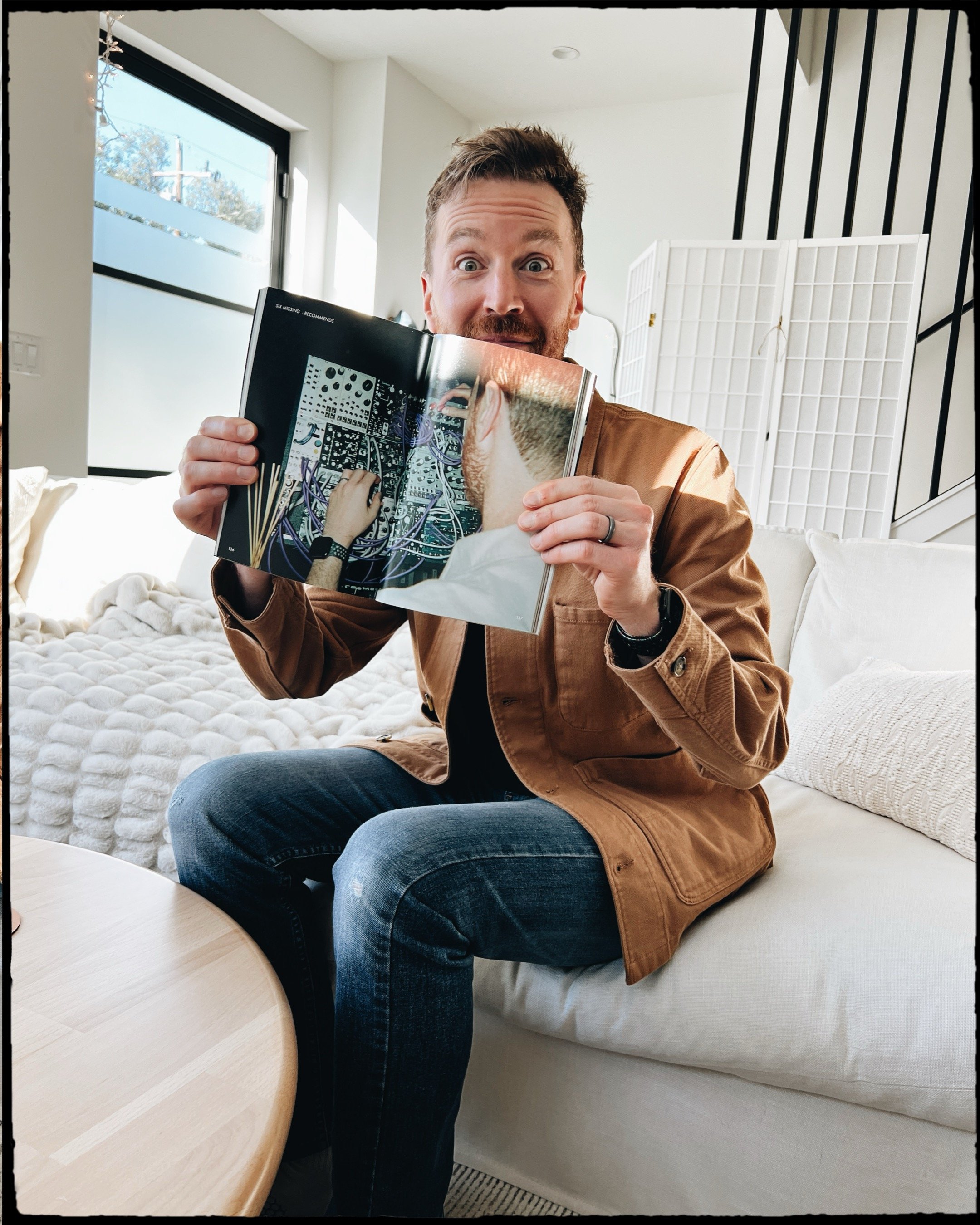
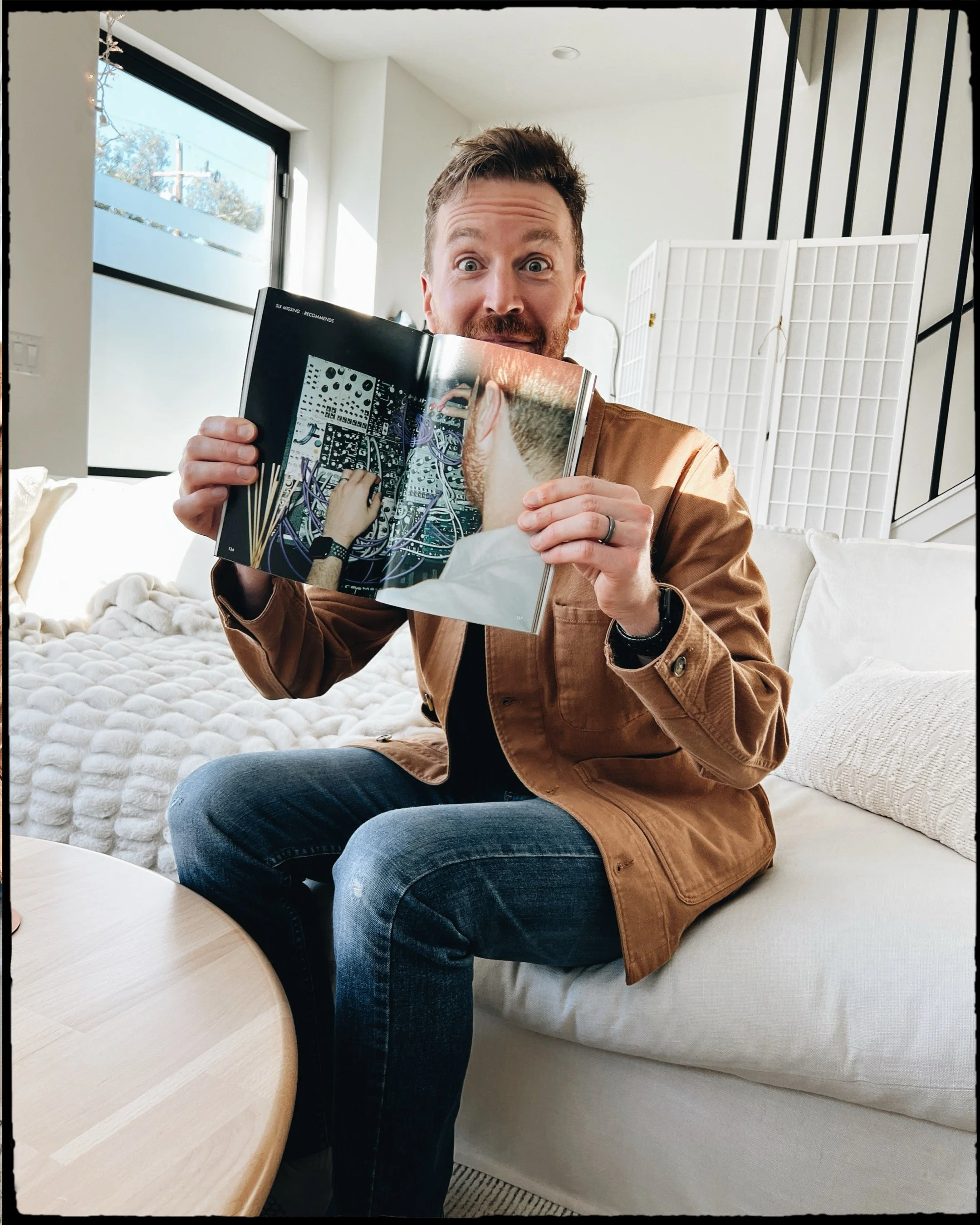
I’m featured in Synth History Vol. 5 — the physical zine — and also on their website as part of their Recommends Series.
That still feels surreal to type.
I first discovered Synth History on a plane, flipping through Volume 2, and immediately felt something click. The care in the layout. The tactile feel of the paper. The depth of the writing. It wasn’t just about synths — it was about why we’re drawn to these machines in the first place.
It felt like finding my place.
Fast forward a few volumes later, and now I’m somehow in actual ink, alongside artists I deeply admire. That kind of full-circle moment doesn’t happen often — and when it does, you really feel it in your chest.
Synth History as a Living Document
What Dan and the Synth History team have built is special. This isn’t gear fetishism or trend chasing — it’s documentation. Culture. Memory.
In a time when so much of music exists fleetingly on screens, there’s something grounding about a printed object that asks you to slow down, sit with it, and turn pages. That philosophy mirrors how I like to work musically — hands on, ears open, patience intact.
Holding Vol. 5 feels like holding a small piece of collective history.
The Recommends Series
For the Recommends Series, I was asked to list 10–15 studio essentials — instruments and tools that have shaped how I hear, feel, and create.
What I appreciated most about the prompt was that it wasn’t about productivity or optimization. It was about relationship.
Two pieces I spoke about in depth were my Korg PS-3100 and the EarthQuaker Devices Avalanche Run — both of which feel less like gear and more like collaborators.
The PS-3100 is big, heavy, temperamental, and already feels like it has a will of its own. It’s been in the shop more than once — and I’ll still never give it up. There’s something mystifying about it that I was actively searching for. The interface invites you to touch it, to play, to mess things up and see where they land. Watching Ólafur Arnalds speak about the PS-3100 years ago made me realize he was talking about synths the same way I do — almost poetically. That moment sent me on a long hunt until I finally found one, had it put on a plane, and picked it up at the airport like a precious artifact.
And then there’s the Avalanche Run.
I don’t say this lightly — that pedal changed the entire course of my musical life. I bought it at Main Drag Music in Williamsburg, and the person ringing me up smiled and said, “Hope you enjoy losing time for three days.” They weren’t wrong.
My first Six Missing release was born entirely out of improvising with that pedal — one long session of me playing with it and it playing back at me. It’s a universe. A texture engine. A collaborator that chews sound into something elastic and strange and beautiful. If I ever had to choose just one pedal to perform with, it would be the Avalanche Run. No question.
Gratitude
Huge thanks to Synth History for including me — both in Vol. 5 of the physical zine and online. It means more than I can properly articulate.
And thank you to everyone who listens, supports, reads, and makes space for this kind of slow, intentional work. None of it exists in isolation.
If you’re into synthesizers, ambient music, or thoughtful creative culture, I can’t recommend Synth History enough. And if you can get your hands on a physical copy — do it. Some things really are better when you can hold them.
You can read the full Recommends feature here:
https://www.synthhistory.com/post/six-missing-recommends