
Ambient Music for Babies and New Parents: A Softer Way Through the Night
My sister Kelly sent me a photo once that I still think about.
No caption, just the image: my nephew settled into his spot, and right there beside him, her phone screen clearly visible — one of my albums playing. She didn't need to explain it. The picture said everything. This is what we're using. This is what helps.
But the moment that really got me happened a few Christmases ago. We were in the car together and my nephew was escalating — that particular brand of toddler distress that has no obvious cause and no obvious solution. Someone put my music on. And I got to sit there, in real time, and watch his entire mood shift. The tension leaving his body. The crying slowing. The settling.
I don't have the words for what that felt like, honestly. I've had music placed in films and on billboards in Times Square, and none of it hit me the way that car ride did. Because it was just real. Just a small person and a piece of sound I'd made and a moment that actually worked.
I've thought about both of those moments a lot since then. And they sent me down a genuine rabbit hole of thinking about why ambient music works so well for babies — and honestly, maybe even more importantly, for the exhausted human beings trying to get them to sleep.
What a Baby's Nervous System Is Actually Doing
A newborn arrives in the world having spent nine months in an environment that was anything but silent. The womb is surprisingly loud — a constant wash of blood flow, heartbeat, muffled voices, the rhythmic sound of breathing. It's warm and close and constant.
And then suddenly: the world. Light, cold air, new smells, sounds with hard edges, silence that's actually more alarming than comforting because silence means the familiar has stopped.
This is worth understanding if you're a new parent trying to figure out why your baby seems to settle more easily with some kind of sound playing. It's not that the baby needs entertainment. It's that the baby needs the world to feel a little less abrupt. A little more like something familiar. A soft, continuous, gently moving sound is probably the closest thing the outside world has to offer to what they already know.
Ambient music — specifically the kind without hard edges, without sudden dynamic shifts, without the kind of melodic hooks that pull attention — fits that description pretty naturally. It doesn't startle. It doesn't resolve and then stop. It simply continues, warmly and without urgency, for as long as you need it to.
Why It's Different From White Noise
White noise has become the go-to recommendation for baby sleep, and it works — to a point. The mechanism is similar: a consistent sound that masks environmental noise and gives the nervous system something predictable to process. Nothing wrong with that.
But white noise is a blank. It has no warmth, no movement, no sense of human presence. It fills the room the way a refrigerator hum fills a room — functionally, without feeling.
Ambient music, made by a human being with genuine emotional intent, does something additional. It carries warmth. It has texture that shifts almost imperceptibly, the way a living thing shifts. There's a reason lullabies have existed in every human culture across recorded history — we have always known, intuitively, that music made by people carries something that pure noise doesn't. A quality of presence. Of someone being there.
I think about this when I make music. Not specifically for babies, obviously — but the impulse is the same. I want the listener to feel held by the sound. To feel, even subconsciously, that something alive made this and that something alive is in the room with them.
That quality doesn't disappear when the listener is six weeks old. If anything, it matters more.
And Then There's the Parent
Here's the thing nobody tells you enough about new parenthood, from what I understand: it is an extended exercise in running on empty while remaining somehow functional.
The baby needs to sleep. You need the baby to sleep. You also need to sleep, which is the thing you are least likely to get. The mental load of those overlapping needs — the vigilance, the exhaustion, the emotional intensity of caring for something so completely dependent — is its own kind of weight.
Ambient music doesn't fix any of that. But it does something quiet and real: it changes the quality of the room. It softens the edges of the night. It gives your own nervous system something to rest against while you're doing the work of settling another nervous system that doesn't know yet how to settle itself.
I've heard from parents who say they started playing ambient music for their baby and ended up needing it just as much. That doesn't surprise me at all. The music doesn't know how old you are. It just does what it does — holds the space, slows the breath, makes the room feel a little more like somewhere it's okay to rest.
And at 3am, with a baby on your chest and a day that starts again in four hours, okay to rest is everything.
A Few Practical Things That Actually Help
Start before the routine begins, not during it. Put the music on ten or fifteen minutes before you start the wind-down — bath, feeding, the quiet dark of the bedroom. Let the room change before you're asking the baby to change with it.
Keep the volume lower than feels natural. It should be present without being noticeable — a quality of the room rather than a thing in the room. If you can clearly identify it as music playing, it's slightly too loud.
Let it continue after they fall asleep. The transition from sleep to deep sleep is where a lot of babies wake — a consistent sound environment helps them move through that transition without a sudden silence triggering a startle.
And let it work on you too. This is not a small thing. You're not just managing the baby's nervous system. You're also managing yours. Give yourself permission to be soothed by the same thing.
What I'd Recommend Starting With
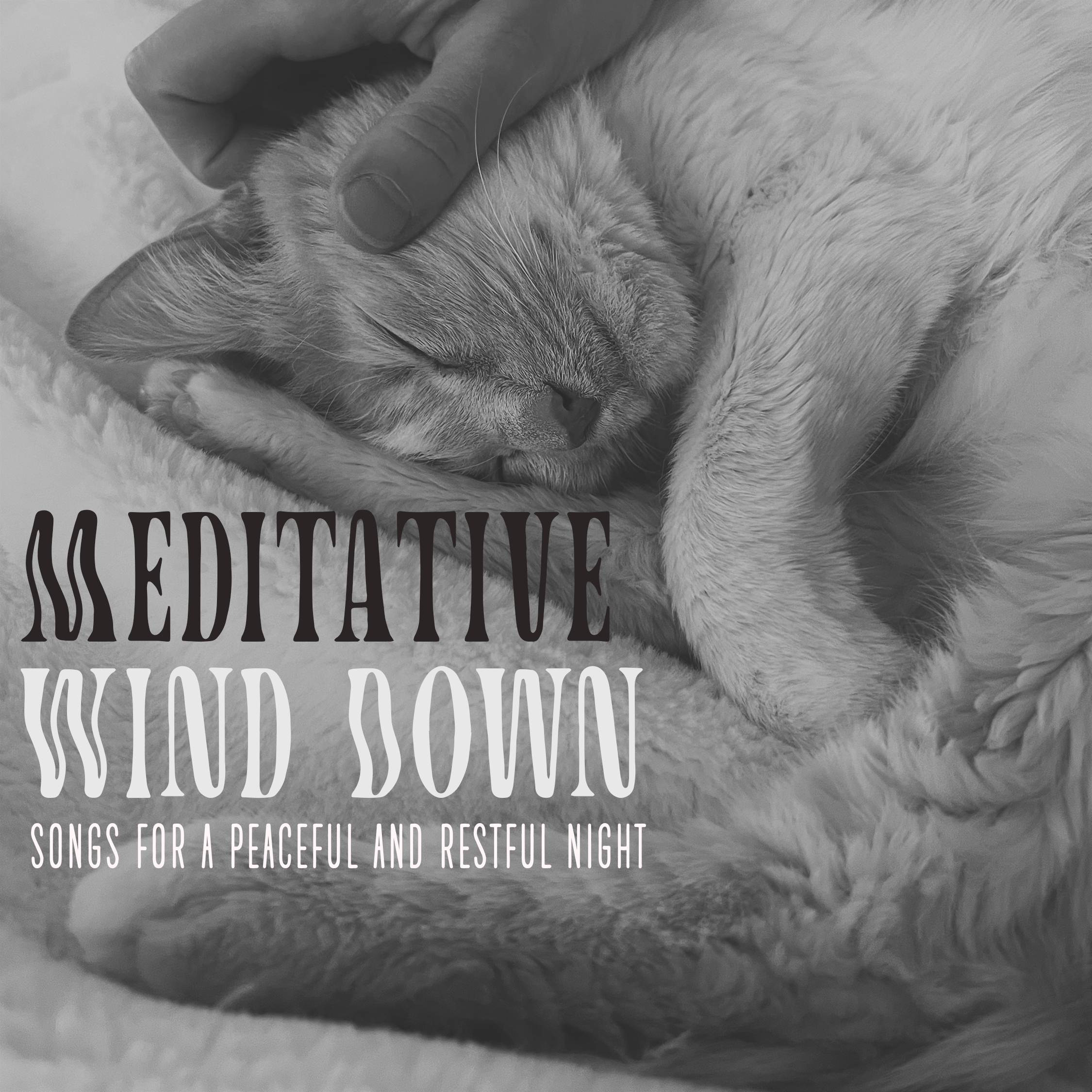
My MEDITATIVE WIND DOWN playlist is where I'd point a new parent first, without hesitation.
It's the most spacious, most unhurried thing I've made. It moves at the pace of breath rather than the pace of a clock.
It was made with a particular quality of quiet intention that I think translates across ages and circumstances. My nephew settles to it in a Christmas car ride and at bedtime.
The music doesn't know the difference. It just holds the room.
Which is, I think, the most honest thing I can say about what I'm trying to make. Something that holds the room. Something that makes whatever night you're having a little softer.
For you. For the small person on your chest. For anyone who needs it.

Ambient Music for Sleep: What Actually Helps (and Why)
There's a particular kind of awake that happens after midnight.
It's not the kind where you're reading or watching something or doing anything useful. It's the kind where your body is exhausted and your mind just won't stop. The ceiling. The same thoughts cycling through again. The sound of the house settling, a car outside, your own breathing suddenly too loud in the quiet.
I know that kind of awake well. Austin summers are brutal and long, and more than a few times I've found myself lying there at 2am, the ceiling fan barely making a dent, thinking about nothing and everything at the same time.
What I've learned — slowly, over years — is that the solution isn't more silence. It's better sound.
Why Silence Doesn't Actually Help Most People Sleep
There's a persistent myth that the best environment for sleep is total quiet. And for a small number of people, that's true. But for most of us, silence isn't peaceful — it's just absence. And an absent room tends to fill up fast with whatever your brain has been meaning to deal with all day.
What actually helps the mind let go is something to rest against. A sound that's present without being demanding. Something that gives your nervous system a signal that the environment is safe and steady, without asking anything of your attention in return.
That's the job description of a good piece of ambient music.
Not all ambient music does this equally, though. There's a real difference between music made with genuine emotional intention and something generated to fill a playlist slot. Your nervous system notices that difference even when your conscious mind doesn't. One has texture, warmth, small variations that feel alive. The other keeps you company the way a refrigerator hum keeps you company.
What the Research Actually Says
I'm a musician, not a scientist — so take this for what it is: a working knowledge of things I've found genuinely useful to understand.
The body has a natural resting heart rate of around 60 beats per minute. Music that moves at or below that tempo tends to create what researchers call an entrainment effect — your nervous system starts to synchronize with the pace of what it's hearing. Slower music, slower breath. Slower breath, slower heart rate. Slower heart rate, sleep.
There's also something called the glymphatic system — the brain's overnight cleaning crew, essentially, that flushes out metabolic waste while you sleep. Deep, uninterrupted sleep is when this process is most active. Ambient music that helps you stay in that deeper sleep longer isn't just helping you rest; it's helping your brain actually repair itself.
And then there's the simpler thing: a steady, soft sound in the room gives your nervous system something predictable to process, which means it's less likely to startle awake at the house settling or a neighbor's car door. It creates a kind of sonic shelter.
What I Reach For
Without Mindis the record I'd point someone to first, if they were trying ambient music for sleep for the first time.
It was made in unusual circumstances — I created the original recordings as a live, improvised score for a ketamine-assisted therapy documentary. No overdubs, no going back to fix anything. Just whatever came out in the moment, in real time, in a deeply altered emotional and psychological space.
What that process produced is something that breathes. There are no hard edges, no moments that suddenly demand your attention, no places where the music announces itself. It moves like water moves — continuous, unhurried, with its own internal logic.
I've heard from a lot of people over the years who use it for sleep. A nurse in Minnesota who puts it on during night shifts. A dad in Australia who plays it for his newborn. A woman going through chemotherapy who said it was the only thing that helped her rest during treatment.
That's not something I engineered. It's something that happened, because the music was made in a genuinely quiet, genuinely open state. I think that comes through.
A Few Practical Things Worth Knowing
If you're going to try ambient music for sleep, here are the things I've found actually matter:
Start before you're trying to sleep. Put it on 20 or 30 minutes before you want to fall asleep, while you're doing your end-of-day things. Let your nervous system start winding down before you ask it to fully let go.
Volume lower than you think. It should be just barely there — present without being noticeable. If you're aware of it as music, it's slightly too loud.
No lyrics. Your brain will follow words even when you're exhausted. Instrumental music sidesteps this entirely.
Let it loop. Don't let the silence when it ends be the thing that wakes you up. Set a long playlist or let the album repeat.
Give it a few nights. The first time you try something new your brain is still evaluating it. After a few nights, it starts to become a cue — and cues are powerful.
It's Not a Cure. It's a Companion.
I want to be careful not to oversell this. Ambient music isn't medicine, and if you have serious sleep issues, you should talk to someone who actually knows what they're doing medically.
But as a companion — something to make the space a little softer, the night a little less loud, the transition from the day a little gentler — it genuinely helps. I've experienced it myself, and I've heard enough from listeners over the years to believe it's not just placebo.
There's something worth saying about the fact that the same music that helped people relax deeply enough to process trauma in a therapy setting is the same music that helps a baby fall asleep. That range tells you something about what it actually does — not what kind of experience it creates, but the quality of state it creates. Quiet. Open. Safe.
That's what I'm going for, every time.

The Science of Sleep: How Ambient Music Helps You Rest
Sleep is one of the most essential functions of the human body, yet for many people, falling and staying asleep is a nightly challenge. In a world filled with screens, notifications, and overstimulation, winding down can feel impossible. That’s where ambient music for sleep comes in.
I’ve always been drawn to the way sound shapes our mental and emotional states, and over time, I’ve come to appreciate just how powerful ambient music can be in preparing the body and mind for deep rest. The science backs it up—listening to calming music before bed can help slow your heart rate, reduce stress hormones, and even enhance brain function while you sleep.
How Music Prepares the Body for Sleep
Our bodies are deeply attuned to rhythm. Slower tempos, gentle drones, and evolving soundscapes signal to the brain that it’s time to transition into rest mode. When we listen to low-frequency tones and soft, sustained notes, the parasympathetic nervous system kicks in, lowering heart rate and blood pressure, which naturally promotes relaxation.
Some studies suggest that music around 60 beats per minute (BPM) aligns with the body’s resting heart rate, creating an entrainment effect that encourages deeper sleep cycles. This is why ambient music for relaxation often features minimal rhythm or a slow pulse, allowing the brain to gently synchronize with its natural bedtime state.
The Brain’s Nightly Reset: How Sleep “Bathes” the Mind
While you sleep, your brain isn’t just resting—it’s actively working. One of the most fascinating processes is the glymphatic system, which “washes” your brain with cerebrospinal fluid, removing toxins that accumulate throughout the day. This nightly cleansing is crucial for cognitive function, memory consolidation, and mental clarity.
Listening to ambient music during this process can create a sound environment that enhances the brain’s ability to reset. By reducing external noise and providing a steady, gentle background, ambient soundscapes help limit disturbances and keep the nervous system in a relaxed state throughout the night.
The Science-Backed Benefits of Ambient Music for Sleep
Research has shown that listening to soothing music before bed can:
Decrease stress and anxiety by lowering cortisol levels
Improve sleep quality and reduce time spent awake during the night
Encourage deep, restorative sleep by slowing brainwave activity
Aid in memory consolidation by enhancing neural processing during REM sleep
How to Incorporate Ambient Music into Your Sleep Routine
If you’re looking to experiment with ambient music for better sleep, here are a few simple ways to integrate it into your nightly routine:
Start 30-60 minutes before bed – Begin playing ambient music as part of your wind-down routine to cue your body for sleep.
Keep the volume low – Music for sleep should be just above the threshold of hearing, acting as a gentle backdrop.
Avoid abrupt changes in sound – Choose tracks that flow seamlessly without sudden shifts in dynamics or tempo.
Use a timer or looping playlist – Set your music to play for a specific duration or allow it to run throughout the night for uninterrupted rest.
As someone who creates ambient music, I love hearing how people use these soundscapes in their daily lives. If you struggle with sleep, try incorporating ambient music into your routine and see how it affects your rest.
My Ambient Music for Sleep Playlists
If you’re looking for something to try tonight, I’ve curated a playlist featuring my own music and other sleep-friendly soundscapes:
🎧 Sleep & Ambient Music Playlist
I hope this helps you find the stillness you need. Sleep well.
Until next time, Your fellow human just being.
Six Missing