
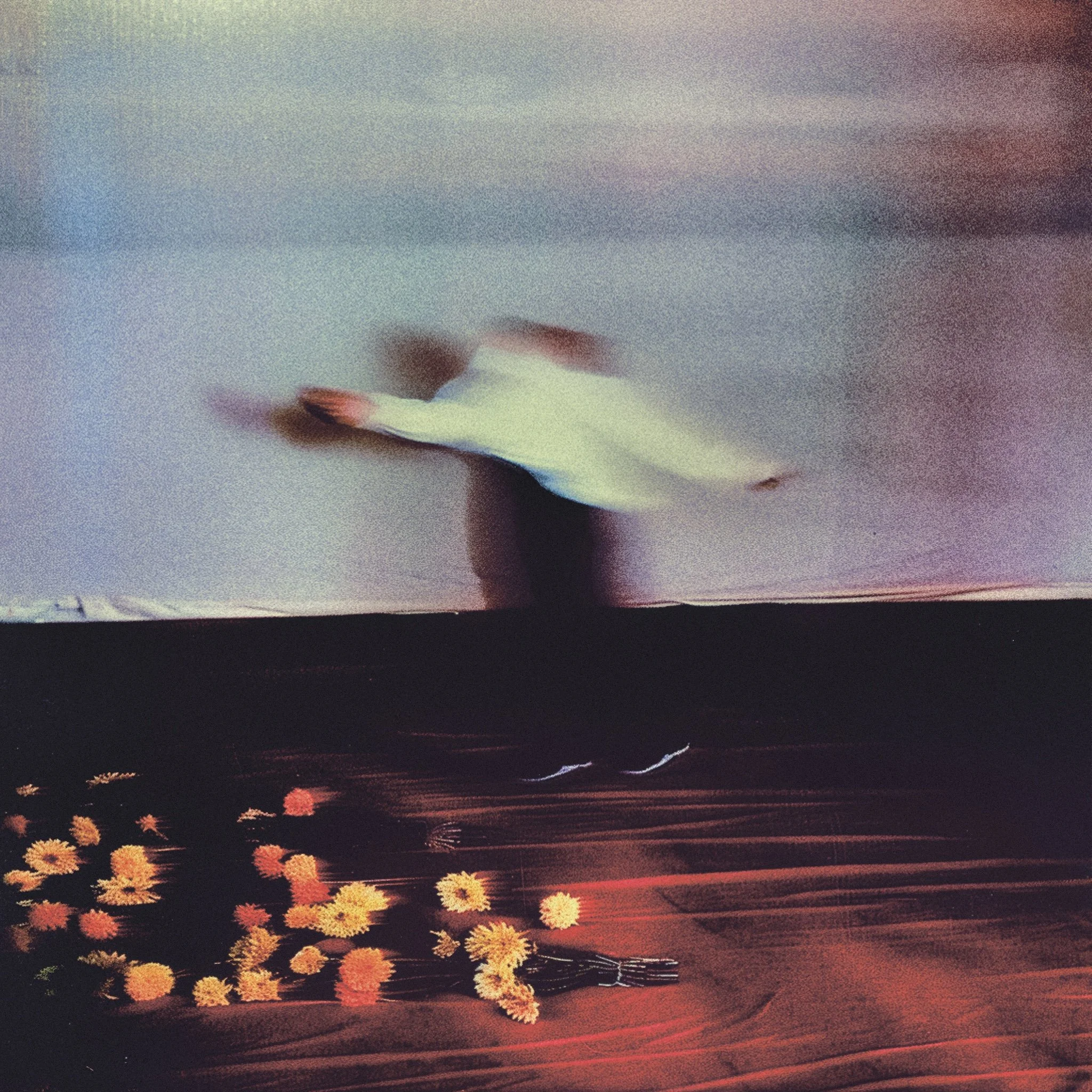
drift, sway: a new ambient album for focus, rest, and the slow return of light
There's a particular kind of creative energy that only shows up in winter. I've stopped fighting it. The days get short, the world goes quiet, and something in me starts reaching for the pedalboard.
drift, sway — my new full-length album out April 10th via Nettwerk — came from exactly that place. Ten pieces of ambient music built for the moments when you need the world to slow down: deep focus, quiet reading, the kind of sleep that actually restores something.
How it was made
I kept the approach as minimal as I could. Guitar as the primary instrument. A Boss DD-20 set to a 16-second looper mode as the spine of nearly every piece. From there: the Count to Five, the Meris Mercury 7, the EarthQuaker Devices Avalanche Run. Subtle warmth from a vintage Moog Minimoog and a Korg Polysix drifting in and out at the edges.
Nothing here was overworked. The goal was to capture a feeling — the sensation of breath, of a room settling, of time moving a little slower than usual. I've always believed that ambient music works best when it doesn't announce itself. When it just becomes part of wherever you are.
Two movements, one arc
The album splits into two halves. Drift — six pieces — leans into weightlessness. Guitar textures that float, loops that fold back on themselves, small moments held gently. Sway goes deeper: slower tempos, darker tones, more interior.
Together they move from presence to introspection. From the exhale to the stillness after.
Some of the track titles are rooted in specific memories. Afternoon walk is a quiet ode to daily walks with my wife Hanna. Sandcastles goes back further — summers on the Jersey Shore, the particular impermanence of things you build at the water's edge. Others are harder to name. They came from a season that had some weight to it, and they carry that without making a big deal of it.
Spring felt like the right time to release this. Music made in the dark, offered in the light.
For your next quiet hour
If you work better with something in the background that doesn't pull focus — this is for you. If you read before bed and need sound that doesn't follow you into your dreams — this is for you. If you've just had a hard few months and you're not quite sure how to re-enter the world — honestly, this one's for you too.
drift, sway is out April 10th everywhere. A full-length visualizer drops the same day on YouTube.
🎵 [Stream here] 📺 [Watch the visualizer]
Six Missing is the ambient project of Austin-based composer and sound designer TJ Dumser. His music has amassed over 200 million streams globally and is released via Nettwerk Music Group.

Ambient Music for Deep Focus: How Sound Helps the Mind Settle
There are days when the noise inside is louder than anything in the room.
Not the kind of noise you can turn down or walk away from. The kind that sits just behind your eyes — a low hum of everything you're carrying, everything that hasn't found its place yet. On those days, what you choose to listen to isn't a small decision.
I've been making music for most of my life — as a sound designer, a mixer, a composer, and as Six Missing, my ambient project. And I'll tell you: my relationship to what I put in my ears while I work has changed a lot over the years. Not because I went looking for a system, but because I started paying close attention to how certain sounds made me feel, and how some of them quietly made everything easier.
This is what I've learned.
The Brain Doesn't Actually Want Silence
There's a misconception that deep focus requires quiet. For some people, maybe. But for most of us, the absence of sound creates a kind of restlessness — the mind, left in a vacuum, tends to fill it with whatever unfinished thought has been waiting in the wings. Worry. Distraction. The thing you said three days ago that you can't stop replaying.
What actually helps the mind settle isn't silence — it's sound that's present without being demanding. Something to rest against. Ambient music, when it's made with intention, does exactly this. It's not background noise. It's a carefully held space.
What "Made With Intention" Actually Means
Here's where I'd push back gently on just putting on any playlist labeled "focus music." A lot of what gets marketed that way is algorithmically generated — emotionally flat, designed to be inoffensive rather than genuinely useful. It keeps you company the way a blank wall keeps you company.
Music made by a human being, with real emotional intent behind it, does something different. It has warmth. Texture. Small, almost imperceptible moments of variation that your nervous system registers even when your conscious mind doesn't. There's a real difference between music that occupies space and music that creates it.
When I made drift — the first part of my new record drift, sway, which came out last Friday — I was thinking about exactly this. The whole record was built from guitar loops. Improvised, single-take performances run through delay pedals, tape machines, and space echoes, with a Boss DD-20 on 16-second looper mode at the center of it all. Each piece started as a kind of meditation: I'd begin playing, follow the sound wherever it wanted to go, and stop when it felt complete. No overdubs. No going back to fix anything.
What came out of that process was music that breathes. That moves at the pace of thought rather than the pace of a clock. That was always the goal.
The Body Notices Before the Mind Does
Something people often mention when they talk about using ambient music for focus is that the body settles first — shoulders drop, breath slows, the jaw unclenches — before they notice any real shift in concentration. I find that really beautiful, and I think it makes total sense. We're not just brains floating in space. The nervous system is listening too. And when the sound in the room signals that it's safe to be here, something releases.
That's part of why I make music the way I do. I want the listener to feel held by the sound before they've made any conscious decision about it.
A Few Simple Things That Help
Start the music a few minutes before you actually sit down to work. Give your nervous system a chance to arrive before you ask your mind to show up.
Skip anything with lyrics if you're writing or reading — your brain will follow the words whether you want it to or not. Instrumental music sidesteps this entirely.
Match the energy to what you're doing. drift is soft and spacious — it's made for the kind of work that needs unhurried attention. Writing, reading, thinking something through slowly. If your work runs faster, find something with a little more pulse.
And then let it go. The best sign that focus music is working is when you stop noticing it. The goal is presence in your work, not presence in the sound.
A Place to Start
If you've never used ambient music as a focus tool and you want a gentle entry point, drift is a good place to begin. Six tracks, each one a small study in stillness and space. Made slowly, quietly, in a studio in Austin — for exactly this kind of moment.
Who I Am & Why I Make Music
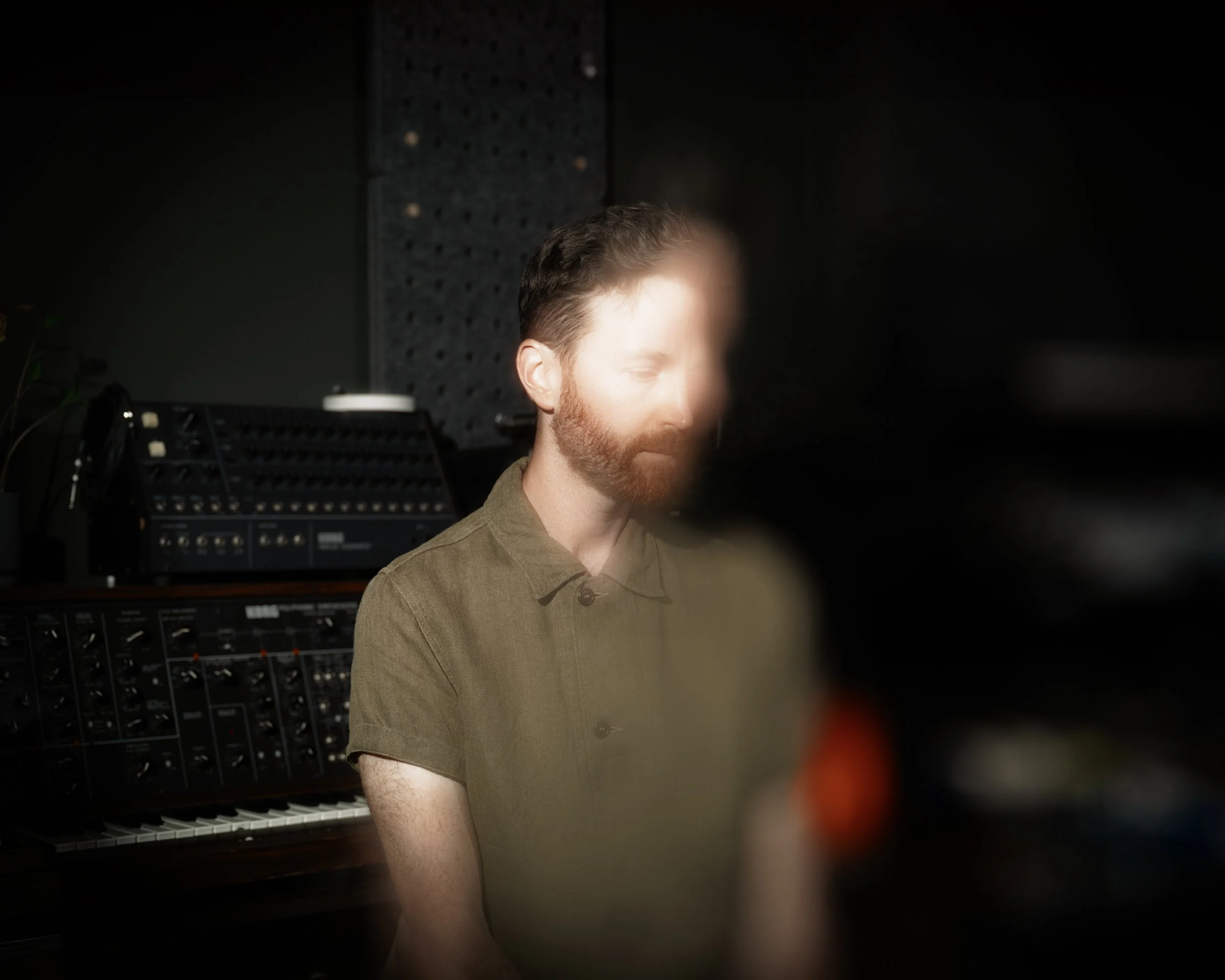
Who I Am & Why I Make Music
Music has always been a way for me to process the world—its beauty, its weight, and the in-between spaces where emotions live. From my earliest memories, sound fascinated me. I was drawn not just to melodies but to the textures of sound, the way it could envelop you like a warm embrace or stretch out into the distance like a horizon at dusk. That fascination never faded; it only deepened, eventually leading me to create Six Missing.
A Sonic Beginning
My journey started with the piano, my first instrument. While I found traditional lessons slow-paced, I quickly discovered that I could play by ear, and that felt far more natural. But it wasn’t until I stumbled upon my Uncle Chuck’s 1964 Gretsch Clipper in my grandparents’ attic that my love for music truly ignited. Surrounded by stacks of vinyl records, I felt an instant connection to the instrument, sparking a passion that would guide me for years to come.
Like many guitarists, I was shaped by classic rock, and Led Zeppelin’s IV was my gateway. The moment I heard the solo in “Stairway to Heaven,” I was hooked. But it wasn’t just the guitar work that fascinated me—it was the atmosphere, the space between the notes, the way sound could transport you.
The Path to Six Missing
As I grew, my musical tastes evolved. I explored delay pedals and looping, captivated by the infinite layers they could create. My first pedals—a Jekyll & Hyde distortion, a Zoom 606 multi-effects unit, and eventually a Boss DD-6—opened the door to soundscapes that felt boundless. By the time I transitioned to synths, beginning with the Korg Minilogue, my focus had shifted from traditional songwriting to immersive sonic exploration. Discovering vintage synths like the Moog Memorymoog and the Juno-60 further deepened my understanding of texture and space, shaping the sonic identity of Six Missing.
But the defining moment for Six Missing came in Astoria, Queens. What began as a simple guitar looping project evolved into something deeper. Encouraged by friends, I released my early ambient explorations, and the response was unexpectedly encouraging. It was clear that people connected to this music—not just as entertainment, but as a space for meditation, deep focus, and healing.
Why I Create
For me, music is more than sound—it’s a means of connection, a way to navigate the complexities of being human. I’ve found that ambient music, in particular, holds a unique power. It allows the mind to wander, to rest, to breathe. It can offer solace in moments of anxiety, a moment of stillness in a chaotic world.
That’s why I create. Whether it’s for someone meditating, studying, or simply needing a pause from the noise of everyday life, my goal is to craft soundscapes that offer space—to think, to feel, to just be.
This blog will be a place to share my journey—how Six Missing came to be, the struggles I’ve faced, and the inspirations that continue to shape my sound. If you’re here, I hope you find something that resonates with you.
Until next time, Your fellow human just being.
Six Missing