

Ambient Music for Deep Focus: How Sound Helps the Mind Settle
There are days when the noise inside is louder than anything in the room.
Not the kind of noise you can turn down or walk away from. The kind that sits just behind your eyes — a low hum of everything you're carrying, everything that hasn't found its place yet. On those days, what you choose to listen to isn't a small decision.
I've been making music for most of my life — as a sound designer, a mixer, a composer, and as Six Missing, my ambient project. And I'll tell you: my relationship to what I put in my ears while I work has changed a lot over the years. Not because I went looking for a system, but because I started paying close attention to how certain sounds made me feel, and how some of them quietly made everything easier.
This is what I've learned.
The Brain Doesn't Actually Want Silence
There's a misconception that deep focus requires quiet. For some people, maybe. But for most of us, the absence of sound creates a kind of restlessness — the mind, left in a vacuum, tends to fill it with whatever unfinished thought has been waiting in the wings. Worry. Distraction. The thing you said three days ago that you can't stop replaying.
What actually helps the mind settle isn't silence — it's sound that's present without being demanding. Something to rest against. Ambient music, when it's made with intention, does exactly this. It's not background noise. It's a carefully held space.
What "Made With Intention" Actually Means
Here's where I'd push back gently on just putting on any playlist labeled "focus music." A lot of what gets marketed that way is algorithmically generated — emotionally flat, designed to be inoffensive rather than genuinely useful. It keeps you company the way a blank wall keeps you company.
Music made by a human being, with real emotional intent behind it, does something different. It has warmth. Texture. Small, almost imperceptible moments of variation that your nervous system registers even when your conscious mind doesn't. There's a real difference between music that occupies space and music that creates it.
When I made drift — the first part of my new record drift, sway, which came out last Friday — I was thinking about exactly this. The whole record was built from guitar loops. Improvised, single-take performances run through delay pedals, tape machines, and space echoes, with a Boss DD-20 on 16-second looper mode at the center of it all. Each piece started as a kind of meditation: I'd begin playing, follow the sound wherever it wanted to go, and stop when it felt complete. No overdubs. No going back to fix anything.
What came out of that process was music that breathes. That moves at the pace of thought rather than the pace of a clock. That was always the goal.
The Body Notices Before the Mind Does
Something people often mention when they talk about using ambient music for focus is that the body settles first — shoulders drop, breath slows, the jaw unclenches — before they notice any real shift in concentration. I find that really beautiful, and I think it makes total sense. We're not just brains floating in space. The nervous system is listening too. And when the sound in the room signals that it's safe to be here, something releases.
That's part of why I make music the way I do. I want the listener to feel held by the sound before they've made any conscious decision about it.
A Few Simple Things That Help
Start the music a few minutes before you actually sit down to work. Give your nervous system a chance to arrive before you ask your mind to show up.
Skip anything with lyrics if you're writing or reading — your brain will follow the words whether you want it to or not. Instrumental music sidesteps this entirely.
Match the energy to what you're doing. drift is soft and spacious — it's made for the kind of work that needs unhurried attention. Writing, reading, thinking something through slowly. If your work runs faster, find something with a little more pulse.
And then let it go. The best sign that focus music is working is when you stop noticing it. The goal is presence in your work, not presence in the sound.
A Place to Start
If you've never used ambient music as a focus tool and you want a gentle entry point, drift is a good place to begin. Six tracks, each one a small study in stillness and space. Made slowly, quietly, in a studio in Austin — for exactly this kind of moment.

The Science of Sleep: How Ambient Music Helps You Rest
Sleep is one of the most essential functions of the human body, yet for many people, falling and staying asleep is a nightly challenge. In a world filled with screens, notifications, and overstimulation, winding down can feel impossible. That’s where ambient music for sleep comes in.
I’ve always been drawn to the way sound shapes our mental and emotional states, and over time, I’ve come to appreciate just how powerful ambient music can be in preparing the body and mind for deep rest. The science backs it up—listening to calming music before bed can help slow your heart rate, reduce stress hormones, and even enhance brain function while you sleep.
How Music Prepares the Body for Sleep
Our bodies are deeply attuned to rhythm. Slower tempos, gentle drones, and evolving soundscapes signal to the brain that it’s time to transition into rest mode. When we listen to low-frequency tones and soft, sustained notes, the parasympathetic nervous system kicks in, lowering heart rate and blood pressure, which naturally promotes relaxation.
Some studies suggest that music around 60 beats per minute (BPM) aligns with the body’s resting heart rate, creating an entrainment effect that encourages deeper sleep cycles. This is why ambient music for relaxation often features minimal rhythm or a slow pulse, allowing the brain to gently synchronize with its natural bedtime state.
The Brain’s Nightly Reset: How Sleep “Bathes” the Mind
While you sleep, your brain isn’t just resting—it’s actively working. One of the most fascinating processes is the glymphatic system, which “washes” your brain with cerebrospinal fluid, removing toxins that accumulate throughout the day. This nightly cleansing is crucial for cognitive function, memory consolidation, and mental clarity.
Listening to ambient music during this process can create a sound environment that enhances the brain’s ability to reset. By reducing external noise and providing a steady, gentle background, ambient soundscapes help limit disturbances and keep the nervous system in a relaxed state throughout the night.
The Science-Backed Benefits of Ambient Music for Sleep
Research has shown that listening to soothing music before bed can:
Decrease stress and anxiety by lowering cortisol levels
Improve sleep quality and reduce time spent awake during the night
Encourage deep, restorative sleep by slowing brainwave activity
Aid in memory consolidation by enhancing neural processing during REM sleep
How to Incorporate Ambient Music into Your Sleep Routine
If you’re looking to experiment with ambient music for better sleep, here are a few simple ways to integrate it into your nightly routine:
Start 30-60 minutes before bed – Begin playing ambient music as part of your wind-down routine to cue your body for sleep.
Keep the volume low – Music for sleep should be just above the threshold of hearing, acting as a gentle backdrop.
Avoid abrupt changes in sound – Choose tracks that flow seamlessly without sudden shifts in dynamics or tempo.
Use a timer or looping playlist – Set your music to play for a specific duration or allow it to run throughout the night for uninterrupted rest.
As someone who creates ambient music, I love hearing how people use these soundscapes in their daily lives. If you struggle with sleep, try incorporating ambient music into your routine and see how it affects your rest.
My Ambient Music for Sleep Playlists
If you’re looking for something to try tonight, I’ve curated a playlist featuring my own music and other sleep-friendly soundscapes:
🎧 Sleep & Ambient Music Playlist
I hope this helps you find the stillness you need. Sleep well.
Until next time, Your fellow human just being.
Six Missing

Finding Stillness: How Ambient Music Helped Me Through Addiction, Anxiety, and Depression
For much of my life, I struggled to find stillness. My mind was constantly racing—sometimes with thoughts I didn’t want, other times with an overwhelming sense of unease. I turned to alcohol as a way to quiet the noise, to numb the weight of anxiety and depression that felt impossible to shake. What started as a temporary escape became a cycle I couldn’t break. It wasn’t until I found my way back to music—specifically ambient music—that I began to understand healing in a new way.
The Weight of Addiction
Addiction is deceptive. It doesn’t happen all at once—it creeps in slowly, disguising itself as relief, as control. For years, I convinced myself that alcohol was helping me manage my anxiety, when in reality, it was fueling it. The more I drank, the further I drifted from myself.
Anxiety and depression have a way of isolating you, making you feel like you’re stuck in a loop that no one else can understand. The drinking only made that loop tighter. At my lowest, I realized that I was trying to escape my own mind, but I didn’t know how to exist without the distractions I had built around me.
Rediscovering Sound as Healing
Music had always been a part of my life, but during my struggles with addiction, I lost my connection to it. The urgency of traditional songwriting—the need for structure, for lyrics—felt suffocating. I needed something that allowed me to just exist, something that didn’t demand anything from me.
That’s when I truly discovered ambient music. The first time I listened to Brian Eno’s Music for Airports, I felt something shift. The absence of a defined rhythm, the way the sounds stretched out into infinity—it was exactly what I needed. There was no expectation, no pressure, just a space to breathe.
As I started creating my own ambient music, I realized how much it mirrored my own recovery process. The layers of sound, the slow evolution of a piece over time—it all reflected the patience and presence that sobriety required. Ambient music taught me that healing wasn’t about erasing the past; it was about allowing things to unfold naturally, without force.
The Power of Deep Listening
One of the most valuable things ambient music has given me is the ability to truly listen. In the past, I used alcohol to drown things out—to escape discomfort. But ambient music does the opposite. It invites you to sit with the discomfort, to observe it without judgment. It allows you to recognize that emotions, like sound waves, rise and fall—they aren’t permanent.
This shift in perspective changed everything. Instead of resisting my anxiety, I started using music as a way to move through it. I experimented with vintage synths like the Moog Matriarch and Korg PS-3100, exploring textures that felt soothing rather than overwhelming. I built looping layers of sound, letting each note breathe, much like I was learning to do in my own life.
Music as a Meditation
As I deepened my sobriety, I found that making music became a form of meditation. The repetitive nature of looping, the way a delay pedal could stretch out a sound indefinitely—these elements mirrored the stillness I had been searching for. I began to understand that healing isn’t about distraction; it’s about presence.
Meditation had always been difficult for me in the traditional sense, but ambient music became my way in. I found solace in sound, using it to center myself when my thoughts felt too heavy. Floating in an expanse of synth waves, I could detach from the need to control everything and instead just be.
Creating for Others
The more I created, the more I realized that this music wasn’t just for me. People began reaching out, telling me that they used my music for their own moments of stillness—for studying, meditating, even coping with their own struggles. That connection reminded me why I started making music in the first place.
If there’s one thing I’ve learned, it’s that healing isn’t linear. Some days are harder than others, and that’s okay. But finding something—whether it’s music, movement, or meditation—that brings you back to yourself is invaluable.
For me, that’s ambient music. It’s not just sound; it’s a space, a refuge, a reminder that even in stillness, there is movement.
Moving Forward
Now, over a decade into my sobriety, I look back on my journey with gratitude. I know that I wouldn’t be here without music, without the ability to lose myself in sound and find clarity in stillness. Ambient music helped me rebuild my relationship with myself, and it continues to be my guide.
Wherever you are in your own journey, I hope you find something that gives you space to breathe, to listen, and to simply be.
Until next time, Your fellow human just being.
Six Missing
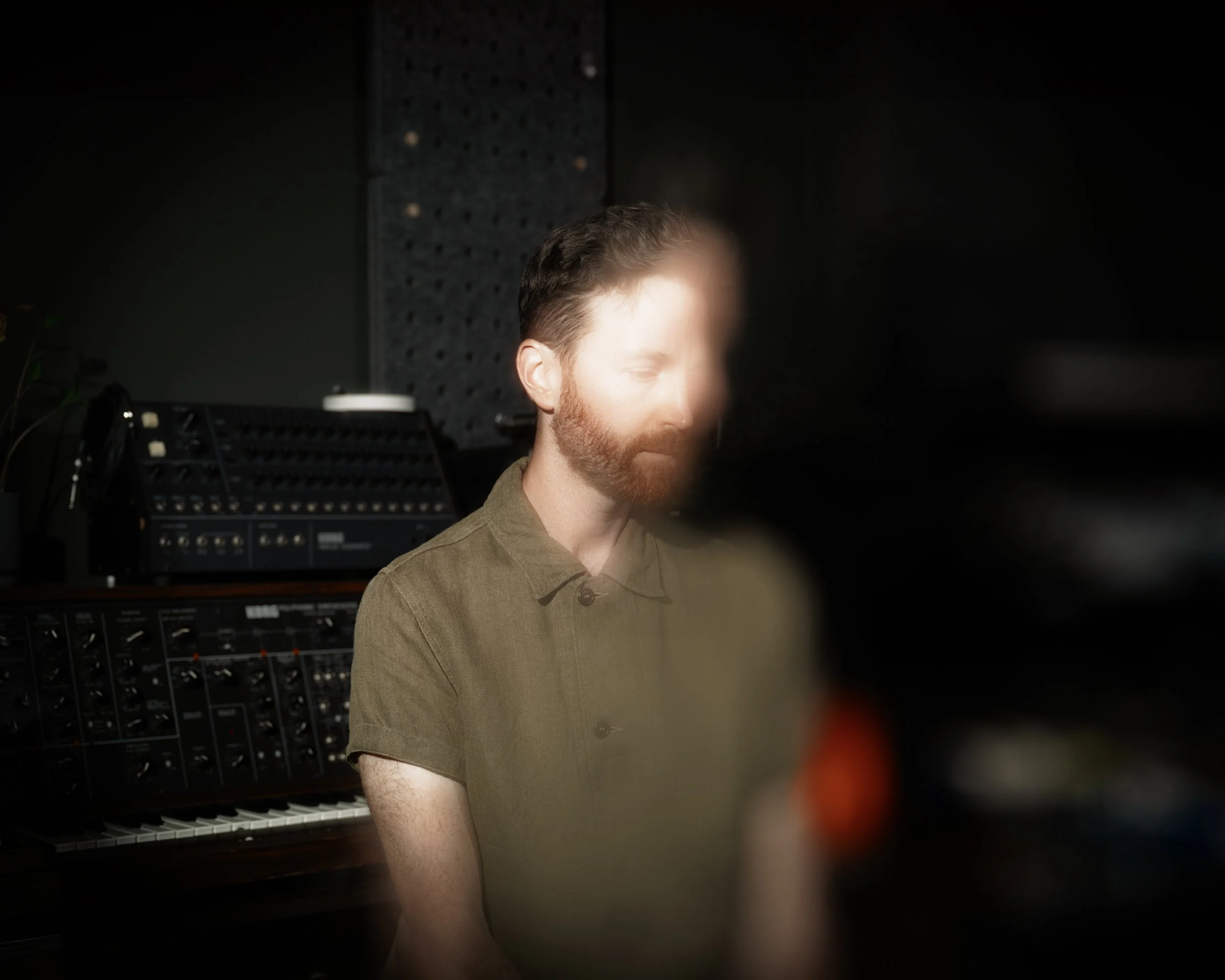
Who I Am & Why I Make Music
Who I Am & Why I Make Music
Music has always been a way for me to process the world—its beauty, its weight, and the in-between spaces where emotions live. From my earliest memories, sound fascinated me. I was drawn not just to melodies but to the textures of sound, the way it could envelop you like a warm embrace or stretch out into the distance like a horizon at dusk. That fascination never faded; it only deepened, eventually leading me to create Six Missing.
A Sonic Beginning
My journey started with the piano, my first instrument. While I found traditional lessons slow-paced, I quickly discovered that I could play by ear, and that felt far more natural. But it wasn’t until I stumbled upon my Uncle Chuck’s 1964 Gretsch Clipper in my grandparents’ attic that my love for music truly ignited. Surrounded by stacks of vinyl records, I felt an instant connection to the instrument, sparking a passion that would guide me for years to come.
Like many guitarists, I was shaped by classic rock, and Led Zeppelin’s IV was my gateway. The moment I heard the solo in “Stairway to Heaven,” I was hooked. But it wasn’t just the guitar work that fascinated me—it was the atmosphere, the space between the notes, the way sound could transport you.
The Path to Six Missing
As I grew, my musical tastes evolved. I explored delay pedals and looping, captivated by the infinite layers they could create. My first pedals—a Jekyll & Hyde distortion, a Zoom 606 multi-effects unit, and eventually a Boss DD-6—opened the door to soundscapes that felt boundless. By the time I transitioned to synths, beginning with the Korg Minilogue, my focus had shifted from traditional songwriting to immersive sonic exploration. Discovering vintage synths like the Moog Memorymoog and the Juno-60 further deepened my understanding of texture and space, shaping the sonic identity of Six Missing.
But the defining moment for Six Missing came in Astoria, Queens. What began as a simple guitar looping project evolved into something deeper. Encouraged by friends, I released my early ambient explorations, and the response was unexpectedly encouraging. It was clear that people connected to this music—not just as entertainment, but as a space for meditation, deep focus, and healing.
Why I Create
For me, music is more than sound—it’s a means of connection, a way to navigate the complexities of being human. I’ve found that ambient music, in particular, holds a unique power. It allows the mind to wander, to rest, to breathe. It can offer solace in moments of anxiety, a moment of stillness in a chaotic world.
That’s why I create. Whether it’s for someone meditating, studying, or simply needing a pause from the noise of everyday life, my goal is to craft soundscapes that offer space—to think, to feel, to just be.
This blog will be a place to share my journey—how Six Missing came to be, the struggles I’ve faced, and the inspirations that continue to shape my sound. If you’re here, I hope you find something that resonates with you.
Until next time, Your fellow human just being.
Six Missing